


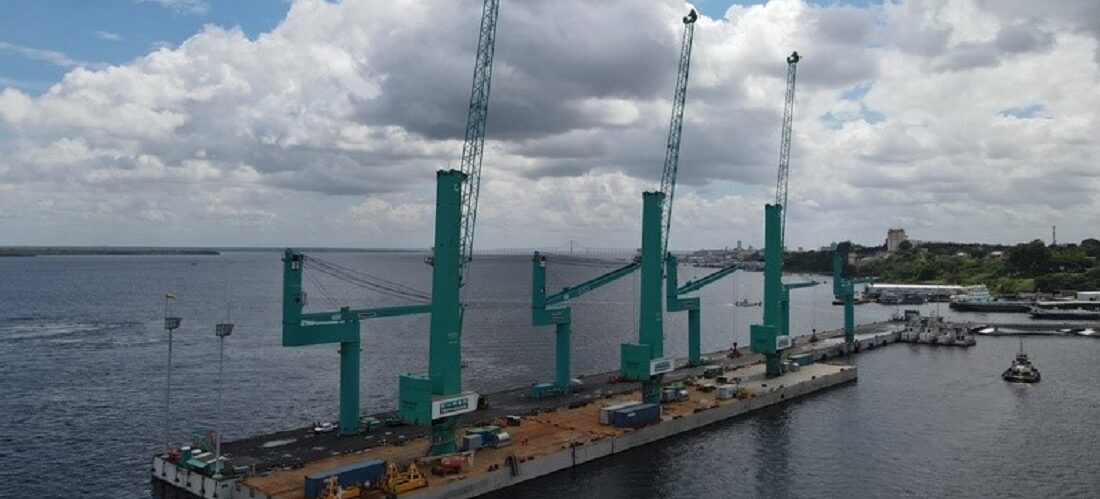
Brazil cabotage operators brace for drought, advance shipments to Manaus
Aug, 20, 2025 Posted by Lucas LorimerWeek 202535
Coastal shipping companies (which operate between ports within the same country) that also serve the Port of Santos have been moving cargo earlier than usual in Manaus to mitigate the negative consequences of the expected dry season affecting rivers in the state of Amazonas, in northern Brazil.
Meanwhile, the National Department of Transport Infrastructure (Dnit) says construction projects will be completed this year to ensure navigability along key routes during drought periods. In the past two years, low river levels have caused significant losses for the cabotage sector.
“The industry is always preparing for the dry season. It’s a seasonal phenomenon. The past two years were very serious and severe. 2023 and 2024 resulted in nearly R$3 billion in costs for industries,” said Augusto Rocha, coordinator of the logistics and competitiveness committee of the Industry Center of the State of Amazonas (Cieam).
According to Luís Fernando Resano, executive director of the Brazilian Association of Cabotage Shipowners (ABAC), cabotage ships were unable to reach terminals in Manaus for 45 days in 2023, which prevented the movement of approximately 45,000 containers. A strategy was adopted last year to lessen the impact of the drought.
“In 2024, at the initiative of terminals and shipping companies, we operated using a floating pier in Itacoatiara, which allowed logistics operations in the region to continue. However, it caused wait times due to the limited infrastructure,” he said.
Because Manaus and Santos are the main container ports for coastal shipping, the logistical impact was significant, “with added service costs,” Resano noted.
Forecasts
A technical analysis by Aliança Navegação e Logística forecasts that this year’s drought will affect Manaus between the end of October and early December.
Reviewing the Brazilian Geological Service (SGB) graph on drought in the Amazon River, Augusto Rocha says expectations are for this year’s dry season to be less severe. “We hope that the lessons learned in previous years will help reduce industry losses, allow shipowners and port terminals to maintain cost balance, and prompt the government to invest in fixing this structural shortcoming.”
Rocha notes that an underwater engineering project is necessary to alter the river’s hydrodynamics, thereby eliminating the need for dredging. Currently, he says, dredging is focused on navigation safety rather than deepening the channel.
Resano added that during last year’s drought, a communications cable was identified as obstructing some dredging operations. “There is a need to plan for repositioning this cable, which now also involves the National Telecommunications Agency (Anatel). Our position, and our request to Dnit, is for greater transparency in the planning of these actions so we can monitor them,” said the Abac executive director.
He believes the North Region is not prepared for severe droughts. “Unfortunately, I don’t see sufficient infrastructure in place for critical moments like we experienced in 2023 and 2024. The measures adopted by the private sector helped to mitigate the serious problem in 2023. They were satisfactory, but we need to work toward maintaining normal logistics flow.”
Resano stated that the 2024 solution increased operating costs, extended transit times, and created bottlenecks.
Costs
Over the past two years, drought in Manaus has generated R$3 billion in costs for industries. The worst-case scenario was in 2023, when cabotage ships were unable to access Manaus terminals for 45 days, halting the movement of approximately 45,000 containers.
Source: A Tribuna
-
Shipping
Oct, 26, 2023
0
APM Terminals and DP World spearhead roadmap for accelerating electrification of port operations in bid for net-zero
-
Other Logistics
Sep, 24, 2024
0
Capuaba Port Railway Overhaul Promises 5 Million-Tonne Cargo Surge
-
Other Cargo
Aug, 09, 2023
0
Ag minister announces measures to fight the effecs of milk imports in Brazil
-
Ports and Terminals
Jun, 06, 2019
0
Paranaguá Port to renovate pier dedicated to inflammable goods