

Brazil submits plan for first-ever waterway concession to audit court
Aug, 19, 2025 Posted by Lucas LorimerWeek 202535
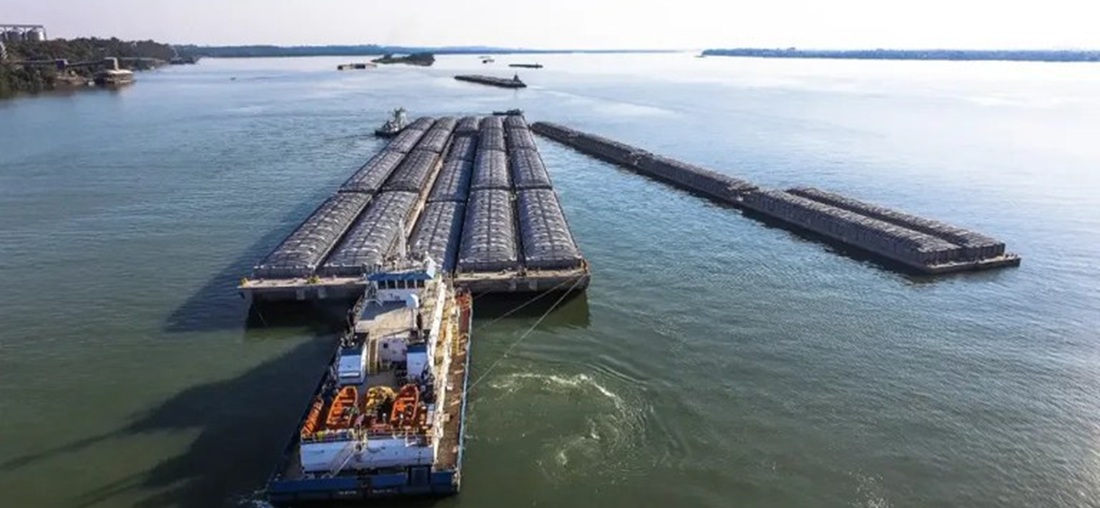
The Ministry of Ports and Airports (MPor) submitted this week to Brazil’s Federal Court of Accounts (TCU) the project outlining the concession model for the Paraguay River waterway, which is expected to be put up for auction by the end of the year. This will be Brazil’s first waterway concession, marking a regulatory and logistical milestone with the potential to inspire similar projects across other navigable river basins in the country, according to Minister Silvio Costa Filho.
“This is a sign that, for the first time in the country’s history, waterways are being treated as a strategic priority for Brazil’s logistics development,” emphasized the minister, noting that Brazil has more than 20,000 kilometers of navigable rivers, with the potential to reach 60,000 kilometers. “Investing in waterways is essential to increase competitiveness, reduce costs, integrate regions, and decarbonize freight transportation in the country.”
The Paraguay River waterway project covers about 600 kilometers within Brazilian territory and is strategically important for cargo outflow from the Central-West region. The concession will cover the southern section of the river, from Corumbá (MS) to the mouth of the Apa River on the Paraguayan border. There are five other waterway concession projects currently under development by MPor.
According to the National Secretary for Waterways and Navigation, Dino Antunes, the goal is to complete the concession process by the end of the year. “This will be the country’s first waterway concession, which will bring greater predictability for the transport of large cargo volumes. The concession will expedite maintenance dredging when needed, with navigation channel signaling, which will even allow for safe nighttime navigation,” he said.
Due to the drought in 2024, cargo volume transported on the Paraguay River last year totaled 3.3 million tonnes (3.1 million of which were iron ore). In 2023, the volume had reached 7.9 million tonnes (6.1 million of iron ore and 1.6 million of soybeans). With the concession, the expected outcome is a threefold increase in transported volume by 2035.
The project was revised by the regulatory agency Antaq following a wide-ranging public consultation process, including two public hearings, and estimates R$43.2 million in investments by the fifth year of the concession. The contract spans 20 years, with the possibility of successive extensions for up to 70 years. Around 20% of the investments will be allocated to preservation and environmental monitoring efforts in the region.
The concessionaire will be required to provide services including hydrographic monitoring, nautical signaling and channel marking, traffic management and operation, and environmental management. It will also be responsible for maintenance dredging to eliminate siltation and ensure a minimum depth of three meters for most of the year and two meters during the dry season. In recent years, the Paraguay River has been closed to navigation for about 65 days per year, on average. With the concession, this downtime is expected to drop to eight days annually.
Antunes noted that encouraging cargo transport by waterway helps reduce highway traffic, significantly decreasing the number of wildlife collisions and greenhouse gas emissions. A survey by the Wildlife Conservation Institute (ICAS) recorded 13,000 animal roadkill incidents on highways in Mato Grosso do Sul alone during three years of monitoring.
“Brazil is a signatory to the Paris Agreement and is committed to adopting measures to reduce carbon emissions. We must increasingly turn to waterways for cargo transport, which is 27 times less polluting than road transport,” said the secretary. “We are allies when it comes to environmental protection, and we aim to elevate operations in terms of both navigational safety and environmental impact. Navigation has the most to gain from water conservation—without water, there is no navigation.”
-
Blog News (ENG)
May, 20, 2025
0
Porto Itapoá is the largest container handler in southern Brazil
-
Ports and Terminals
Dec, 17, 2021
0
ANTAQ will hold public inquiry on the concession of the Port of São Sebastião
-
Shipping
Apr, 06, 2026
0
Japanese shipyards deliver two 13,932 TEU sister container ships to Ocean Network Express (ONE)
-
Trade Regulations
Jun, 01, 2020
0
China rumored to have started suspending agribusiness purchases from the USA