



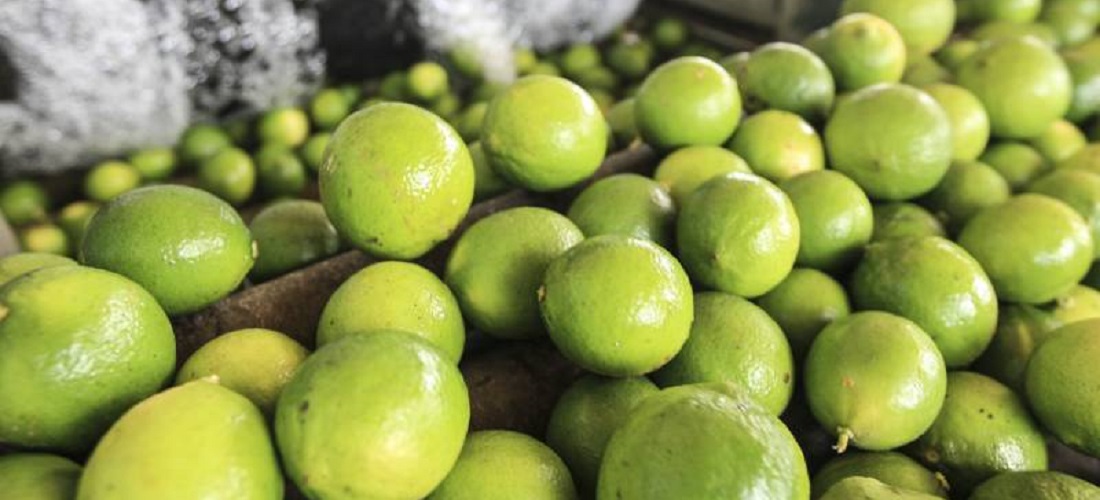
Lemon exports grow 21% in the state of São Paulo
Aug, 21, 2025 Posted by Lucas LorimerWeek 202535
The state of São Paulo is Brazil’s largest lemon producer, with notable annual export growth. According to data from the Institute of Agricultural Economics (IEA – Apta), part of the São Paulo Secretariat of Agriculture and Supply (SAA), more than 1.1 million tonnes were harvested in 2024. In the first half of 2025, over 81,000 tonnes were exported, generating US$72 million—a 21% increase compared to the same period last year.
Below is a historical overview of lemon exports from São Paulo since January 2022. The chart was prepared using data from DataLiner:
Lemon Exports from São Paulo | Jan 2022 – Jun 2025 | TEU
Source: DataLiner (Click here to request a demo)
Europe is the main export market, with the Netherlands receiving 62,200 tonnes—acting as a gateway through the Port of Rotterdam for further distribution to the rest of the EU. Other top destinations include the United Kingdom (11,600 t), Russia (1,300 t), and Canada (970 t).
“Trade between the Netherlands and Brazil is a dynamic example of complementary agricultural markets, with São Paulo playing a central role as the top producer and exporter. This presents excellent opportunities to enhance bilateral cooperation in sustainable production and logistics. Dutch lemon-importing companies were well represented at the second edition of Fruit Attraction in São Paulo,” said Alf de Wit, Agricultural Advisor at the Consulate General of the Netherlands.
Itajobi, located in the São José do Rio Preto region and considered Brazil’s lemon capital, is a key producer of the Tahiti variety. The family-owned company, Pimentel Itajobi, based in the town, has been in business for 30 years, primarily serving international markets, including the United Kingdom and the European Union.
“In 2024, we exported more than 4,000 tonnes of Tahiti lemons. The sector experienced a very prosperous year, despite a severe drought. We invested in improvements to our packing house, which increased our production capacity and subsequently boosted our export volume. Despite sector and external market challenges, we are optimistic for continued growth in 2025 and an even better 2026,” said Alison Dejavite, Export Analyst at Pimentel.
To further promote international growth of São Paulo’s fruit industry, the state’s Agriculture Secretariat participated in the opening of Fruit Attraction SP 2025—the leading fruit and vegetable trade fair in Latin America. “Fruit farming adds value, drives the economy, creates jobs, and helps preserve the environment. São Paulo has the most diversified crop production in Brazil, which enables us to lead the country’s trade balance even in difficult years,” said Agriculture Secretary Guilherme Piai.
At this year’s edition, the Agricultural Defense Agency (CDA) presented initiatives for phytosanitary certification that support exports of São Paulo’s products. The registration and oversight of Tahiti lime plantations reinforce São Paulo’s position as the country’s largest exporter, responsible for over 70% of the lime exported from Brazil.
“We continuously invest in phytosanitary certification of origin to ensure São Paulo’s products reach international markets with quality and safety. The registration and oversight of Tahiti lime groves result from coordinated work between producers, the private sector, and government services, ensuring competitiveness, opening new markets, and generating income for small, medium, and large growers,” said Alexandre Paloschi, Head of the Department of Plant Health and Inspection (DDSIV).
Investment in production
Through its Agribusiness Expansion Fund (FEAP), the SAA provides a credit line tailored to lemon producers. “For lemon growers, the Sustainable Agriculture of São Paulo line offers financing for orchard renewal and expansion using certified seedlings, efficient irrigation, and other productive investments. With reduced interest rates and extended payment terms, the credit provides financial flexibility to invest securely,” explained FEAP Executive Secretary Felipe Alves.
The FEAP financing cap is R$250,000 for individuals and R$500,000 for companies. Repayment can be made over 84 months, with a grace period of up to 12 months. “Producers can also count on technical support from CATI and ITESP, who help develop and monitor the technical project to ensure efficient use of resources. It’s sustainability that turns into productivity and income for São Paulo’s lemon sector,” concluded Alves.
Source: Agência São Paulo
-
Trade Regulations
May, 31, 2022
0
Turkey and Russia are meeting to discuss Ukraine’s humanitarian export corridor
-
Shipping
Mar, 04, 2024
0
Santos Brasil to offer weekly long-haul service at Tecon Imbituba
-
Oil and Gas
Jan, 13, 2022
0
Petrobras increases LNG imports by 200% in 2021
-
Other Cargo
Dec, 16, 2024
0
BNDES Approves R$ 1.1 Billion to Boost Embraer Jet Exports