


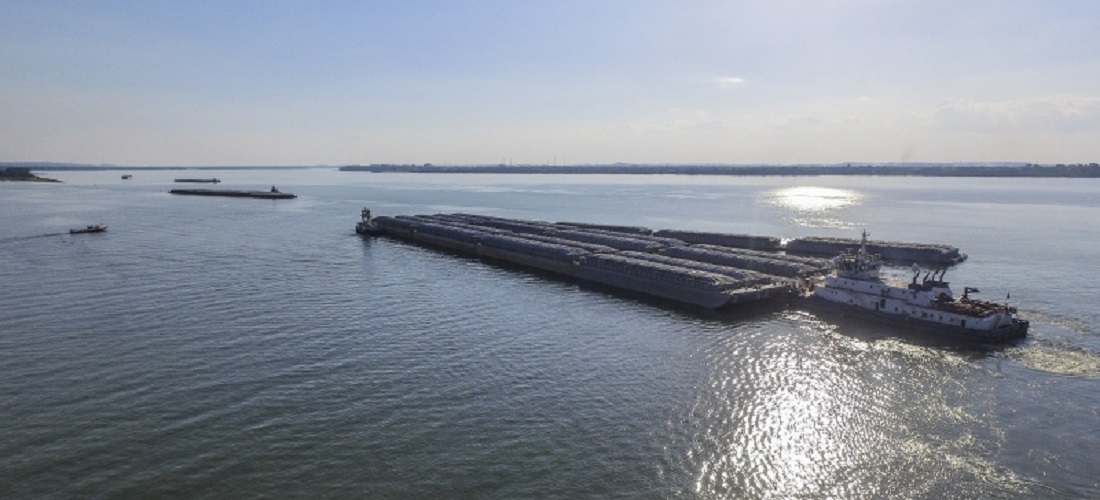
Inland waterways gain prominence in soybean and corn exports
Oct, 03, 2025 Posted by Lucas LorimerWeek 202541
Waterways are gaining prominence in Brazil’s export matrix and consolidating as strategic corridors for soybean and corn shipments. Much of the production originates in the Center-West, the country’s main agricultural hub, and flows toward the Northern Arc ports, reducing logistics costs, shortening distances, and enhancing the competitiveness of the agribusiness sector in the global market.
From January to July this year, the region handled 19.9 million tonnes of grains through organized Amazonian ports, according to the National Waterway Transport Agency (Antaq). Most of this cargo traveled along the Amazon River waterway, with 10.26 million tonnes, followed by the Pará River (4.65 million tonnes), the Tocantins River (4.59 million tonnes), and the Tapajós River (430,100 tonnes).
The Minister of Ports and Airports, Silvio Costa Filho, emphasized that this performance underscores the strategic importance of inland navigation. “Inland navigation is a strategic vector for Brazil. With the work of the National Secretariat of Waterways and Navigation, we have been investing in dredging, rock removal, and logistical integration to make rivers leading players in grain exports. This reduces costs, increases competitiveness, and guarantees predictability for exporters,” he said.
Key highlights
The shipments were concentrated in five main ports:
- Vila do Conde Terminal (PA): 3.94 million tonnes
- Barcarena Grain Terminal (PA): 3.79 million tonnes
- Hermasa Grain Terminal (AM): 3.70 million tonnes
- Santarém (PA): 3.60 million tonnes
- Novo Remanso Port Terminal (AM): 2.35 million tonnes
A large share of this volume traveled along four of the country’s main waterways. The Amazon River serves as the major integration corridor, linking various river terminals to Northern Arc ports. The Pará River connects the Miritituba and Santarém regions to the Vila do Conde Port, one of the most important for grain exports and the leader in cargo handling in northern Brazil in 2025.
The Tocantins River enables the outflow of production from the Center-West to the North, favoring logistical integration. Meanwhile, the Tapajós River is essential for transporting cargo between Miritituba, Santarém, and Vila do Conde, consolidating the region’s grain route.
Waterways in focus
These river routes strengthen the role of the Northern Arc, which in 2024 accounted for 34.8% of soybean exports and 46% of corn exports, according to the 2025 Agrologistics Yearbook by Conab.
The National Secretary of Waterways and Navigation, Dino Antunes, emphasized that investments in inland navigation are reshaping Brazil’s export matrix. “Waterways are a strategic asset with enormous potential. Each investment increases efficiency, brings producing regions closer to Northern Arc ports, and ensures cleaner and more competitive transport. Our goal is for inland navigation to stop being an alternative and become the backbone of national logistics,” he said.
China remains the main destination for exports, with 7.49 million tonnes shipped by July. Spain (2.85 million), Turkey (1.63 million), Algeria (829,400), and Mexico (768,900) follow, reflecting the diversification of buyers and the resilience of Brazil’s logistics chain.
Development and outlook
Strengthening waterways is a central pillar of Brazil’s public policy for modernizing national logistics. In addition to reducing pressure on highways, improving transport safety, and generating jobs throughout the agribusiness chain, inland navigation ensures structural efficiency in the production process.
The Ministry of Ports and Airports has been channeling resources to keep strategic rivers navigable year-round, aiming to provide predictability for operators, security for exporters, and a solid foundation for the expansion of Brazilian agribusiness.
More than just export corridors, waterways represent the integration of Brazil’s productive hinterland with global markets. By transforming rivers into permanent channels for foreign trade, Brazil is strengthening its logistics infrastructure and consolidating its global leadership not only in soybean and corn production and exports but also in other key agricultural commodities.
Source: Informativo dos Portos
-
Economy
Feb, 09, 2026
0
DataLiner shows moderate growth and cargo diversification in Brazil’s container market in 2025
-
Ports and Terminals
Jun, 09, 2023
0
Port of Paranaguá’s East Corridor achieves record-breaking soybean exports in May 2023
-
Other Logistics
Feb, 02, 2020
0
Agreement between Paraná government and Rumo Logística allows Ferroeste railway capacity to double
-
Ports and Terminals
Dec, 30, 2019
0
Açu Port continues to grow with first shipment of beach iron