


Surging Chinese Exports Put Beijing on Collision Course With Europe
Dec, 12, 2025 Posted by Lucas LorimerWeek 202550
Chinese exports are pushing the country toward an imminent conflict with Europe. French President Emmanuel Macron described the trade imbalance with China as “unbearable,” stating that what is at stake is “a matter of life or death for European industry.” For European Commission President Ursula von der Leyen, the bloc’s ties with China “have reached a tipping point.”
The scale of the trade imbalances with the European Union became clear recently, when Beijing announced that its surplus with the bloc reached a record close to 300 billion in 2025. Currently, Chinese exports to the EU are more than twice the value of imports, as Chinese sellers redirect products that face tariffs in the United States.
“The China shock in Europe is really starting to take hold,” said Andrew Small, director of the Asia program at the European Council on Foreign Relations. “What we’ve seen in recent months is much greater urgency — not everything becomes public, but serious crisis meetings are taking place.”
According to Small, who has advised von der Leyen on China-related matters, the outcome may represent the most significant overhaul of EU policy toward Beijing in at least a decade. Distracted in recent years by the war in Ukraine and, more recently, by Donald Trump’s tariffs, the EU has refocused its attention on China and is preparing what Small describes as a “pent-up” package of measures.
The bloc unveiled this month a plan to ensure global competitors do not overtake its industries amid intensifying competition with the U.S. and China. The European Commission, the EU’s executive arm, also proposed creating an economic security hub to manage trade tensions better and address the threat of cheap products flooding the single market.
The EU is also expected to propose criteria for foreign investments that involve technology transfer, local-content requirements, and internal value chains.
The warning comes as other major economies erect trade barriers. Mexican lawmakers this week approved new tariffs on Asian imports.
Time is working against Europe. Goldman Sachs economists estimate that competition from Chinese exports will reduce GDP growth in Germany, Spain, and Italy by at least 0.2 percentage points per year between 2026 and 2029.
The impact of Chinese exports could affect nearly one-third of jobs in the eurozone, according to economists from the European Central Bank — meaning more than 50 million workers may be affected.
“External hostility toward China’s exported products will increase, especially in Europe,” said Stephen Jen, CEO of London-based fund Eurizon SLJ Capital. “This combination of explosive trade and a depreciated renminbi is unsustainable.”
For China, there are few alternatives. The EU’s €20 trillion economy is one of the few markets large enough to absorb products that were once destined for the U.S.
In Brussels, the risks of confrontation became clear this year when trade tensions escalated between China and the United States. Beijing then used its dominance in rare-earth minerals, affecting key industries — from electric vehicles to wind turbines — and causing production stoppages at European companies.
Although the EU has earmarked at least €3 billion over the next year to reduce its dependence on Chinese raw materials, in practice, this will take many years to yield significant results.
“One of the real reasons for the rapid surge in Chinese exports is that the renminbi is significantly undervalued against the euro,” said Jens Eskelund, president of the EU Chamber of Commerce in China. This acts as a “subsidy” for exports and reduces the purchasing power of Chinese consumers.
For every container Europe exports to China, four return in the opposite direction, Eskelund noted, highlighting that this imbalance is not only growing — it is accelerating.
China’s trade surplus with Europe soared during the pandemic, as consumers bought more goods to adapt to lockdowns and remote work.
At the same time, Chinese companies moved up the value chain and began competing more directly with foreign firms in high-tech sectors such as medical devices and luxury cars. With Chinese imports stagnating, the rebound in exports made the trade relationship even more lopsided.
As a result, China now accounts for 7% of EU exports but supplies nearly a quarter of all imports from outside the bloc. China’s surplus with the EU and the UK already accounts for almost one-third of its global trade surplus, which surpassed 1 trillion for the first time.
This asymmetry means European companies are losing sales to China and facing greater domestic competition from cheap products. In addition, they face stronger competition in other international markets as Chinese companies rapidly increase shipments of cars and other goods worldwide.
Germany is the epicenter of this shift in commercial relations with Beijing. In 2019, China recorded a €25 billion deficit with Europe’s largest economy. In the first 11 months of this year, that became a €23 billion surplus, due to the collapse of German imports.
The result is a stagnating German economy, affected by job cuts and growing competition from China both inside and outside the country. German industry has eliminated more than 10,000 jobs per month this year, according to the federal statistics agency, Destatis.
Combined with high energy prices and challenges such as an aging population, this weakness led Chancellor Friedrich Merz’s advisers to lower Germany’s growth forecast to below 1% next year.
China’s advantage is not limited to high-tech manufactured products such as electric vehicles. Chinese companies continue to dominate the production of cheap consumer goods, clothing, and footwear.
Shipments of low-value products via e-commerce platforms have increased every year since the pandemic and grew another 56% in the first ten months of this year compared with the same period in 2024.
The rapid rise in exports “may be creating a false sense of security that China’s current policy focus on security and self-sufficiency — while reaping the benefits of its dominant position in global trade — is correct and sustainable,” according to a recent EU Chamber of Commerce report.
As pressure grows for a response, countries may “not only use existing trade instruments, such as antidumping tariffs, but also develop new tools and approaches to deal with what is becoming a serious and unsustainable situation,” said Wendy Cutler, former U.S. trade negotiator and now a member of the Asia Society Policy Institute.
“We may see the EU and others adopt new measures to limit Chinese imports over the next year,” she said.
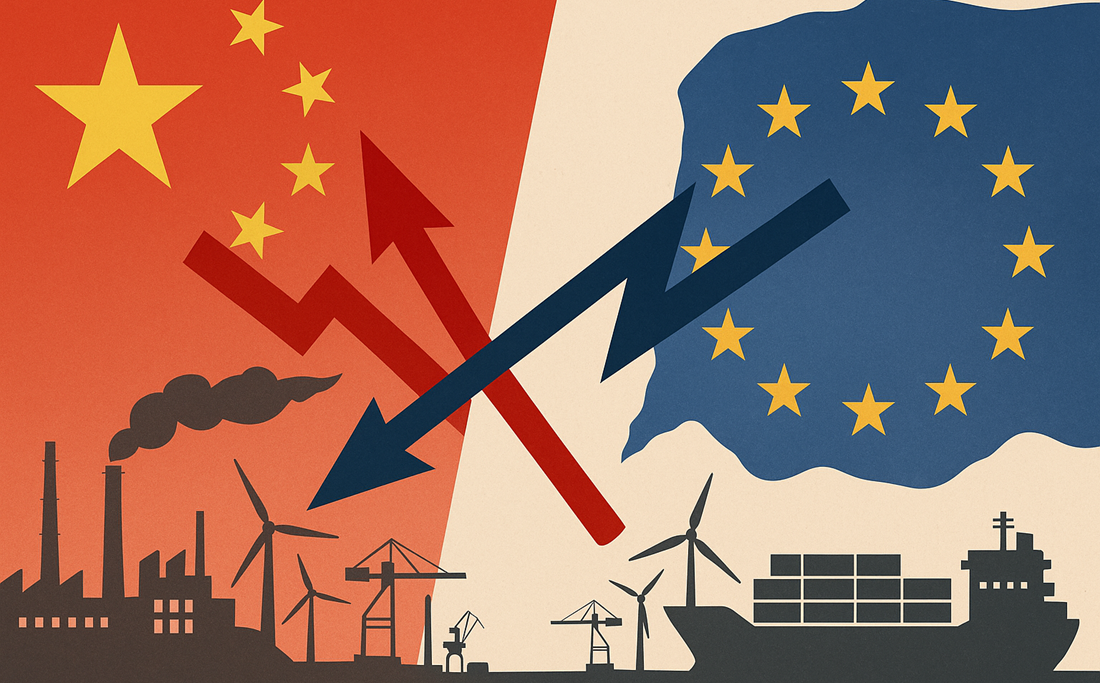
Image generated by Artificial Intelligence
Source: Valor Econômico
-
Grains
May, 18, 2020
0
China concerned about supply chain disruptions due to increase of COVID-19 cases in Brazil
-
Ports and Terminals
Aug, 07, 2020
0
Court approves auction of two projects for works on terminals at Aratu port (Bahia)
-
Economy
Apr, 12, 2022
0
The Brazilian trade balance shows a surplus of US$ 3.55 billion in the first two weeks of April
-
Other Cargo
Mar, 21, 2022
0
Abrapa: Brazil imported 41k tonnes of cotton in the season so far