


VLI celebrates 15 years with R$17 billion in investments and consolidation in integrated logistics services
Dec, 17, 2025 Posted by Sylvia SchandertWeek 202551
VLI, a logistics solutions company that operates railways, ports and terminals, celebrates its 15th anniversary on December 18 with a robust track record of investments and operational advances. Founded in 2010, the company invested more than R$17 billion between 2014 and 2024 in infrastructure, technology and expansion, consolidating itself as one of the country’s leading players in the sector. Focused on generating value for more than 100 clients in key segments of the national economy—such as agribusiness, mining, steelmaking and construction—VLI connects Brazil’s producing regions to major global markets, including the United States, Asia, Europe and the Middle East.
Established on December 18, 2010, the company took over general cargo operations with assets from the Centro-Atlântica Railway (FCA) and the northern stretch of the North–South Railway (FNS). In 2011, it launched its brand and positioning, with the purpose of “transforming the country’s logistics” and a strong customer-centric focus. In 2012, VLI inaugurated its first Integrator Terminal in Araguari (Minas Gerais), marking the start of implementing its integrated multimodal logistics system, which connects terminals, railways, and ports.
Since then, new terminals have been strategically positioned in Minas Gerais, São Paulo and Tocantins, strengthening efficiency and competitiveness across the sector. In addition to the railways under its concession, VLI operates via right of way on the Carajás Railway to access the São Luís port system, and on the Vitória–Minas Railway, which is currently transitioning to the new regulatory model of Railway Freight Transport Agent (ATF-C), with investments of around R$500 million. VLI also operates seven port terminals located at strategic points along the Brazilian coast.
Today, the company’s three logistics corridors with the highest cargo volumes are fully consolidated within their respective strengths. The Northern Corridor, for example, has become a strategic pillar by connecting the new agricultural frontier of Matopiba to the Port of São Luís, with the North–South Railway as its backbone. The Southeast Corridor links Brazil’s interior to the Port of Santos, standing out in the export of sugar and grains, as well as fertilizer imports. In the Eastern Corridor, the connection between Minas Gerais and the Espírito Santo port system ensures smooth flows for industrial, mineral and steel cargoes.
“The history of VLI is the history of the people who are, or have been, part of this company and who have dedicated their time and talent to a transformative purpose in a country with great infrastructure needs. Over the years, our experience has led us to shift from a logic based on our logistics assets to a model centered on customer needs. At the same time, we remain focused on generating value for our shareholders and building a meaningful legacy in the communities where we operate,” said Fábio Marchiori, CEO of VLI.
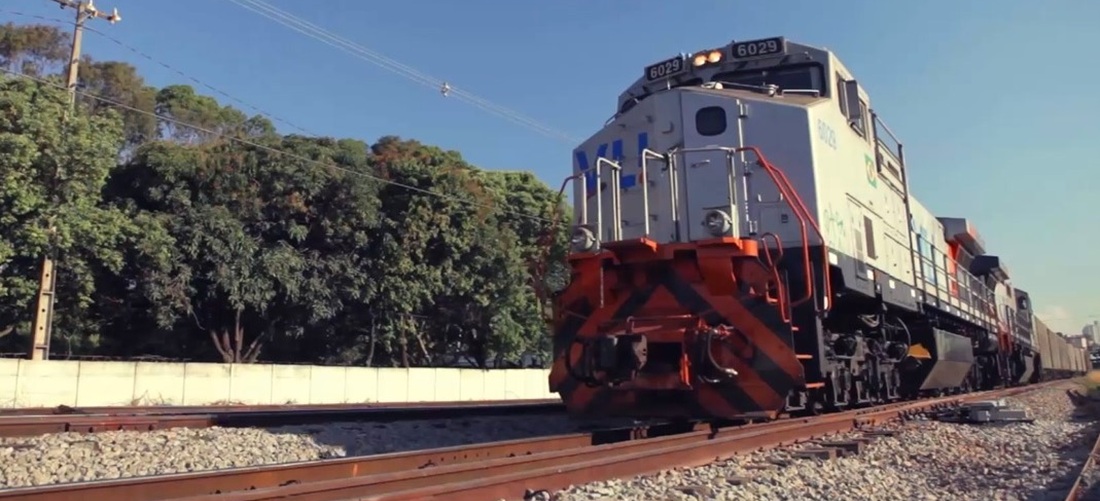
VLI currently operates a fleet of approximately 600 locomotives and 21,000 railcars, including recent rolling stock acquisitions that strengthen Brazil’s domestic industry.
Sustainability
Since its foundation, VLI has treated sustainability as a strategic pillar, continuously evolving its practices to align with the ESG agenda. This commitment was systematized with the launch of its ESG Agenda in 2021, reinforcing the company’s belief that sustainable logistics is both possible and necessary. That year, VLI set public targets that remain in place, such as reducing greenhouse gas emissions per tonne transported by 15% by 2030, achieving 30% female representation in leadership positions, maintaining 60% local suppliers, and reducing fresh water consumption in operations by 20%—the latter two goals having already been achieved ahead of schedule.
As these initiatives have matured, VLI has expanded its commitments to intensify positive social and environmental impacts. New targets include benefiting more than 150,000 people in at least 35 municipalities, reducing routine waste generation by 15%, and assessing suppliers under ESG and corporate integrity criteria to promote a more ethical and sustainable value chain. This journey reaffirms VLI’s purpose of transforming Brazilian logistics responsibly, creating connections that generate value for people, businesses and the planet.
Innovation
VLI views innovation as an essential path to enhancing operational performance and environmental contributions. As such, it invests in digital solutions and technologies that improve safety, traceability and sustainability across its operations. One example is the Leader system, which enables semi-autonomous operation of premium locomotives, reducing operational variability, diesel consumption and greenhouse gas emissions. Leader was one of the tools that recently allowed VLI to cut fuel consumption in the Northern Corridor by 8.6%.
Another highlight is Trato, a platform developed through VLI’s intrapreneurship programs that optimizes truck drivers’ journeys using dynamic scheduling, artificial intelligence and machine learning. Since its creation, it has handled millions of trips and tonnes, bringing greater predictability and efficiency for clients. VLI also developed Speed, an AI-based system that plans vessel loading and unloading, increasing operational capacity and customer satisfaction.
The company is also advancing initiatives such as the Smart Warehouse, which automates processes and ensures digital inventory management, reducing risks and operating time. These solutions are part of a strategic roadmap with more than 200 projects aligned with Industry 4.0, including automation, robotics, digital twins and green logistics.
Key figures
- Structure: VLI operates four railways, nine intermodal terminals and seven port operations.
- Fleet: Approximately 600 locomotives and 21,000 railcars.
- Employees: Around 8,000 employees, with significant progress in diversity, equity and inclusion. The company has surpassed 1,700 women and reached 27% female representation in senior leadership positions.
- Investments: More than R$17 billion invested between 2014 and 2024.
Source: VLI
Related Post
-
Shipping
Aug, 26, 2025
0
Citrosuco launches first long-haul voyage with B24 biodiesel on Carlos Fischer vessel
-
Other Cargo
Jan, 04, 2024
0
Brazil Sets Phytosanitary Requirements for Almond Imports from Argentina
-
Ports and Terminals
Sep, 23, 2020
0
Paranaguá’s expanded pier is inaugurated & increased draft work commissioned
-
Ports and Terminals
Aug, 02, 2021
0
Port complex project in Maricá, RJ moves forward again