

Brazilian customs seize nearly half a tonne of cocaine at Port of Santos
Feb, 24, 2026 Posted by Gabriel MalheirosWeek 202609
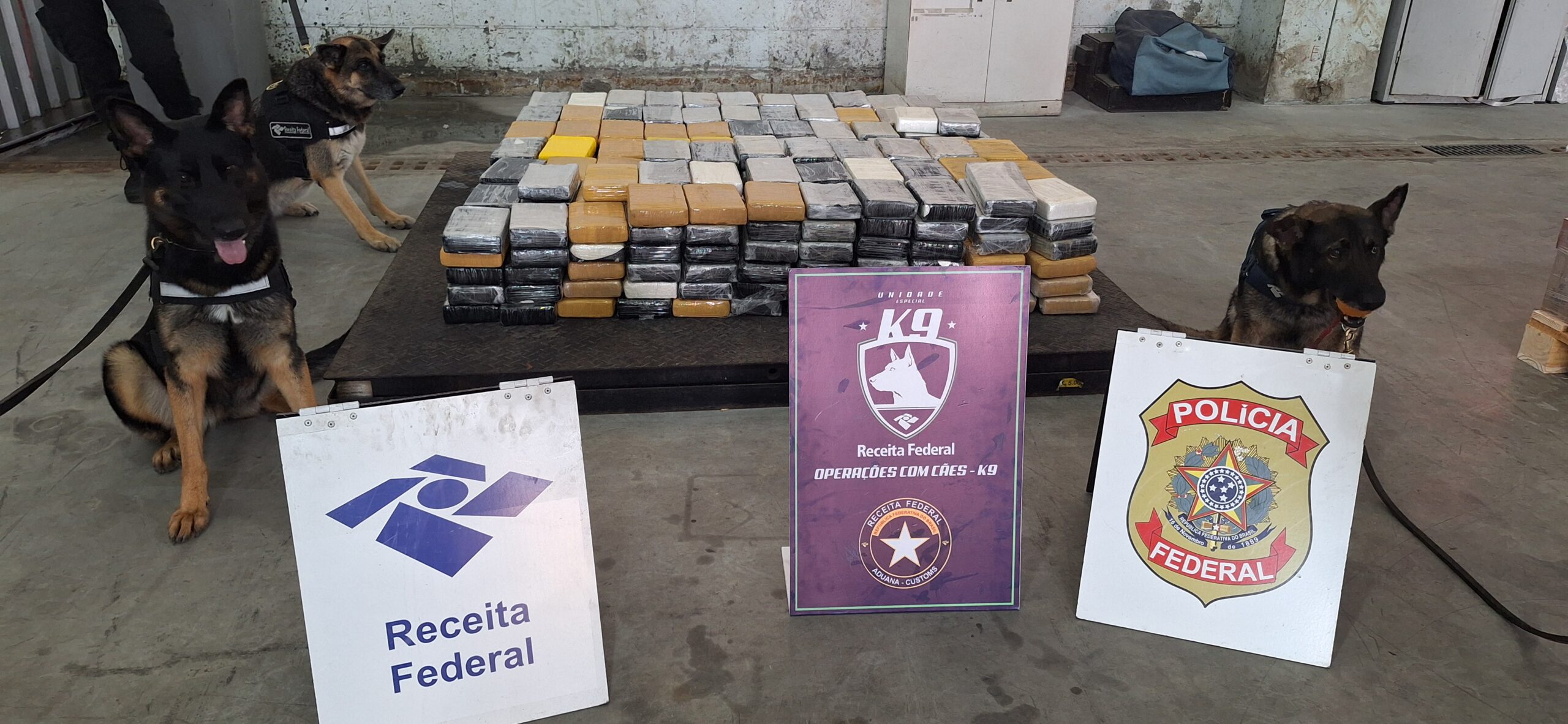
Brazil’s Federal Revenue Service seized 461 kilograms (about 1,016 pounds) of cocaine at the Port of Santos on Monday (Feb. 23), thwarting an attempt to ship the drugs overseas.
The cocaine was concealed within a 51-metric-ton shipment of paper and was discovered during routine customs surveillance and enforcement operations conducted by officials at the Santos customs office.
The cargo was stored in two containers comprising 104 wooden pallets. Authorities said the contamination occurred in one of the containers, where A4 paper packages had been replaced with bricks of cocaine.
According to export documents, the containers were scheduled for transshipment in Antwerp, Belgium, with the final destination listed as the United Kingdom.
Risk analysis and canine detection
Customs officials said cargo selection was based on objective risk management and analysis criteria, including scanner image inspections. The approach aims to ensure efficient foreign trade operations while preventing customs-related crimes at Latin America’s busiest port.
Drug-sniffing dogs also played a key role in the operation. During Monday’s inspection, three canine units from the Santos customs office alerted authorities to the presence of narcotics while conducting physical checks on selected shipments.
Federal police investigation
After confirming the presence of drugs, Brazil’s Federal Police were notified to carry out forensic procedures at the site and open a formal criminal investigation.
The case remains under investigation.
Source: Receita Federal
-
Ports and Terminals
Dec, 19, 2025
0
Port of Imbituba Ends 2025 With Major Works and Investments Redefining Operational Capacity
-
Ports and Terminals
Feb, 04, 2019
0
Chinese fishing port in Punta Yeguas faces opposition
-
Shipping
Jan, 24, 2022
0
Government bets on a controversial project to double waterway’s cargo capacity
-
Shipping
Oct, 06, 2020
0
MSC studies use of hydrogen and hydrogen-derived fuels