

Port of Rio Grande handles 85% of Rio Grande do Sul port cargo, spurring new investment
Mar, 20, 2026 Posted by Gabriel MalheirosWeek 202612
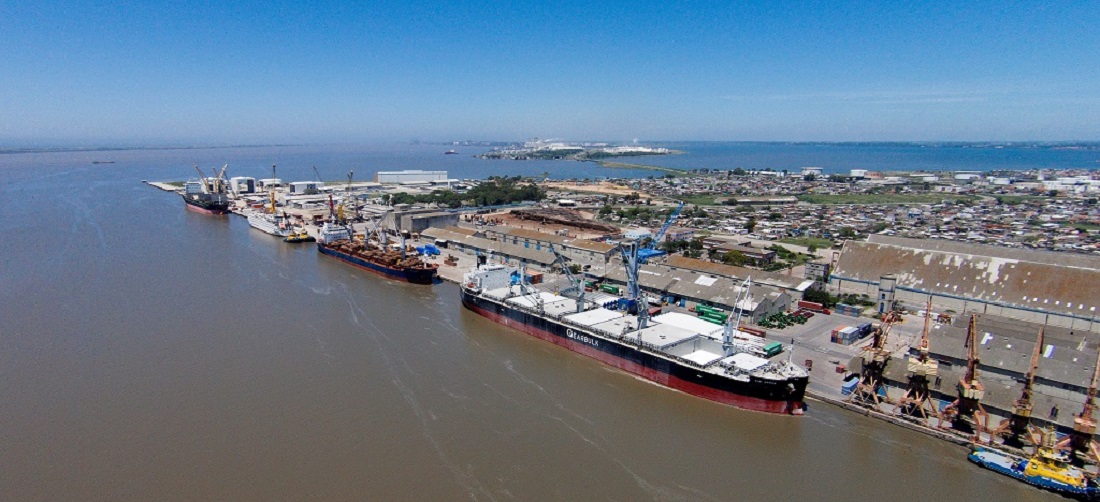
Handling nearly 85% of Rio Grande do Sul’s port cargo throughput, the Port of Rio Grande has cemented the city’s position as one of southern Brazil’s leading logistics and industrial hubs. Its recent performance, combined with a multi-billion-real investment pipeline, points to a new cycle of economic growth in the region.
The industrial district linked to the port area currently hosts 54 companies in operation. Of that total, 39% are tied to agribusiness, including chemical, food and shipbuilding industries. The diversification of activities is one of the factors underpinning the complex’s expansion.
“When we talk about port activity, cargo throughput is growing, largely because of what is being produced in the state, both in agriculture and in industry,” said Cristiano Klinger, president of Portos RS.
In January alone, the port handled 2.8 million tonnes of cargo, with 226 vessels calling at the complex. Compared with the same month in 2025, container throughput rose 41.26%, reinforcing the expansion trend.
The following identifies the primary outbound commodities shipped via long-haul international services in containers through the Port of Rio Grande during January 2026:
Top Exports via Port of Rio Grande | Jan 2026 | TEUs
Source: DataLiner (click here to request a demo)
“We have seen growth in both bulk cargo and containers. Last year, we surpassed 46 million tonnes handled, a significant increase that shows how the activity is evolving,” Klinger added.
The figures include operations at the public port, leased terminals such as Braskem, Tergrasa, Transpetro, Petrobras and Tecon, as well as private terminals including Bunge, Bianchini, Termasa and Yara.
On the international front, the port remains deeply integrated into global trade flows. In January 2026, imports totaled 665,000 tonnes, with China accounting for 26.78%, Argentina 20% and Germany 8%. Exports reached 1.4 million tonnes, with shipments bound for destinations including Indonesia, Bangladesh, South Korea, Vietnam and France.
City draws investor attention
Rio Grande’s logistics prominence has placed the city at the center of new investment plans. One of the main projects now underway is CMPC’s port terminal, part of a 27-billion-real package in the state aimed at pulp production and exports.
“The terminal is a joint venture between CMPC and Neltume Ports, with investment of more than 1.5 billion reais. We are now in the environmental licensing phase, with construction expected to start at the end of 2026 and be completed in 2028,” said chief executive Leonardo Maurano.
The project is expected to generate more than 1,200 construction jobs, around 450 direct operational positions and roughly 2,100 indirect jobs. Once production begins in 2029, that total could reach 5,000 jobs.
For Klinger, the combination of strategic location and multimodal infrastructure is decisive in attracting new projects.
“We have road, rail and inland waterway access, in addition to room for expansion, which increases our logistics potential,” he said.
Rio Grande Mayor Darlene Pereira said the city is working to facilitate the arrival of new companies.
“We are working to ensure faster licensing and attract new investment,” she said.
Energy transition and a new cycle
Another strategic project is the conversion of Refinaria Riograndense into a biorefinery, a move expected to position the city as a benchmark in renewable fuel production in Latin America. Estimated investment stands at $1 billion.
With the shift, the facility will phase out fossil fuels and begin operating with renewable feedstocks such as soybeans, canola and residual oils, strengthening the production chain.
According to Petrobras Chief Executive Magda Chambriard, the unit is expected to rank among the most advanced in the world in terms of technology and efficiency.
The combined pipeline of logistics, industrial and energy investments points to a broader shift in the city’s development profile.
“The focus is not just on building infrastructure, but on attracting companies, generating competitiveness and driving the economy,” Klinger said.
Backed by infrastructure, logistics integration and new investments, Rio Grande is reinforcing its position as one of the main economic hubs in Rio Grande do Sul and Brazil.
Source: GZN
-
Meat
Jun, 02, 2021
0
Live cattle from Brazil to be slaughtered in the Emirates
-
Meat
Apr, 11, 2022
0
Brazilian beef exports exceeded 200,000 t in March, breaking yet another record
-
Meat
Dec, 11, 2025
0
Brazil’s pork exports see the largest monthly drop since 2015
-
Trade Regulations
Aug, 25, 2025
0
Alckmin says Trump tariffs impact 3.3% of Brazilian exports