


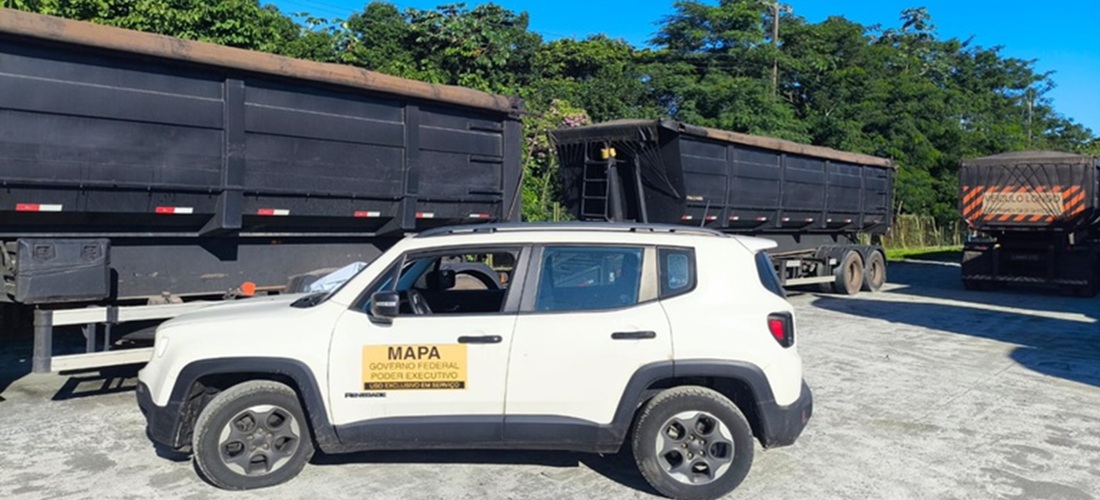
Federal Police seize 48 tonnes of sugar suspected of adulteration at Port of Paranaguá
May, 14, 2026 Posted by Gabriel MalheirosWeek 202620
A joint operation by Brazil’s Ministry of Agriculture and Livestock (Mapa) and the Federal Police resulted in the seizure of about 48 tonnes of VHP sugar suspected of adulteration in the export corridor at the Port of Paranaguá, in Paraná.
During a preliminary test carried out when samples were collected, inspectors identified the presence of insoluble materials, apparently sand, in amounts above the legal limit. The finding indicated possible cargo adulteration and noncompliance with the quality standards required for the product.
This type of analysis is used to verify sugar purity and identify possible contamination or adulteration.
Following the suspicion, federal agricultural inspectors from Paraná’s Plant-Origin Products Inspection Service collected samples and sent them to the Federal Agricultural Defense Laboratory in Goiás for analytical confirmation and the adoption of the appropriate administrative measures.
The operation is part of an ongoing effort involving the Federal Police, port authorities and the Ministry of Agriculture and Livestock to combat fraud in export cargoes. The initiative has been under way since 2024. The joint work has strengthened the security, traceability and credibility of operations at the Port of Paranaguá, particularly for agricultural bulk cargoes such as soybeans, soybean meal and sugar.
If the presence of foreign matter is confirmed at levels incompatible with regulatory standards, the cargo may be downgraded and deemed unfit for consumption under federal law. Confirmation of fraud could also lead to administrative sanctions and criminal proceedings.
Brazil is currently the world’s largest sugar producer and exporter, accounting for about 25% of global production and roughly 50% of world exports. In 2024, the country exported a record 38.24 million tonnes, generating more than US$18.6 billion in revenue.
Inspection operations are essential to ensure the integrity of exported cargoes, preserve international market confidence in Brazilian agricultural products and protect the credibility of the country’s inspection system. Fraud, adulteration or contamination in export-bound cargoes can jeopardize strategic markets, increase sanitary requirements and cause economic and reputational losses for Brazilian agribusiness.
The company responsible for the cargo was fined. Because there is no traceability for the material mixed with the sugar, the product was considered a risk to agricultural defense. As a result, Mapa is expected to order the cargo destroyed, as provided for under current environmental legislation.
Source: MAPA
-
Automotive
Jun, 17, 2022
0
Three Ro-Ro ships dock in Valparaíso in less than a month
-
Other Cargo
Aug, 16, 2024
0
Brazilian furniture and mattress exports surge in first half of the year
-
Ports and Terminals
Mar, 30, 2021
0
Striking truck drivers at Salvador port manage 18% increase in freight rates
-
Meat
Aug, 27, 2021
0
Beef restrictions in Argentina may impact global market, says Rabobank