


MSC drops another Montevideo service, renewing concerns over port costs
Jun, 18, 2026 Posted by Gabriel MalheirosWeek 202625
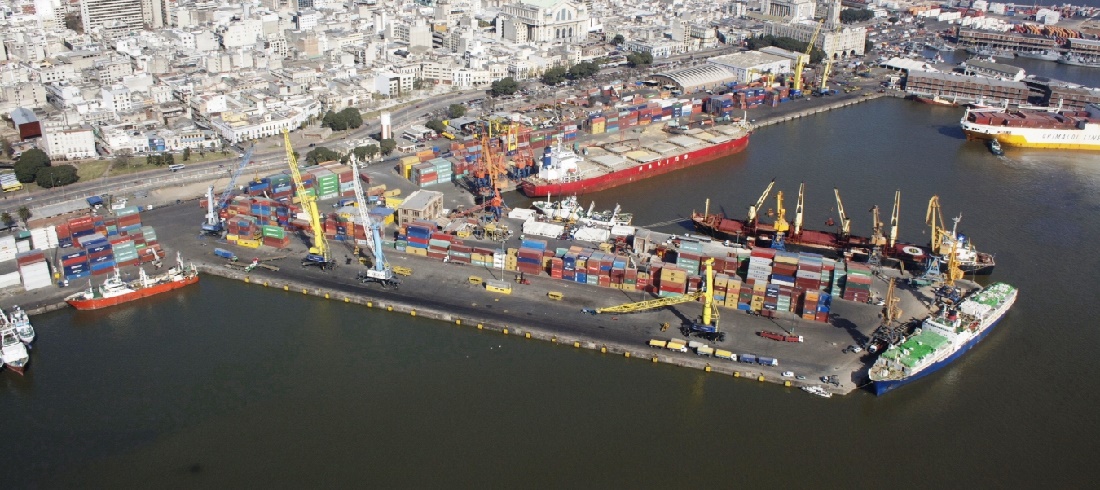
Mediterranean Shipping Company (MSC) has informed Terminal Cuenca del Plata and Uruguayan port authorities that it will stop operating another service at the Port of Montevideo, in a fresh sign of pressure on the competitiveness of the country’s top container terminal.
The decision affects the Montevideo-U.S. service, a weekly connection with the U.S. Atlantic coast that called at the specialized container terminal. According to Búsqueda, the service will now call Rio de Janeiro for import cargo and load exports in Santos.
The route generated 14,764 moves for TCP in 2025 and ranked as the terminal’s eighth-largest service by activity. MSC described the change as temporary, but the reason cited by the carrier again brought attention to a recurring issue: high operating costs in Montevideo.
The decision adds to a string of negative signals for the Uruguayan port. Over the past year, MSC had already shifted part of its operations to Navegantes, Brazil, and moved transshipment cargo from Paraguay to Buenos Aires, where it also operates its own terminal.
The move is significant because maritime connectivity depends on the number of regular services that include Montevideo in their rotations. Each lost call reduces options for exporters and importers, raises logistics costs and weakens the port’s position as a regional platform.
Official data from Uruguay’s National Ports Administration (ANP) show the scale of the decline. The Port of Montevideo handled 634,506 containers in 2024. In 2025, volume fell to 479,392, a 24.5% drop in one year.
The decline was even sharper at the specialized container terminal. Cuenca del Plata handled 331,437 containers in 2025, down from 466,795 in 2024, a drop of nearly 29%.
The steepest fall came in transshipment, a key business for Montevideo’s regional role. According to ANP data, transshipment containers fell to 182,915 in 2025 from 355,412 in 2024, a decline of almost 49%.
That figure helps explain the concern among operators, exporters and shipping agencies. Montevideo has not only lost domestic volume; it has also lost part of the regional cargo that for years supported its ambition to become a logistics hub for the Río de la Plata.
The first four months of 2026 showed a partial recovery from the same period in 2025. ANP reported 166,625 containers handled between January and April, up from 154,163 a year earlier. Even so, volume remained 24% below the level recorded in January-April 2024.
At Cuenca del Plata, the contrast is clearer. The specialized terminal handled 116,409 containers from January through April 2026, virtually unchanged from the same period in 2025, but 30% below the first four months of 2024.
According to Datamar data, wood was the leading commodity among the cargoes handled at the port. The chart below shows the other products that stood out most in the first four months of 2026:
Top Exported Products | Uruguay | Jan 2023 – Apr 2026 | WTMT
| wdt_ID | wdt_created_by | wdt_created_at | wdt_last_edited_by | wdt_last_edited_at | DTM HS4 DESCRIPTION | YTD Value | Last Year | %Growth | %MarketShare |
|---|---|---|---|---|---|---|---|---|---|
| 1 | I_write_a_lot | 18/06/2026 05:02 PM | I_write_a_lot | 18/06/2026 05:02 PM | WOOD SAWN OR CHIPPED | 118.784 | 89.048 | 33.4% | 9.39% |
| 2 | I_write_a_lot | 18/06/2026 05:02 PM | I_write_a_lot | 18/06/2026 05:02 PM | FROZEN BOVINE MEAT | 102.506 | 108.610 | -5.6% | 8.10% |
| 3 | I_write_a_lot | 18/06/2026 05:02 PM | I_write_a_lot | 18/06/2026 05:02 PM | RICE | 92.390 | 90.684 | 1.9% | 7.31% |
| 4 | I_write_a_lot | 18/06/2026 05:02 PM | I_write_a_lot | 18/06/2026 05:02 PM | CHEMICAL WOOD PULP SODA OR SULPHATE | 68.108 | 43.633 | 56.1% | 5.39% |
| 5 | I_write_a_lot | 18/06/2026 05:02 PM | I_write_a_lot | 18/06/2026 05:02 PM | MILK & CREAM SWEETENED | 58.623 | 53.386 | 9.8% | 4.64% |
| 6 | I_write_a_lot | 18/06/2026 05:02 PM | I_write_a_lot | 18/06/2026 05:02 PM | WOOD IN THE ROUGH | 46.807 | 38.398 | 21.9% | 3.70% |
| 7 | I_write_a_lot | 18/06/2026 05:02 PM | I_write_a_lot | 18/06/2026 05:02 PM | PLYWOODVENEERED & LAMINATED | 33.409 | 30.865 | 8.2% | 2.64% |
| 8 | I_write_a_lot | 18/06/2026 05:02 PM | I_write_a_lot | 18/06/2026 05:02 PM | FROZEN FISH | 32.256 | 29.311 | 10.0% | 2.55% |
| 9 | I_write_a_lot | 18/06/2026 05:02 PM | I_write_a_lot | 18/06/2026 05:02 PM | FOOD RESIDUES UNFIT FOR HUMAN CONSUMPTION | 24.145 | 29.216 | -17.4% | 1.91% |
| 10 | I_write_a_lot | 18/06/2026 05:02 PM | I_write_a_lot | 18/06/2026 05:02 PM | BOVINE MEAT | 14.619 | 14.147 | 3.3% | 1.16% |
Source: DataLiner (click here to request a demo)
The dispute combines several factors. Shipping lines point to operating costs and contract conditions. Exporters question tariffs they consider too high. Logistics operators warn of the loss of regional transit cargo, especially Paraguayan shipments that have shifted toward Buenos Aires or Brazilian ports.
Infrastructure and operational issues are also part of the debate. Dredging returned to the center of the discussion after periods of inactivity involving ANP’s only operational dredger and delays in deepening and maintenance work. To compete with regional ports, Montevideo needs a deeper draft, predictability and the ability to receive larger vessels without restrictions.
Other parts of the port business are also facing pressure. Foreign fishing fleets have reported interruptions in diesel supply by state-owned fuel supply company ANCAP, raising concern over possible vessel diversions and the loss of related port services.
The political and business backdrop also matters. The terminal in Cuenca del Plata, operated by Katoen Natie with ANP holding a minority stake, is carrying out an expansion project while negotiating a new collective bargaining agreement with its workers. The company says the expansion will improve capacity and efficiency, but customers are comparing the total cost of operating in Montevideo with regional alternatives.
The central question is whether the port can retain and recover transit cargo. For years, Montevideo has sought to attract cargo from Paraguay, southern Brazil and Argentina. That strategy required competitive tariffs, frequent services, sufficient draft, labor stability, operational efficiency and clear rules.
Each lost call reduces the port’s operating density and erodes its appeal as a regional hub. Winning that cargo back later may be harder than preventing it from leaving in the first place.
Adapted from UY.press
-
Aug, 17, 2021
0
The US exports the same amount of beef as Brazil, but earns much more
-
Grains
Mar, 09, 2023
0
Rising temperatures to affect bean production in Brazil
-
Grains
Sep, 14, 2022
0
Argentina farmers sell 15% of total soy crop in a week, Rosario Exchange says
-
Other Cargo
Jul, 04, 2022
0
Cotton: Brazil ships 62.733K tonnes in June