


Tariffs on Brazil may benefit China, companies tell USTR
Jul, 08, 2026 Posted by Sylvia SchandertWeek 202628
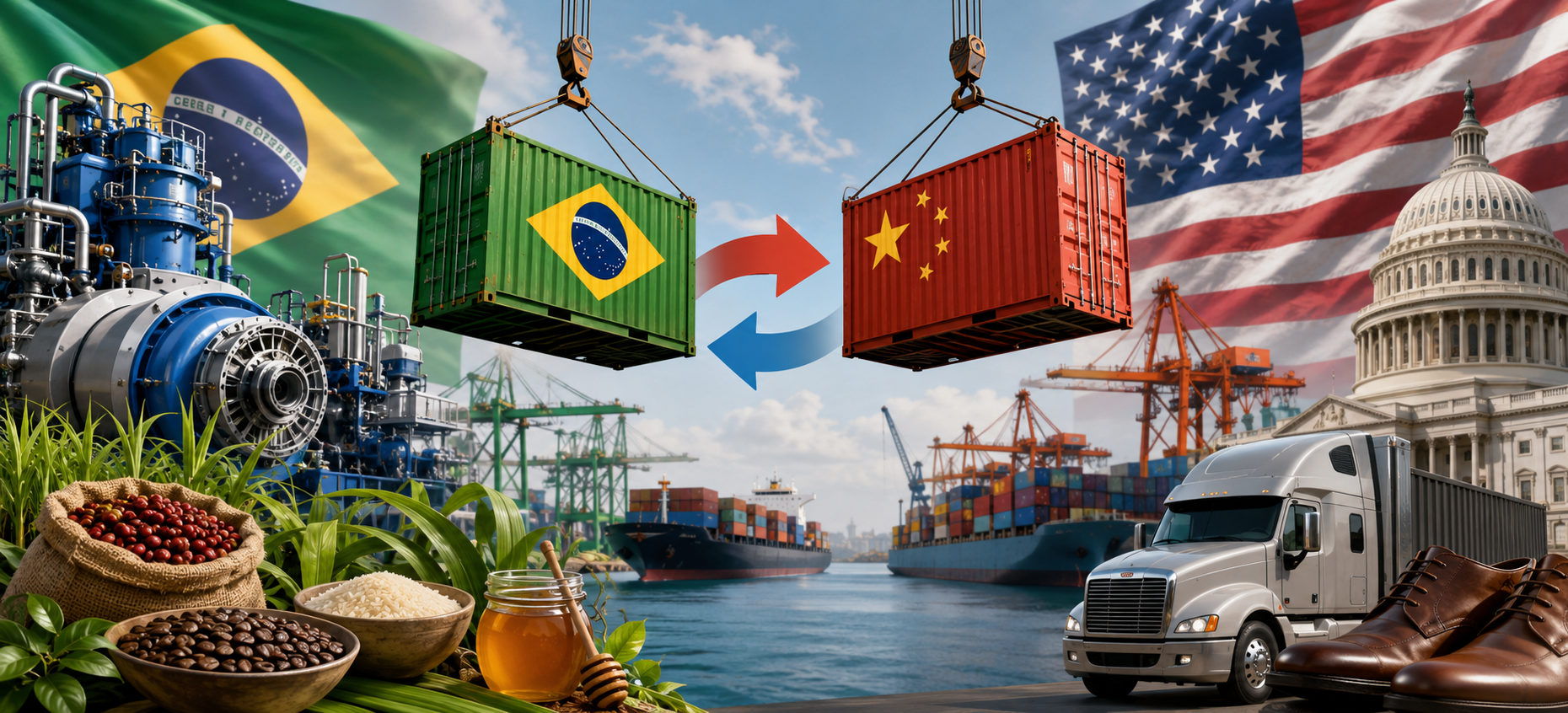
The possibility that Brazilian exports to the United States could be replaced by shipments from China if new U.S. tariffs are imposed on Brazil was one of the warnings raised by Brazilian business representatives on the second day of hearings at the Office of the U.S. Trade Representative (USTR).
“We brought this argument that taxing Brazil on machinery and equipment could displace the country and that China could be the one to occupy [that space]. Other sectors also made this argument. For some, only China can replace Brazil, but in others, India and South Korea, for example, could also do so,” said Patrícia Gomes, executive director for foreign markets at Abimaq, the association that represents machinery and equipment manufacturers.
Gomes attended the hearing on the recommendation made in June by the USTR to impose a 25% tariff on some goods imported from Brazil over trade practices the U.S. administration considers “unfair.”
According to Abimaq, the questions raised included whether there was domestic production in the United States of the material exported by Brazilian industry and whether that output was enough to meet U.S. demand.
“But we talked about how difficult it is to replace the kind of machinery supply we provide, since these are customized, made-to-order products that meet extremely strict certifications that are difficult to obtain,” she said.
The chart below shows the main commodities exported to the United States by volume in the first five months of 2026. The data was collected and processed by Datamar.Top Exports to the United States | Jan-May 2026 | WTMT
Source: DataLiner (click here to request a demo)
Supply diversification
For the footwear industry, Brazil as a supplier helps diversify shipments to the United States through a “reliable” Western source of supply. According to Abicalçados, the association that represents the sector, the U.S. consumes more than 2 billion pairs of shoes a year and produces about 20 million pairs, or roughly 1% of domestic consumption. China currently leads supply to the U.S. market, accounting for 48% of total volume, the association said.
An additional tariff “would tend to increase costs, reduce supply diversity, and reinforce the concentration of U.S. supply sources in already dominant origins, running counter to U.S. interests in diversification,” Letícia Sperb Masselli, relationship and business manager at Abicalçados, said in a statement. Sperb took part in the hearing.
Welber Barral, a former Brazilian foreign trade secretary and partner at law firm Barral Parente Pinheiro, said the hearing was “quite formal.”
“The subject was focused on documents, data, and confirmation of data, so it was much more technical,” he said.
His firm represented entities including the Brazilian Tree Industry (Ibá), the Sugarcane and Bioenergy Industry Union (Unica), and the Brazilian Instant Coffee Industry Association (Abics) in the discussions.
Abimaq argued that 82% of Brazilian machinery and equipment exports in 2024 took place between companies in the same economic group—those headquartered in Brazil with subsidiaries in the United States, or vice versa. For the association, the tariff would affect Brazilian companies investing in U.S. territory and U.S. companies investing in Brazil.
“This type of trade complements U.S. production,” Gomes said.
She said the U.S. trade surplus of $1.2 billion with Brazil in national machinery and equipment trade balance was also mentioned.
Abicalçados said “all the explanations were favorable to Brazil, pointing above all to the tariff impact on the country, which does not have significant footwear production,” Sperb said.
Another person who attended the meeting and spoke on condition of anonymity said they believe that, based on the hearing, the U.S. government will merely correct data flagged by industry.
“Clearly, the USTR will basically correct some things we pointed out, but the overall conclusion will probably be the same [to impose a tariff], I don’t know whether at 25%. In fact, what it depends on now is the Brazilian government’s negotiation, because the final decision rests with [Donald] Trump,” the person said.
Coffee sector
In the coffee panel, Cecafé, the Brazilian Instant Coffee Industry Association (Abics), and the U.S. National Coffee Association (NCA) argued for keeping green, roasted, and ground coffee exempt from the 25% tariff and extending the benefit to instant coffee.
In its presentation, Abics argued that instant coffee is essential to several areas of the U.S. economy, including ready-to-drink beverages, bakery products, confectionery, dairy, and institutional food services. The association cited studies pointing to annual growth of 5.6% between 2025 and 2030 in the U.S. ready-to-drink coffee market.
Abics stressed the need to ensure a stable and affordable supply of instant coffee. According to the association, Brazil accounts for 22% of U.S. instant coffee imports. The additional 25% tariff would pressure corporate margins and inflation in the country, the entity said.
“Mexico and Brazil account for almost 60% of total imports, while Mexican prices are about 1.5 times higher than Brazilian prices,” said Fabio Sato, institutional relations director at Abics, who took part in the hearing.
Honey, rice, and agribusiness
The honey export sector also took part in the hearings. Brazil exports around 40,000 tonnes of organic honey a year to the U.S., which has no local production of that honey category. The sector is already subject to a 12.5% import duty, and with the 25% surcharge proposed by the Trump administration, the total tax would reach 37.5%.
“Brazil meets 75% of demand and is the main supplier of organic honey to the United States,” said João Marcelo Messas, director of the Brazilian Honey Exporters Association (Abemel). Abemel estimates that every dollar of imported organic honey generates $5.50 in business for the U.S. economy.
Messas said he is optimistic about the progress of the USTR investigation.
“We met the deadlines and answered the questions very clearly, which was very well received by the committee that evaluated us,” he said.
He added that, in addition to support from the Brazilian export sector during the hearing, companies affected in the United States also defended an exemption from the 25% tariff.
“I view everything that happened positively, but still without any guarantee that we will get a decision in our favor.”
The rice industry also took part in the first day of hearings. Andressa Silva, executive director of the Brazilian Rice Industry Association (Abiarroz), said the atmosphere at the hearing was receptive.
“We talked about the potential impact on small and medium-sized U.S. companies that serve the Latino community niche, as well as the entire value chain involved—logistics, transportation, storage—and the potential increase in costs for U.S. consumers.”
The Confederation of Agriculture and Livestock of Brazil (CNA), represented by Fernanda Maciel Carneiro, pushed back against the idea that illegal deforestation is concentrated in an isolated area and does not represent Brazilian agriculture and livestock production. CNA presented data indicating that deforestation in the Legal Amazon fell 56% between 2011 and 2025.
Biofuels
In the biofuels segment, the U.S. government accuses Brazil of harming ethanol trade through the application of tariffs. The Sugarcane and Bioenergy Industry Union (Unica) argued that Brazil’s tariff on imported ethanol follows the World Trade Organization’s most-favored-nation rule and is not retaliation against the United States.
The National Corn Ethanol Union (Unem), in turn, argued that U.S. ethanol lost ground in Brazil because of the exchange rate, logistics costs, and the rapid expansion of Brazil’s domestic corn ethanol industry.
The USTR has until July 15 to make its final decision.
Source: Valor International
-
Meat
Jul, 10, 2021
0
Pork exports set revenue record in June
-
Automotive
Feb, 11, 2019
0
Vehicle production falls in both Brazil and Argentina
-
Meat
Apr, 19, 2022
0
Brazilian pork exports feel the hit of the increased pork output in China
-
Other Cargo
Dec, 21, 2022
0
Brazil chemical imports fall back 10.3% in November to USD 5.8 bln