


Brazil set for record Hass avocado crop as exports fuel expansion
Jul, 14, 2026 Posted by Gabriel MalheirosWeek 202629
Brazil is expected to harvest its largest Hass avocado crop on record this year, with production projected to reach 60,000 metric tons, twice the volume recorded in 2025, according to Abacates do Brasil, an association representing growers, agricultural specialists and nursery operators.
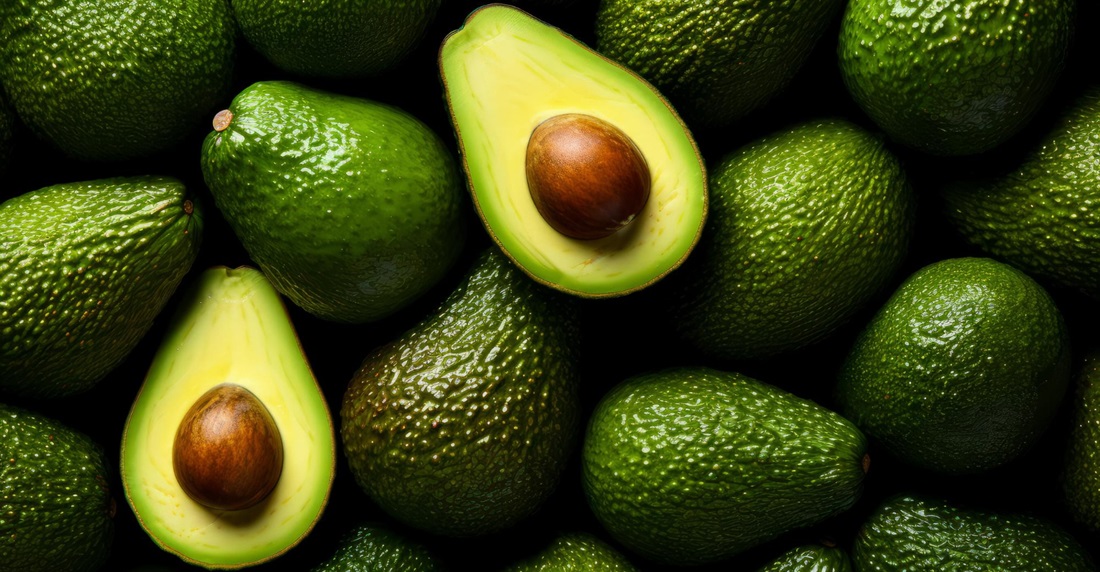
Exports account for approximately 90% of the country’s Hass avocado production and have encouraged growers to expand their orchards year after year. Known locally simply as “avocado,” the Hass variety is smaller than the tropical avocados traditionally consumed in Brazil and has dark, rough skin and firmer flesh.
Hass avocado trees begin bearing fruit in their fourth year and require cooler temperatures and higher elevations. Productivity declined over the past five years because of adverse weather, including excessive heat and insufficient rainfall during the fruit-setting period, Abacates do Brasil President Rodrigo de Paiva Stockler Barbosa said.
Jaguacy Avocado, based in Bauru in São Paulo state, pioneered commercial Hass avocado cultivation in Brazil and is now the country’s largest producer and exporter. The company lost 70% of its crop in 2025 because of a lack of rainfall. With more favorable weather this year, it expects its largest harvest to date.
In addition to improved yields, national production is set to rise as recently planted orchards begin bearing fruit. Brazil’s statistics agency IBGE estimates that the country has 18,100 hectares planted with avocados, although its figures do not distinguish between tropical and Hass varieties.
Abacates do Brasil estimates that Hass avocado orchards will cover between 10,000 and 11,000 hectares this year. The area stood at 9,000 hectares four years ago and just 1,000 hectares a decade ago. Production is concentrated in São Paulo and Minas Gerais states, where harvesting generally runs from February through September.
Hass avocados are valued for their fiber and potassium content, as well as vitamin E, vitamin B6, monounsaturated fatty acids, healthy fats and antioxidants. They also have a logistical advantage over tropical avocados: a shelf life of up to 45 days, making it possible to export them by sea.
In the year-to-date period from January to May 2026, Brazil exported 2,352 TEUs of avocados, according to Datamar data. That volume represents an increase of 161% compared with the same period a year earlier. The chart below compares the figures with previous years:
Avocado Exports | Jan-May | 2022 – 2026 | TEUs
Source: DataLiner (click here to request a demo)
Pioneering production
Commercial Hass avocado cultivation at Jaguacy Farm began 51 years ago, when agronomist Paulo Leite de Carvalho and his wife, Maria Cristina Falanghe Carvalho, launched a fruit-based reforestation project that included avocado trees.
The couple later shifted their focus toward the Hass variety after discovering its high level of consumption in Europe, according to their daughter, Ligia Falanghe Carvalho, who is now a managing partner at the company.
The family initially planted 30 hectares. Today, the second generation, which also includes Ligia’s siblings Vitor, Tiago and Júlia, farms 1,200 hectares in Bauru and Timburi, both in São Paulo state, and Roca Sales in Rio Grande do Sul. Yields can reach 12 metric tons per hectare.
Jaguacy also has export partnerships with approximately 30 growers in Minas Gerais, Paraná, Espírito Santo and Goiás states, whose orchards cover an additional 1,500 hectares.
“We invested in micro-sprinkler irrigation to create a microclimate so the trees are less affected by the heat. Now, when temperatures reach 28 degrees Celsius, we make it rain in the orchard,” Carvalho said.
She expects Jaguacy to finish this year’s harvest with production of 6,000 metric tons, above its annual average of 4,000 metric tons. Revenue is projected to reach R$150 million, twice the level recorded last year.
The company has also acquired 300 hectares in Rio Grande do Sul in an effort to extend its production window, which traditionally overlaps with Peru’s. Peru is South America’s largest producer and exporter of Hass avocados.
Jaguacy already invests in early-season orchards, but production in Rio Grande do Sul, where the first harvest is expected this year, should allow the company to offer fruit for export from November through February, when global supplies are lower and prices tend to be stronger.
The company expects to export 800 containers, equivalent to 16,800 metric tons, to Europe, Argentina, Uruguay, Chile and India this year.
One of the industry’s goals is to gain access to the United States, the world’s largest avocado importer. That market remains unavailable to fresh Brazilian avocados because the necessary trade arrangements have yet to be concluded.
Jaguacy has diversified its business to include avocado-derived products and currently exports small volumes of pulp and avocado oil to the United States.
According to Carvalho, several investment funds and major growers of other fruits are now interested in entering Brazil’s Hass avocado industry.
“Production should grow significantly over the next few years,” she said. “Brazil is only the world’s 10th-largest producer—the ranking is led by Mexico—but it has the potential to become the third-largest very quickly. However, exporters are essential to the industry’s survival because the domestic market still needs to be developed.”
Jaguacy employs 300 workers during the harvest. It also operates its own nursery, which can produce 100,000 seedlings annually through a partnership with South Africa-based Westfalia, and a fruit processing and packing facility in Bauru where 60% of operations are automated.
According to the company, GlobalG.A.P. certification provides production traceability, while GRASP and SMETA certifications cover social responsibility standards.
Strong expectations for the industry
Abacates do Brasil President Rodrigo Stockler Barbosa also owns Milênio Fruits, which began investing in Hass avocado production in 2017 in Ibiá, in western Minas Gerais’ Triângulo Mineiro agricultural region.
The company now has 104 hectares planted with Hass avocados. Barbosa also grows 10 hectares of the Margarida tropical avocado variety, in addition to oranges.
He expects to harvest 850 metric tons of Hass avocados this year, with yields of approximately 12 metric tons per hectare when only mature orchards are considered.
Milênio exported 20 containers to Europe last year and had expected to increase shipments in 2026. However, a hailstorm that struck the farm in November damaged the crop, and exports are now expected to decline to five containers. For 2027, the company projects shipments of 35 loads of 21 metric tons each.
According to Barbosa, Milênio invests in irrigation, fertigation, nutritional monitoring through leaf and soil analysis, scheduled pest and disease management, technical support and yield monitoring for individual sections of its orchards.
The favorable outlook has attracted new growers in recent years, including Adilson Penariol, a former president and current chief financial officer of Abacates do Brasil.
Penariol entered the industry in 2020 when he became chief executive of Green Super Food, a Chilean company that already operated avocado farms in Colombia and had decided to invest in Brazil.
He left the company two years later, joined a group of investors and acquired properties in Cristina, in southern Minas Gerais. They established Avoprime with an initial 40 hectares of Hass avocado orchards.
The company now has 110 hectares under cultivation and plans to reach 300 hectares over the next few years. Penariol expects Avoprime’s first harvest this year, with estimated yields of between 3 and 4 metric tons per hectare.
“Hass avocado production does not have the same degree of informality found in the tropical avocado market. It requires a high level of professionalism, but it also makes it possible to develop export markets, build international partnerships and expand in the domestic market,” Penariol said.
The fruit’s long shelf life allows it to be shipped in containers, unlike tropical avocados, which can only be exported over short distances by air in small boxes.
“In addition, Hass accounts for 95% of global avocado consumption,” Penariol said, adding that Avoprime has invested approximately R$17 million in the crop.
Growers say the industry’s main bottleneck is labor availability. Hass avocados must be picked by hand to preserve fruit quality, prevent mechanical damage and meet export-market standards.
In addition to opening new overseas markets, the industry is seeking to develop domestic consumption. Abacates do Brasil organizes promotional campaigns and tasting events aimed at “teaching” Brazilian consumers how to eat the fruit.
Low productivity remains a challenge
Osvaldo Kioshi Yamanishi, an agronomist and fruit-growing professor at the University of Brasília who has worked with Hass avocados for more than 20 years, said production is expanding more slowly than he had expected in Brazil.
According to Yamanishi, Brazil exports over an entire year roughly the volume consumed in the United States in a single day. Several companies in Peru and South Africa each export volumes equivalent to Brazil’s total shipments.
He identified several obstacles preventing more substantial growth. Brazil’s labor system and lack of public policies discourage foreign investment, while growers invest too little in genetics and cloned seedlings, limiting tree productivity. The country also produces fruit during the period of greatest global supply, and many orchards are not fully irrigated.
“In Peru, where major investment funds have entered the avocado sector, at least 10 companies have more than 1,000 hectares each,” Yamanishi said. “The country also has more favorable climate and production conditions than Brazil’s growing regions, and all orchards are fully irrigated.”
Peru exported 722,000 metric tons of avocados last year, generating more than $1.3 billion in revenue. Avocados were the country’s third-largest agricultural export by value, behind blueberries and grapes. Shipments are projected to reach 741,529 metric tons this year.
By comparison, Brazil exported 25,000 metric tons, generating revenue of $36.3 million.
Yamanishi said another weakness in Brazil is the lack of vertical integration. Jaguacy, which operates both a packing facility and an avocado oil mill, is an exception and can therefore achieve strong results even in years of lower productivity.
According to the professor, a strong commercial yield would be approximately 20 metric tons per hectare.
Source: Globo Rural
-
Grains
Jan, 05, 2026
0
Argentina sets historic record in wheat exports
-
Meat
Feb, 11, 2025
0
Meat industry expects export growth with Suriname market opening
-
Ports and Terminals
Feb, 15, 2023
0
Record corn exports cause 50% growth in handling at the Port of São Francisco do Sul
-
Ports and Terminals
Jan, 17, 2022
0
Omicron cases detected in Shenzhen and Beijing