


Middle East tensions disrupt Brazilian agribusiness exports and drive logistics costs higher
Jul, 27, 2026 Posted by Gabriel MalheirosWeek 202631
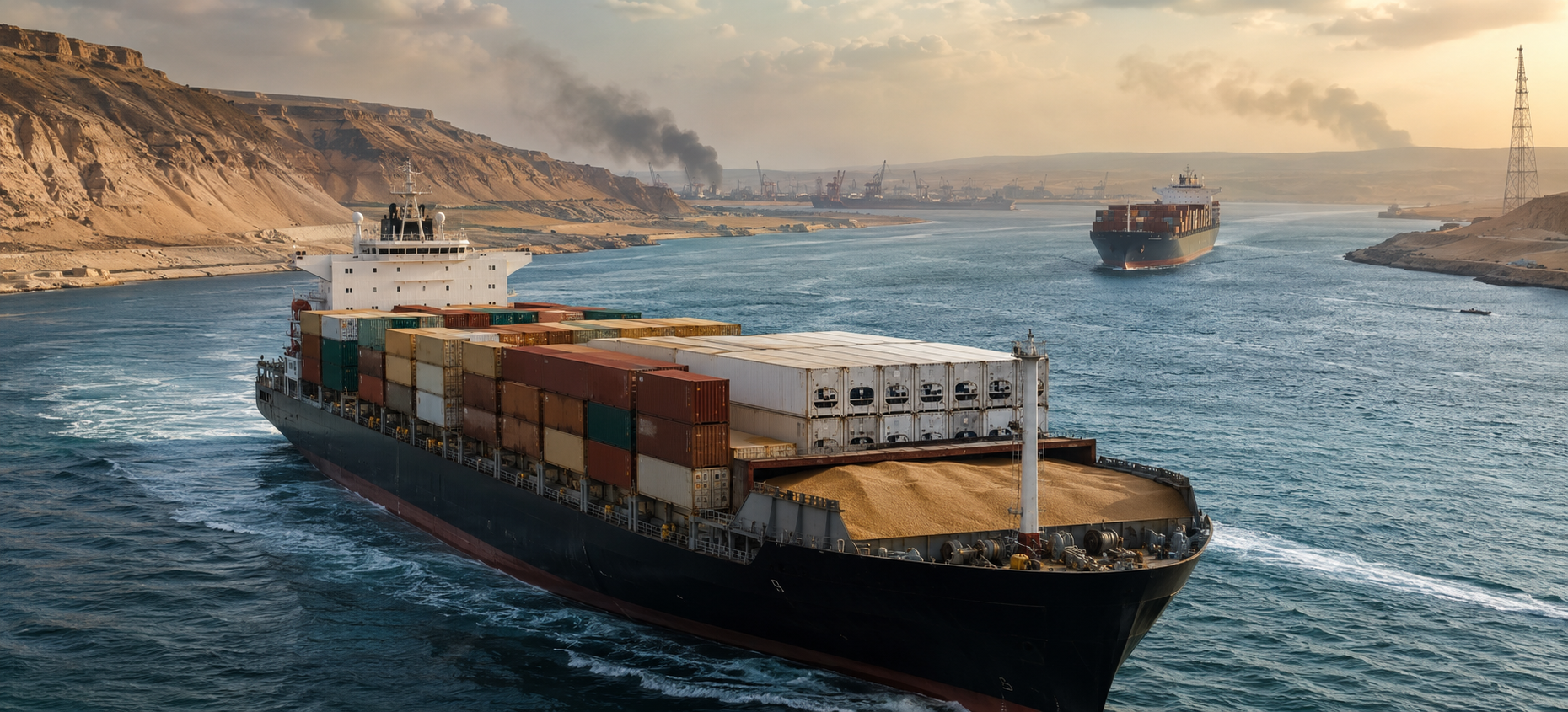
A new escalation in the Middle East is making it harder and more expensive for Brazilian farm exporters to serve the region, as threats to shipping mount in both the Strait of Hormuz, the entrance to the Persian Gulf, and the Bab el-Mandeb Strait, which links the Indian Ocean with the Red Sea.
The latest tensions have already forced a vessel carrying Brazilian soybeans to halt its voyage as it approached the region. Meatpackers are also expected to make greater use of alternative routes, including services through the Suez Canal, Valor Econômico reported.
Exporters had increasingly turned to Bab el-Mandeb as an alternative to the Strait of Hormuz to reach Saudi Arabia and other Middle Eastern markets. Shipping through Hormuz, between Iran and the United Arab Emirates, has fallen sharply since U.S. and Israeli attacks on Iran began in March, with traffic declining further over the past week.
Now, Yemen’s Iran-aligned Houthi movement is threatening vessels transiting Bab el-Mandeb, placing the alternative route under pressure as well.
A vessel carrying Brazilian soybeans to the Middle East suspended its journey last week while awaiting further developments in the geopolitical situation, a trader told Valor.
Brazilian poultry exporters are monitoring conditions around Bab el-Mandeb and other regional shipping lanes to maintain supplies to the Middle East, said Ricardo Santin, president of the Brazilian Animal Protein Association, or ABPA. The region is the leading destination for Brazilian chicken exports.
One option would be to increase shipments through Oman, particularly the ports of Salalah in the south and Sohar in the north, near the UAE coast. Cargo could then continue to its final destination by road.
Another alternative is Khor Fakkan in the UAE, located outside the Strait of Hormuz.
To reach Saudi Arabia, companies may increase their use of Mediterranean services that transit the Suez Canal before calling at Jeddah and King Abdullah ports on the Red Sea. Brazilian exporters have relied more heavily on that route since the conflict began, Santin said.
Aurora, Brazil’s third-largest poultry exporter behind MBRF and JBS, has been using Saudi ports as alternatives to Jebel Ali, which was reached through the Strait of Hormuz before the conflict.
Aurora’s cargo is discharged at Jeddah and then transported by road to the UAE and other countries, according to the cooperative’s logistics director, Ricardo Souza. The company is also using Khor Fakkan and Salalah.
Although Aurora has not yet detected an interruption in traffic through Bab el-Mandeb, Souza said a blockade would place even greater pressure on the region’s alternative routes.
“There would be even greater demand for ports outside Saudi Arabia, which are already operating at capacity. It would create chaos,” Souza said. “The only way to reach the Red Sea ports would be through the Mediterranean and the Suez Canal, which is a longer route, and we would have to determine whether carriers could reorganize their vessel rotations accordingly.”
“The impact of the escalation is not yet being felt because companies have been rerouting vessels around the whole of Africa for some time and have already incorporated that into their prices. But Bab el-Mandeb is not closed yet,” said Olivier Girard of infrastructure consultancy Macroinfra. “Should that happen, the impact on global trade would be enormous.”
Alternative ports struggle with rising demand
Ports such as Khor Fakkan and Jeddah are not equipped to handle the full volume of diverted container traffic, according to Aurora’s logistics director.
Long lines of trucks have formed outside the Port of Jeddah, while the growing reliance on road transportation has also made trucks more difficult to secure, Souza said.
Containers carrying Brazilian poultry to the Middle East are now taking more than twice as long to arrive as they did before the conflict, with transit times averaging around 80 days.
Some vessels have sailed to Khor Fakkan but were unable to discharge their cargo and had to return to Salalah, Souza said. Logistics costs have tripled.
According to Datamar, chicken meat exports to the Middle East fell 8.5% year to date in the January-May period. The chart below shows the monthly volumes recorded:
Chicken Exports to the Middle East | Jan 2023 – May 2026 | TEUs
Fonte: DataLiner (clique aqui para solicitar uma demonstração)
The latest tensions have already prompted shipping lines including Maersk and CMA CGM to introduce emergency surcharges on cargo in transit. Maersk has also suspended bookings to several Middle Eastern countries and halted some inland services in the region.
Costs could rise further. Girard estimates that the escalation could increase ocean freight rates on major Europe-Asia routes by 30% to 40% and add 19 days to voyage times. Shipping costs to Saudi Arabia could rise by 10% to 20%, he said.
Leandro Gilio, a professor at Brazilian business school Insper, identified three main drivers of higher logistics costs: rerouting, security risks that raise insurance premiums, and more expensive fuel.
The impact is even greater for chilled and frozen meat than for grains.
“These products cannot withstand significant delays,” Gilio said. “Any logistics problem could even compromise their quality.”
Higher freight costs are generally borne by importers. However, Gilio noted that many of the affected commodities have a relatively low value per metric ton.
“Any increase in logistics costs ultimately affects profit margins and demand for the products themselves,” he said.
The disruption is also affecting other agricultural supply chains. Brazilian cotton that previously reached Turkey through the Mediterranean before continuing through the Red Sea to Pakistan and Bangladesh will need another route.
According to Girard, those shipments will probably have to sail around southern Africa.
Source: Globo Rural
-
Coffee
Jun, 06, 2023
0
Coffee: May shipments close at 2351 million bags in Brazil
-
News Features
Jan, 04, 2022
0
SM Line buys into HMM
-
Meat
Oct, 22, 2021
0
Daily losses from Chinese meat embargo exceed US$ 10 million
-
Ports and Terminals
Apr, 09, 2026
0
Port of Santos fast-tracks gasoline vessel amid Iran war’s impact on Brazil fuel supply