


Imetame sets March 2027 target for first ship at Aracruz port
Aug, 27, 2026 Posted by Gabriel MalheirosWeek 202635
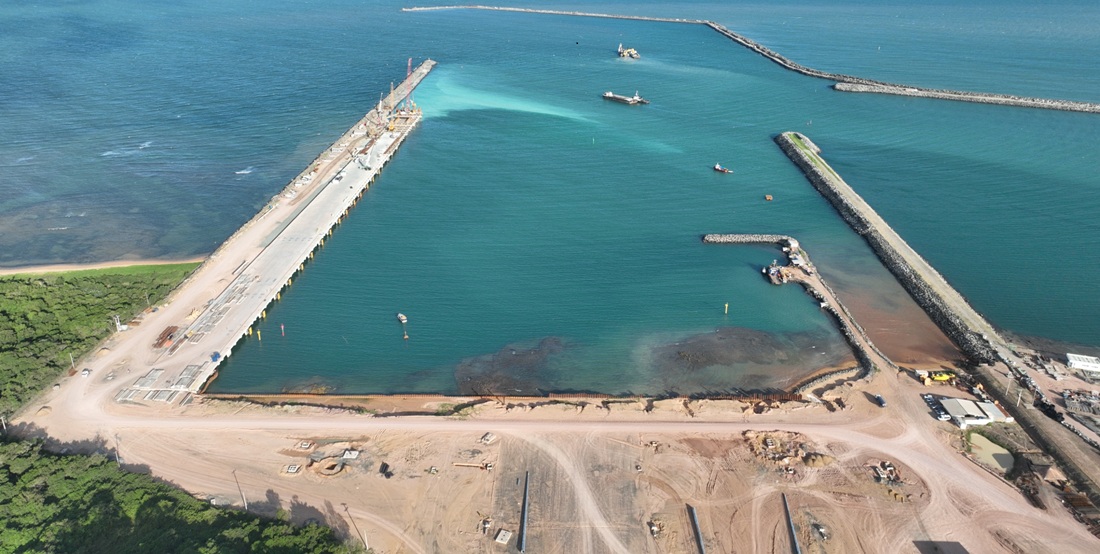
Imetame expects to receive the first vessel at its new port in Aracruz, in Brazil’s southeastern state of Espírito Santo, by March 2027, company founder Etore Cavallieri said. Speaking at the opening of the Cachoeiro Stone Fair on Tuesday night, August 25, Cavallieri narrowed the timeline for the Aracruz port project, turning a broader forecast into a target the market can now track.
“We expect to berth our first ship there by March next year,” he said. The first call will mark the port’s transition from the construction phase to commercial operations. Initial activity is expected to focus on general cargo, although the port may also begin handling some containerized cargo.
Port operations to start with general cargo
In its first phase, the port will mainly serve vessels equipped with their own cranes. That will allow Imetame to handle general cargo before the arrival of large quay cranes used in full container operations.
“The port will already be ready for ships that have cranes. For general cargo, at most, we are already there. And, of course, we will also be able to handle some containers starting in March,” Cavallieri said.
The full container terminal phase is expected in mid-2028. Imetame has partnered with Hanseatic Global Terminals, controlled by German carrier Hapag-Lloyd, which acquired a 50% stake in the project.
According to Hapag-Lloyd, the terminal will have 750 meters of quay, 17 meters of depth and capacity of around 1.2 million TEUs per year.
“HGT, which is our partnership with Hapag-Lloyd, is moving toward mid-2028,” Cavallieri said.
Cavallieri also reaffirmed the company’s ambition to prepare the terminal for vessels with capacity of up to 24,000 TEUs, among the largest containerships in the world. He acknowledged, however, that Espírito Santo does not yet generate enough cargo to attract ships of that size.
“Of course, it is not coming here now. The state does not have the cargo for that. But the port will be ready. In 10 or 20 years, it will be able to receive that ship,” he said.
Long lead times for port equipment
The gap between the first phase and the full container terminal is tied to equipment delivery schedules. Ship-to-shore cranes, the large cranes used to load and unload containers, take a long time to manufacture.
“The delivery of the ship-to-shore cranes takes 20 to 24 months. We have purchased them, and now we have to wait for delivery,” Cavallieri said.
Until then, the port will depend on vessels with their own cargo-handling equipment.
For Espírito Santo’s ornamental stone sector, the new structure could reduce trucking distances, costs and transport time. Today, a significant share of cargo from the state has to use terminals outside Espírito Santo or compete for space at other facilities.
Cavallieri closed his remarks with a joke to businesspeople from the stone and granite sector.
“We can set the date for the barbecue here today. It will be a container full of meat for the entire stone and granite sector,” he said.
License and cargo volumes remain challenges
Before the first vessel call, the port still needs to obtain its operating license, known in Brazil as the Licença de Operação, or LO.
“The license is still missing, because we have to finish the work before we can file the LO request,” Cavallieri said.
The company still needs to complete the required structures and clear environmental procedures. A previous public forecast had pointed to the start of general cargo operations by the end of 2026.
Another challenge is cargo generation itself. Port capacity does not automatically create cargo volumes, and Espírito Santo will need to attract shipments from Minas Gerais, Goiás, Bahia and other regions to support larger routes.
That will require contracts with exporters, road and rail access, customs infrastructure, competitive pricing and regular vessel calls. Without that network, the state could have a port prepared for giant ships but without enough scale to receive them.
Four milestones will show whether the plan has moved from ambition to execution: the operating license, the first vessel call by March 2027, regular general cargo handling and the launch of the full container terminal in mid-2028.
The Aracruz port project creates a rare infrastructure opportunity for Espírito Santo. The next challenge will be turning a high-end port structure into cargo volumes and long-term contracts.
Source: Folha de Vitória
-
Meat
Nov, 25, 2024
0
Brazil’s Poultry and Pork Exports Surge, Driving Up Christmas Dinner Prices
-
Ports and Terminals
Sep, 10, 2024
0
Cargo volume up 18% YTD for Pecém Port
-
Grains
Aug, 11, 2020
0
A record harvest this season is expected to cause Brazil´s wheat imports to fall
-
Ports and Terminals
Oct, 17, 2024
0
New terminal at Port of Santos seen as solution to increase port capacity