



Brazil approves 27 critical minerals for investment incentives
Nov, 06, 2026 Posted by Gabriel MalheirosWeek 202645
Brazil has approved a list of 27 critical and strategic minerals that will qualify projects for government investment incentives, as the country seeks to expand domestic mineral processing, add value to its exports and reduce dependence on imported raw materials.
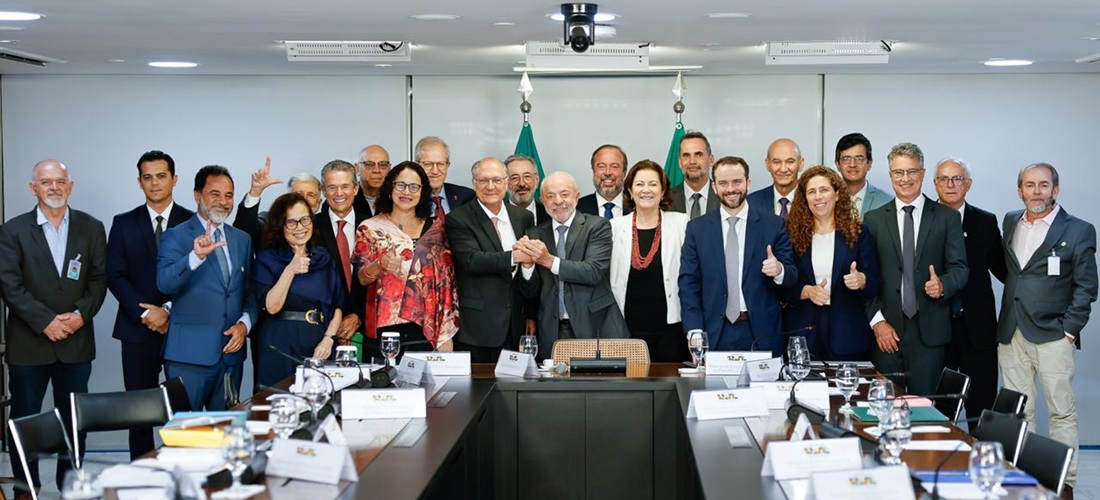
The decision was announced on November 5 following the first meeting of the National Council for the Industrialization of Critical and Strategic Minerals (CIMCE), established under Law No. 15,506/2026.
The list establishes which mineral resources will receive priority under Brazil’s National Policy on Critical and Strategic Minerals (PNMCE), enacted in September. It also sets eligibility criteria for financing mechanisms intended to support mineral exploration, extraction, processing and industrial development.
Projects involving the designated minerals must be registered in the National Project Registry and approved under the policy’s requirements before receiving government support.
Brazil critical minerals list prioritizes nine resources
The government divided the 27 minerals into three priority categories, taking into account geopolitical risks, supply concentration, domestic availability and their importance to Brazil’s economy and industrial development.
The highest-priority group includes nine resources: rare earth elements, graphite, lithium, nickel, cobalt, copper, manganese, silicon and uranium.
These materials play important roles in industries ranging from battery manufacturing and renewable energy to electronics and other advanced technologies.
The second category comprises tungsten, chromium, vanadium, tantalum, titanium, phosphate, potassium and sulfur.
The third category includes niobium, tin, iron, zinc, gold, magnesium, molybdenum, thorium, aluminum and platinum-group metals.
The classification will guide access to the policy’s financing and development mechanisms. The council may also update the list in future meetings.
Fertilizer minerals included to reduce import dependence
The inclusion of phosphate, potassium and sulfur is particularly significant for Brazil’s agricultural supply chain.
These inputs are essential to fertilizer production, an industry in which Brazil remains heavily dependent on foreign suppliers.
According to government figures, approximately 93% of the fertilizers used in Brazil originate abroad. The country imported 45.5 million metric tons of fertilizers in 2025, its highest volume on record.
The new mineral policy seeks to encourage domestic production and processing of fertilizer inputs, reducing exposure to international supply disruptions and fluctuations in overseas markets.
Agriculture Minister André de Paula emphasized the importance of including these materials in the national strategy.
“Our priority is to help translate this policy into more investment, greater domestic fertilizer production and less dependence on foreign supplies,” he said, highlighting the implications for Brazil’s food security.
New financing mechanisms target mineral production and processing
The policy introduces financing instruments aimed at expanding investment across the mineral supply chain.
Among them is the Mineral Activity Guarantee Fund (FGAM), designed to share investment risks and facilitate access to bank financing, particularly during the early stages of exploration and mining projects.
The federal government may contribute up to R$2 billion to the fund, alongside potential resources from state and municipal governments and private investors.
Another measure is the Federal Program for the Processing and Transformation of Critical and Strategic Minerals (PFMCE), which provides for tax credits of up to R$1 billion annually between 2030 and 2034.
The incentives are intended to support mineral processing, industrial transformation and the recovery of minerals from waste and discarded products, rather than focusing exclusively on raw mineral extraction.
Projects seeking support will be subject to eligibility requirements, including research and development commitments and environmental and social obligations.
Policy seeks greater value from Brazil’s mineral resources
The initiative reflects the government’s objective of expanding Brazil’s role in international mineral supply chains beyond the export of unprocessed materials.
While the country already holds an important position in global mineral trade, the new policy aims to encourage more processing and industrial activity within Brazil before products reach international markets.
The CIMCE will oversee implementation of the strategy, including the preparation of a national mineral development plan, the assessment of eligible projects and the identification of priority investments.
The council brings together representatives from 13 federal government bodies, alongside state, municipal, private-sector and academic representatives.
The government also instructed the Ministry of Development, Industry, Trade and Services to submit a proposal identifying priority mineral value chains for the national plan.
The approval of the list establishes a framework for future investment decisions, although the eventual impact on Brazil’s mineral exports and fertilizer import requirements will depend on the projects developed and their implementation.
Source: MAPA
-
Shipping
Sep, 17, 2026
0
BYD weighs new car carrier order as vehicle exports surge
-
Grains
Sep, 01, 2021
0
Agriculture falls 2.8% in the 2nd quarter and is the sector with the biggest drop in GDP
-
Blog News (ENG)
Apr, 16, 2025
0
China’s Exports Surge Ahead of U.S. Tariffs as Trade War Escalates
-
Grains
Jun, 08, 2020
0
Chinese imports of Brazilian soy grew 27.4% YoY in May