


Brazil opens 5 new agricultural markets in China, benefiting the state of Mato Grosso do Sul
May, 14, 2025 Posted by Denise VileraWeek 202520
During President Luiz Inácio Lula da Silva’s visit to China this Tuesday (May 13), Brazil reached a historic milestone in trade relations with the Asian country by securing the simultaneous opening of five new markets for Brazilian agricultural products. The announcement was made during a signing ceremony at the Great Hall of the People in Beijing, attended by Chinese President Xi Jinping and representatives of both governments.
Brazil secured the opening of five new agricultural markets in China during President Lula’s visit. The agreements signed in Beijing allow the export of duck meat, turkey meat, chicken offal, corn ethanol co-products, and peanut meal. This historic move is expected to generate up to US$ 20 billion in potential exports, strengthening commercial ties between the two countries. Mato Grosso do Sul, a state with a strong agribusiness base, stands out as one of the main beneficiaries. China is already the state’s largest trading partner, accounting for about 45% to 50% of its exports. Including new products such as corn-derived co-products and chicken offal is expected to enhance competitiveness and diversify foreign sales. Moreover, the state is advancing in peanut industrialization, constructing a processing plant set to add value to local production.
These new market openings were formalized through bilateral agreements between Brazil’s Ministry of Agriculture and Livestock (MAPA) and China’s General Administration of Customs (GACC). Brazilian exports of duck meat, turkey meat, chicken offal (hearts, livers, and gizzards), corn ethanol industry grains (DDG and DDGS), and peanut meal have been officially authorized.
Agriculture Minister Carlos Fávaro said this was the largest release of Brazilian products into the Chinese market in a single event.
“Brazil has achieved a historic milestone, resulting from a strong relationship with China and trust built on sanitary quality and productive capacity,” he said.
In addition to market openings, the two countries signed a Memorandum of Understanding on sanitary and phytosanitary measures to enhance technical communication and strengthen cooperation on food safety and human, animal, and plant health. The goal is to ensure greater predictability and agility in trade procedures between Brazil and China.
These new markets could add up to US$ $ 20 billion in export potential for Brazilian agribusiness. In 2024 alone, according to Chinese customs data, China imported:
- US$ 155 million in chicken offal
- US$ 50 million in turkey meat
- US$ 1.4 million in duck meat
- Over US$ 66 million in DDG and DDGS (co-products of corn ethanol production used in animal feed)
- US$ 18 million in peanut meal
These products, in addition to fish, whose export to China was authorized at the end of April, further expand Brazil’s presence in the world’s largest food consumer market.
With these new openings, Brazil has reached 62 new market access approvals in 2025, totaling 362 trade opportunities since early 2023. China remains the leading destination for Brazilian agricultural exports, accounting for about one-third of the sector’s shipments.
The expansion of Chinese markets has a direct impact on states like Mato Grosso do Sul, whose economy is strongly driven by agribusiness. China is the state’s largest trading partner, accounting for around 45% to 50% of total exports. Key export products include corn, chicken meat, soybeans, pulp, and agro-industrial derivatives.
With the inclusion of new products such as corn ethanol co-products (DDG and DDGS) and chicken offal, the state is likely to enhance its competitiveness and diversify its export portfolio. Mato Grosso do Sul has invested heavily in corn industrialization and vertical integration of poultry production, both of which stand to benefit directly from the new agreements.
Among the newly approved products, peanut meal stands out in Mato Grosso do Sul, the second-largest peanut producer in Brazil. The state is undergoing a phase of expansion and industrialization of the crop, with the construction of its first peanut processing plant. The facility, developed by a cooperative, is being built in Bataguassu with an investment of R$ 117.5 million and will be able to process, store, and distribute products such as whole peanuts, seeds, crude oil, and meal.
This initiative is expected to add value to local production, strengthen agro-industrialization, and boost exports, taking advantage of the new access to the Chinese market. The state cultivates around 42,000 hectares of peanuts and views the crop as a sustainable agricultural alternative with environmental and economic benefits.
The private sector welcomed the advances. According to Guilherme Nolasco, Executive President of Unem (National Union of Corn Ethanol), the authorization of DDG and DDGS exports to China represents a strategic breakthrough.
“This was achieved in record time. When the private sector and the government work together, results come quickly. This product is fundamental to global food security and the sustainability of ethanol production,” he emphasized.
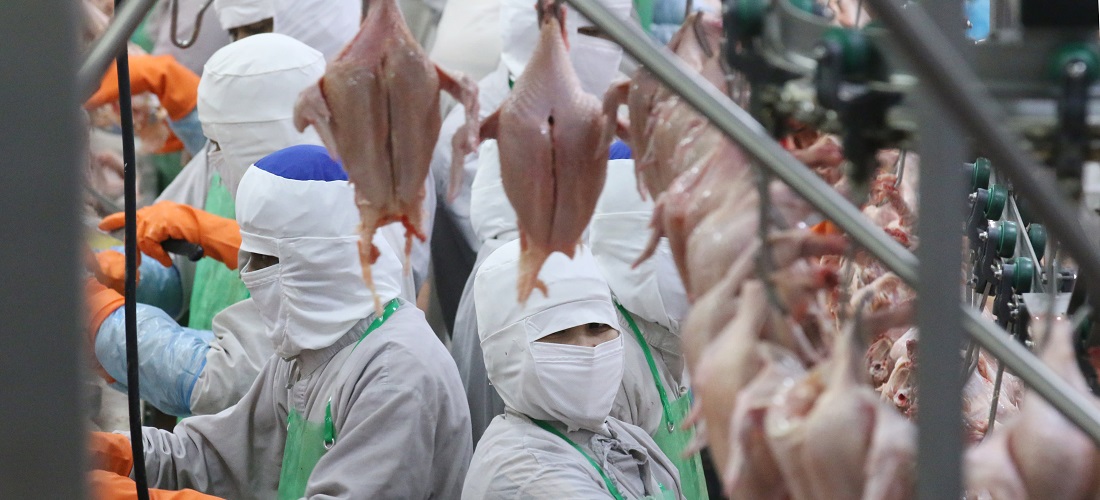
Ricardo Santin, President of ABPA (Brazilian Animal Protein Association), noted that opening the three poultry meat categories could generate over R$ 1 billion in foreign exchange revenue.
“This reflects recognition of the quality and sanitary safety of Brazilian production,” he said.
In addition to agricultural agreements, Brazil and China signed 20 bilateral agreements across various sectors. In agribusiness, a highlight was the memorandum between MAPA and China’s Ministry of Agriculture and Rural Affairs on cooperation in artificial intelligence applied to agriculture. The document, coordinated by Brazil’s Ministry of Agrarian Development (MDA), aims to develop tech-based solutions for sustainable production, crop monitoring, and resource efficiency.
Another key agreement concerns the mechanization of family farming. Both countries committed to cooperating on the research and development of small—and medium-sized machinery, making it more accessible and better suited to small-scale farmers in Brazil. The initiative focuses on improving productivity and technological autonomy in rural areas.
In the energy sector, a memorandum was signed between Brazil’s Ministry of Mines and Energy (MME) and China’s National Energy Administration for cooperation on ethanol and sustainable mobility. The agreement includes collaboration in research and developing first- and second-generation ethanol technologies. It promotes using low-carbon ethanol as a viable alternative in the transportation sector. The MME described the agreement as a strategic step toward opening the Chinese market to Brazilian ethanol.
Source: Campo Grande News
-
Ports and Terminals
Jun, 09, 2023
0
Santos Brasil breaks productivity record at Tecon Vila do Conde
-
Trade Regulations
May, 11, 2022
0
Brazil reduces steel rebar and a few food products import tariffs
-
Grains
Jul, 14, 2020
0
Chinese soy imports up 71% YoY in June, with most of it sourced from Brazil
-
Meat
Jan, 14, 2025
0
Revenue from Turkey Meat Exports Drop 23.4% in 2024, Reveals Brazil’s ABPA