


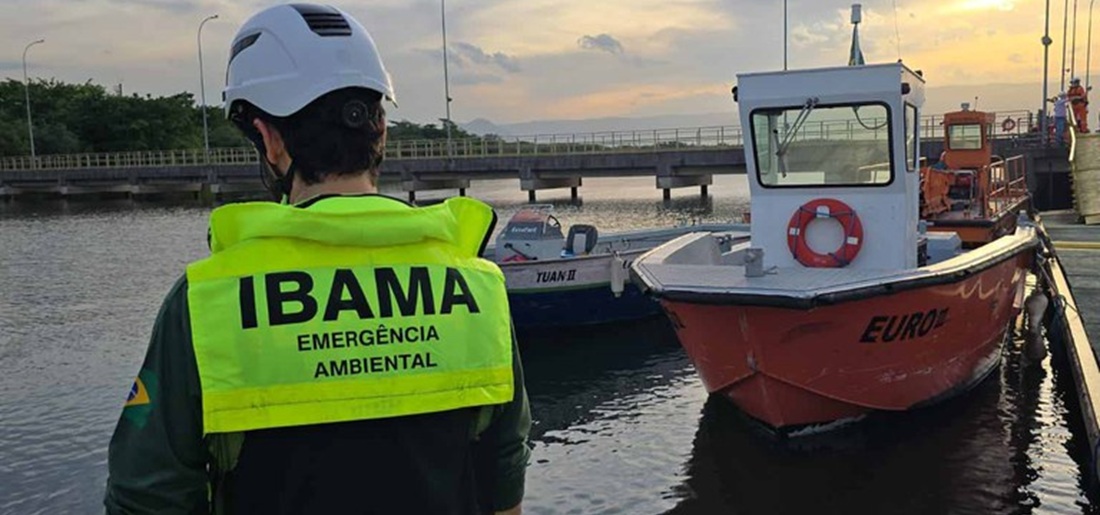
Ibama, Cetesb, and the Brazilian Navy Inspect Terminals and Emergency Equipment at the Port of Santos, SP
Jun, 02, 2025 Posted by Sylvia SchandertWeek 202523
A joint operation by Brazil’s environmental agency Ibama, the Environmental Company of the State of São Paulo (Cetesb), and the Brazilian Navy was carried out at the Port of Santos on the coast of São Paulo. The initiative aimed to map and inspect structures and equipment used in emergencies to prevent oil spills in the water.
The Installed Response Inventory Operation took place from May 20 to 29 and was coordinated by the Technical Team for Environmental Emergency Prevention and Response of the State of São Paulo (Nupaem-SP). According to Ibama, approximately 36 port terminals in the region were inspected, with the participation of 20 Ibama agents.
The operation was supported by technical teams from other states, including Alagoas, Espírito Santo, Maranhão, Mato Grosso, Paraná, and Rio Grande do Sul, as well as the National Center for Environmental and Climate Emergencies (Ceneac/Ibama).
The initiative also had an educational component and involved several state and municipal environmental agencies, including the Chico Mendes Institute for Biodiversity Conservation (ICMBio), port authorities, and the Public Prosecutor’s Office.
Inspection Activities
During the inspections, the technical teams conducted an inventory of equipment, such as containment booms, skimmers, storage tanks, and response vessels. They also assessed the availability of specialized personnel capable of responding immediately to environmental accidents at each terminal.
According to Ibama, the primary focus was to correct irregular conditions, enhance emergency response capacity, and strengthen coordination among institutions.
Ceneac conceived the operation, and is being implemented in several regions of the country to foster a culture of prevention, guide port and industrial operations, and feed data into the National Database of Response Equipment and Structures.
Final Report
At the end of the operation, a report will be prepared describing the conditions observed at each inspected facility, detailing the installed emergency response capacity of each terminal, with a focus on their Individual Emergency Plan (PEI).
This document will then be submitted to the licensing authority and, depending on the findings, forwarded to regulatory agencies if non-compliance is identified.
According to Ibama, the database generated by these operations will enable faster and more effective responses in emergencies, such as the 2019 oil spill disaster off Brazil’s Northeast coast.
Source: G1
-
Grains
Mar, 04, 2021
0
Study shows Brazilian agribusiness feeds more than 772 million people worldwide
-
Ports and Terminals
Apr, 14, 2025
0
Port of Santos Moves Forward with Pier Repair Talks After Ship Collision, Eyes Swift Resolution
-
OTI Rankings
Nov, 13, 2025
0
OTI ranking | Jan–Sep 2025 vs Jan–Sep 2024 | TEU
-
Ports and Terminals
Mar, 14, 2025
0
Landmark Public-Private Partnership for Babitonga Bay Dredging Project Signed