


Santos Brasil Advances Toward Zero Landfill Goal by 2028
Jun, 06, 2025 Posted by Denise VileraWeek 202523
Santos Brasil has taken another major step toward sustainability: just over a year since the official launch of its Zero Landfill Project, the company has already reduced landfill waste by 63%—a milestone initially set for 2026. The progress reinforces the company’s commitment to the UN Global Compact and its target to eliminate landfill disposal entirely by 2028.
Launched in early 2024, the Zero Landfill Project is built on four strategic pillars:
• Organic Waste Treatment with Biodigesters: First implemented at Tecon Santos in 2021, the technology has since expanded to other units, including CLIA Santos, CLIA Guarujá, the Distribution Center in São Bernardo do Campo, and Tecon Vila do Conde (Pará). The equipment accelerates the decomposition of organic waste from cafeterias, converting it into greywater that is later treated at biological effluent treatment plants for reuse or properly disposed of.
• Energy Recovery via Refuse-Derived Fuel (RDF): Introduced in 2024, this initiative sends non-hazardous waste—such as soiled paper and other non-recyclable materials unsuitable for composting—to industrial kilns (e.g., in cement or lime plants), contributing to energy recovery. Five units have already adopted RDF solutions.
• Recycling and Reverse Logistics: Items such as lubricating oil, tires, batteries, and cloths are returned to manufacturers for recovery and reuse, while materials like scrap metal, paper, plastic, wood, and uniforms are recycled.
• “No More Plastic!” Initiative: Promotes the use of reusable bottles and mugs, gradually replacing plastic cups with biodegradable alternatives across all company units.
The initiative is continuously monitored through dashboards that integrate operational data and environmental indicators. Key results achieved so far include:
• 187 tons of organic waste diverted from landfills (2021–2024), with 15 tons avoided in the first year of biodigester operation.
• 297.26 tons of CO₂ equivalent emissions avoided thanks to the equipment.
• Estimated savings of R$518,000 in transportation and final disposal costs, compared to an investment of R$329,000 in biodigesters.
• 62% of waste generated has been recycled or sent through reverse logistics.
The project’s success is also attributed to strong leadership engagement and employee participation, supported by awareness initiatives such as the Internal Week for the Prevention of Workplace and Environmental Accidents (SIPATMA), Environment Day, Conscious Consumption Day, and Recycling Day, all of which reinforce environmental awareness and culture across the company.
A Global Urgency
Béatrice de Toledo Dupuy, Executive Manager of Corporate Communication and Sustainability at Santos Brasil, highlights that waste management is a global urgency. In 2023, the world generated 2.3 billion tons of municipal solid waste. According to the Global Waste Management Outlook 2024, this figure could surpass 3.8 billion tons by 2050.
“Sustainability is a core part of our business strategy. The Zero Landfill Project shows that it’s possible to combine innovation, environmental responsibility, and operational efficiency. We’ve already achieved significant results and remain committed to fully eliminating landfill waste by 2028,” says Béatrice.
In addition to environmental benefits, the project helps reduce pests and disease vectors and improves the use of operational space.
Zero Landfill is part of Santos Brasil’s Climate Transition Plan, which aims for carbon neutrality by 2040. Other initiatives under the plan include optimizing fuel consumption and switching to alternative fuel types, transitioning the energy matrix of terminals, expanding the use of renewable energy through solar panels, engaging the entire value chain, implementing climate adaptation actions, improving water efficiency, stakeholder engagement, and promoting innovation.
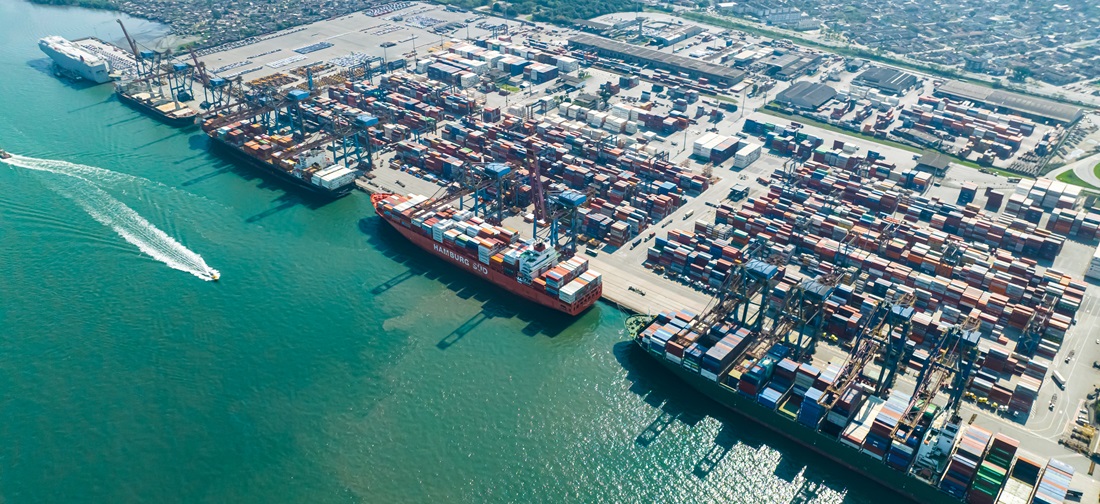
Tecon Santos—the largest container terminal in South America—is a pioneer in the use of electric remotely operated RTGs (rubber-tired gantry cranes) and compressed natural gas (CNG) trucks, which emit about 20% fewer greenhouse gases than diesel-powered vehicles.
-
Coffee
Oct, 03, 2023
0
Brazil’s September coffee exports surge 5.4% to 3098 million bags
-
Economy
Dec, 26, 2023
0
Brazil records 25% hike in agricultural exports volume
-
Trade Regulations
Jun, 03, 2020
0
CNI identifies 17 new barriers to Brazilian exports between March and May
-
Trade Regulations
Jan, 27, 2025
0
France Requests Delay of EU Environmental Regulation