


Middle East Conflicts May Affect Exports from Port of Santos, Says Pomini
Jun, 24, 2025 Posted by Sylvia SchandertWeek 202526
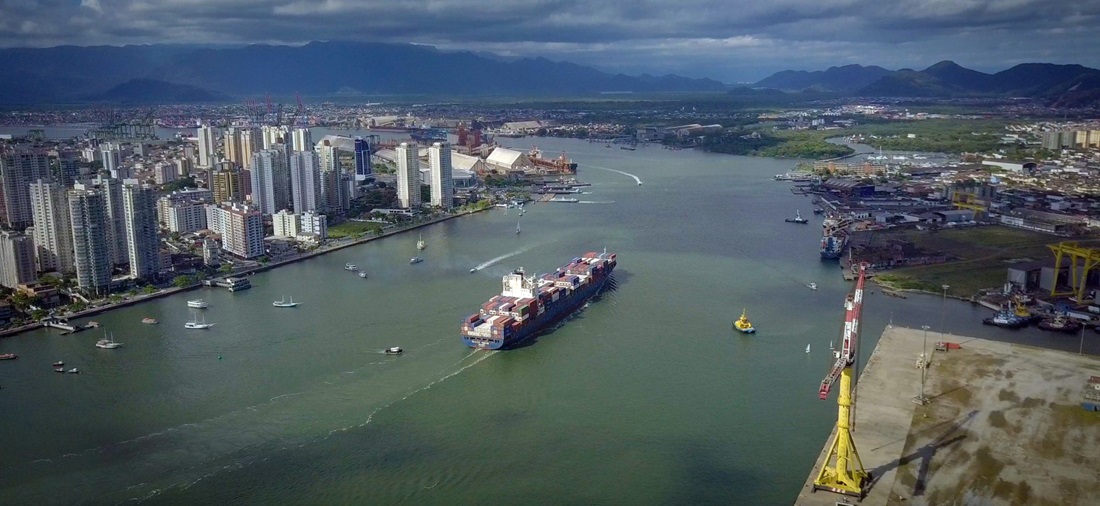
The escalating conflicts in the Middle East are raising red flags for the Port of Santos and Brazil’s entire logistics and trade network. According to Anderson Pomini, president of the Santos Port Authority, the unstable scenario directly threatens international shipping and may have immediate consequences for Brazil.
In 2024, the Port of Santos received 1,300 vessels. It is estimated that 70% of these ships use oil originating from the Middle East.
If that supply is significantly disrupted — either due to rising oil prices or logistical difficulties — the impact on shipping flows and foreign trade will be direct. Maritime routes between Brazil and countries in the Global South may also be affected.
See below a historical overview of container throuhhput at the Port of Santos starting from January 2022. The chart was created using DataLiner data:
Container throughput at the Port of Santos | Jan 2022 – Apr 2025 | TEUs
Source: DataLiner (click here to request a demo)
Impacts on Agribusiness and Brazilian Exports
Iran is a key trade partner for Brazil. In addition to being a significant destination for Brazilian corn, the Middle Eastern country also imports chicken meat and other agricultural products.
In 2024 alone, over 30% of Brazil’s chicken meat exports were destined for countries in the region. At the same time, Iran is a strategic supplier of urea, a vital input for the production of fertilizers used in Brazilian agribusiness.
Any delays or blockages along shipping routes could significantly impact the delivery of agricultural inputs and the export of commodities, potentially jeopardizing farm productivity and international trade agreements.
Logistics Dependence and the Role of China
Another primary concern involves China, which relies on the Strait of Hormuz for around 70% of its oil consumption.
China maintains strong trade relations with Brazil — in 2024 alone, more than 1,300 ships departed from China bound for the Port of Santos, averaging 108 vessels per month. Any blockade or disruption of this key route would affect not only shipping costs but also the entire logistics framework between Asia and South America.
In light of this scenario, the Santos Port Authority is closely monitoring international developments, underscoring the importance of geopolitical stability to sustain the country’s port activity and economic growth.
Source: Diário do Litoral
-
Meat
Dec, 05, 2019
0
JBS plans US$1.91bn investment in Brazil
-
DW 2019 EN
Mar, 18, 2019
0
DatamarWeek 19 March 2019
-
Ports and Terminals
Aug, 01, 2023
0
Minister Márcio França says that work on the Santos-Guarujá tunnel will begin in 2024
-
Economy
Jul, 08, 2019
0
EU-Mercosur agreement: Argentina benefits from beef exports