

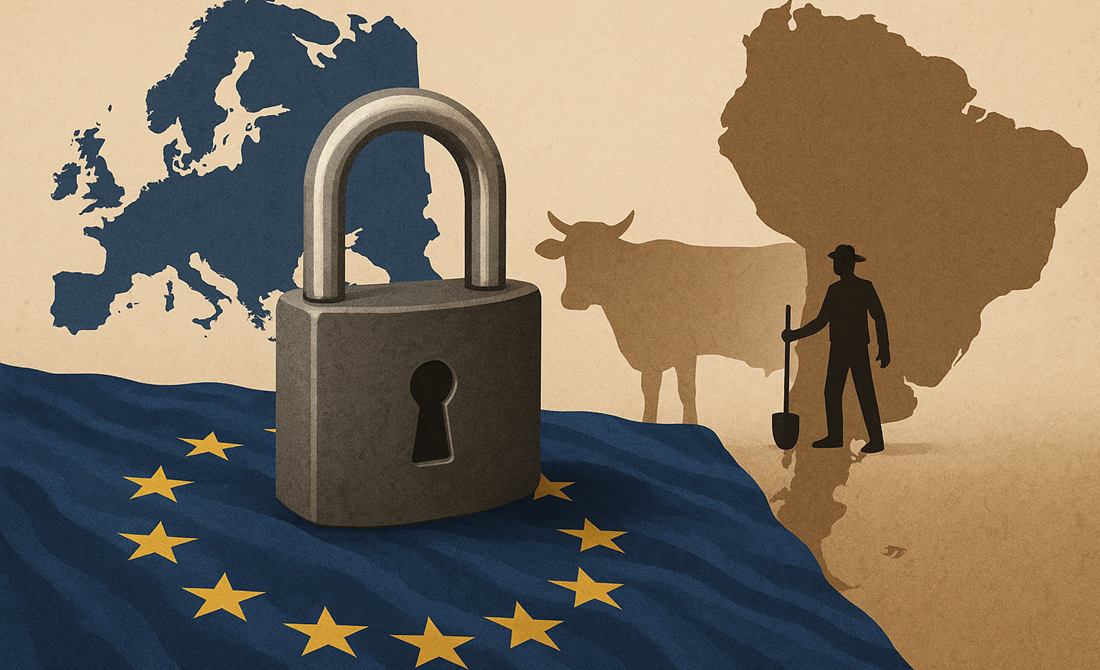
EU to monitor Mercosur meat imports in real time under safeguard plan
Sep, 04, 2025 Posted by Lucas LorimerWeek 202537
Safeguard. By far the most discussed term in Europe this Wednesday (Sept. 3), when the European Commission began the final stage of approving the European Union–Mercosur agreement. It is the item that made France relent in its previously unconditional opposition to the treaty. It is also the tool that European producers and governments will have against the much-feared strength of South American agribusiness, particularly Brazil’s.
A typical mechanism in international trade, the safeguard protects the importing country from sudden market fluctuations that could harm its economy or domestic producers. In the European case, the concern is competing with Brazil, the world’s largest exporter of beef and poultry. Unsurprisingly, the list of “sensitive products,” in the vocabulary of the EU’s negotiators, begins with those two items. Sugar and rice are also causes for concern.
The math is straightforward. If a product or market suffers a fluctuation greater than 10% in imports, either up or down, in any of the 27 member countries of the bloc, an investigation will be launched by Brussels. For this purpose, the EU promises “near real-time” monitoring of prices, according to diplomats.
In addition, regular reports will be produced and submitted to the European Council and Parliament. The concern is to address criticism from farmers’ lobbies on the continent, which hold significant influence in national legislatures, as is also the case in Brazil.
None of this is new. The mechanism is provided for in the agreement signed at the end of last year in Montevideo by the presidents of the Mercosur countries and Ursula von der Leyen, President of the European Commission. What is being clarified now is the legal framework by which safeguards will operate on the European side. “We are not changing the agreement but providing much more transparency and a much deeper level of political commitments and, in the future, legal commitments to operationalize protection for producers,” said a Commission member.
Another nod to farmers is the assurance that European legislation will not be relaxed to accommodate South American products that do not meet the continent’s strict sanitary standards. Requirements related to pesticide use and animal welfare were repeatedly cited. Sanitary inspections, already conducted regularly, will be intensified. The Commission expects both sides of the treaty to work together toward eventual harmonization of rules.
A complex framework has also been outlined for import quotas, which correspond to minimal shares of European production, at least in the case of meat (1.5% for beef and 1.3% for poultry).
Much of the discourse in Brussels was aimed at overcoming internal resistance. While approval by the Council of Ministers, the first step in the final stretch of the EU bureaucracy, seems assured after the non-commercial part of the treaty was separated to facilitate its progress, approval by a simple majority in the European Parliament promises to be more difficult. Nationalist and far-right lawmakers have long embraced farmers’ causes to gain electoral support.
They will find rare allies in the Greens and centrist parties, which are concerned about the possible weakening of the EU’s strict environmental regulations.
Much is at stake in the European push. The agreement with Mercosur has the potential to mitigate a third of the losses expected by the continent from U.S. tariffs, set at 15% for most products under the current terms of negotiation. It also enjoys broad support from the industrial sector. “We fully support it. The EU has benefited greatly from market liberalization over decades,” Mercedes-Benz CEO and president of the European Automobile Manufacturers Association Ola Källenius told the Financial Times.
The enthusiasm is easy to explain. Vehicle exports, currently subject to Mercosur tariffs of up to 35%, will in some cases fall to zero.
Source: Economia ao Minuto
Image generated by artificial intelligence
-
Other Cargo
Nov, 25, 2022
0
Vietnam breaks mineral fertilizer export record
-
Nov, 29, 2021
0
Ministry creates a task force to discuss the supply of inputs
-
Meat
May, 02, 2025
0
Brazilian Fresh Pork Exports Could Grow by Over 19% in April
-
Economy
Jul, 31, 2025
0
Brazil expands South American Integration Routes project to include all states