


Brado moves 130,000 tonnes of consumer and industrial goods through multimodal logistics
Oct, 23, 2025 Posted by Lucas LorimerWeek 202544
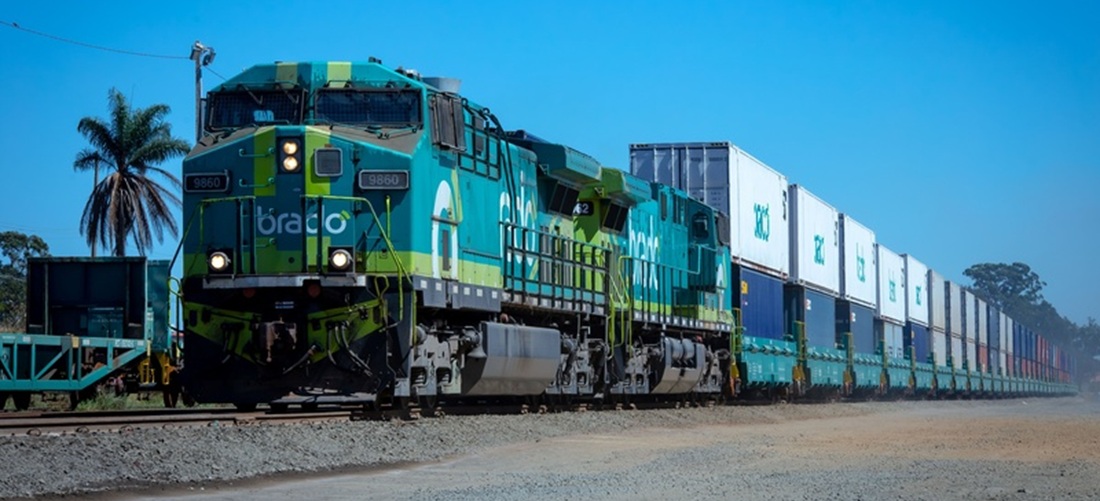
Brado Logística recorded an average annual growth of 30% in multimodal transport of consumer and industrial goods between 2021 and 2024, driven by increasing demand for rail solutions in the country’s interior.
In 2024, the company moved 5,981 containers — equivalent to nearly 130,000 tonnes of products — between Sumaré (SP) and Rondonópolis (MT), a stretch considered the main rail freight corridor in Brazil’s domestic market.
According to the company, the growth reflects industries’ search for more predictable and sustainable transport alternatives. The combination of rail and road — the multimodal model adopted by Brado — has enabled average logistics cost reductions of 5% to 10% and reduced pollutant emissions. In 2024 alone, rail transport prevented the release of 14,500 tonnes of CO₂ equivalent, equivalent to the planting of 104,000 trees.
Operational performance
The on-time delivery rate (OTD) reached 99.1% in the first half of 2025, based on an internal methodology validated with clients. The company’s 24-hour Control Tower monitors all stages of the integrated road and rail transport process in real time.
Sectors served
Growth in consumer goods transport was driven by segments such as beverages and hygiene and cleaning products, which increased by 74% and 35%, respectively, between 2021 and 2024. These operations mainly serve large industries and supply the Central-West region.
In industrial goods, construction materials stood out with a 62% rise, while polymers — used in plastic production — grew nearly 120%. The transported cargo includes inputs such as cement and mortar, as well as flooring and metal components.
In-transit inventory
One practice gaining traction in operations is the concept of “in-transit inventory,” in which part of production is transported while new manufacturing stages are already underway. This approach reduces storage needs and improves companies’ cash flow.
According to company executives, the model allows synchronization between production, transport, and delivery, making trains an active part of the production process.
In addition to economic and environmental benefits, multimodal transport reduces the number of trucks on highways, improving safety and working conditions for drivers. The regular frequency of trains and stable transit times also enhances supply chain planning.
Source: Brado
-
Apr, 20, 2020
0
Brazil’s orange juice exports increased 18% in first nine months of 2019/20 harvest
-
Commodities
Feb, 25, 2025
0
Ranking of Commodities on the East Coast of South America | Jan-Dec 2024 vs. Jan-Dec 2023 | DataLiner
-
Shipping
Jul, 24, 2026
0
How shipping insurance rates are rising, as Hormuz, Bab al-Mandeb shut down
-
Grains
Apr, 08, 2019
0
Brazil’s low soybean exports cause corn storage concerns