


Tariff Hike Slows Stone Exports, with Direct Impact on Espírito Santo
Dec, 09, 2025 Posted by Sylvia SchandertWeek 202550
Tariff Hike Slows Stone Exports, with Direct Impact on Espírito Santo
The tariffs imposed by the United States on ornamental stones have already caused a significant decline in exports from Espírito Santo, the state responsible for about 82% of Brazil’s stone exports to the U.S. market, according to data from the Brazilian Center of Natural Stones (Centrorochas).
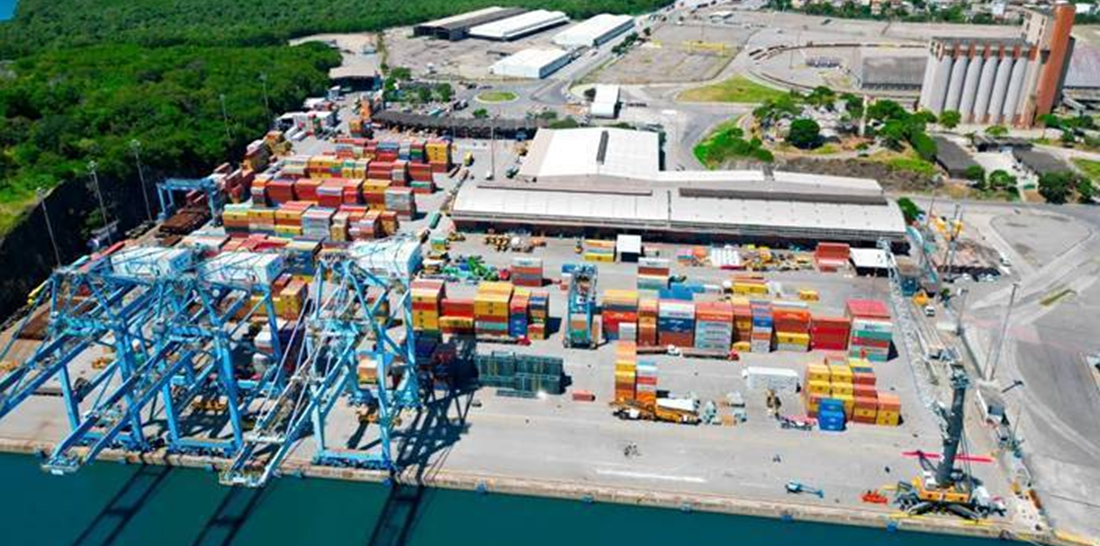
At the Vila Velha Port Terminal (TVV), the main export gate for Espírito Santo’s stone industry, the impact is visible both in the year-to-date figures and in the monthly average after the tariff measures were announced. To mitigate the effects of the downturn, the terminal has accelerated cargo diversification, with growth in general cargo operations, special projects, and bulk shipments.
TVV currently has a strong focus on ornamental stone operations, especially granite. According to terminal data, around 48% of all exports to the U.S. market handled by the terminal consist of ornamental stones, and more than 95% of the ornamental stone volume exported from Espírito Santo passes through TVV. This concentration explains why the effects of the tariff hike have spread so quickly in the state, which is a national hub for stone processing and finishing before export.
According to Gustavo Paixão, Terminal Director at Log-In Logística Integrada, the decline in granite exports became evident in the year-on-year comparison and intensified in the second half of the year. “If we look at the accumulated volume through September, we are 22% below last year’s stone throughput. But between August and September, after the tariff increase, the monthly average fell to 40% below what we were handling in the same period last year,” he says. Paixão adds that the terminal had stronger months in early 2025, but the decline accelerated after the tariff change, altering the historical export curve.
In addition to the direct effects of the tariffs, the terminal notes that cargo classification issues amplified the initial impact. Products such as quartzite were not supposed to fall under the tariff, but were nonetheless affected because they were classified as granite. “There was a significant distortion because not everything is granite, and not all products are subject to the same tariff. The sector began an effort to reclassify these goods, and although the process is not fast, we are already seeing signs of adjustment,” Paixão notes.
Although the U.S. government has revised some tariff measures and included coffee on the list of reduced tariffs, the effect on Espírito Santo is minimal from a port operations standpoint. Paixão explains that coffee represents only a small portion of the terminal’s export flow and is not among the main cargoes shipped to the U.S. “Coffee has a small presence at the terminal and is more widely distributed across other markets. TVV’s current operational dynamics are far more tied to stone exports,” he says.
Opening Doors to New Business
Despite the decline in its main high-margin cargo, the drop freed up operational capacity and created opportunities for new business. Paixão says the terminal seized this window to strengthen general cargo and special project operations—segments that had lost space in 2024 due to high yard occupancy and the retrofit cycle. “With fewer full containers, we were able to free up yard and berth capacity for other operations. We resumed strong general cargo activity, and it has exceeded initial expectations,” he comments.
Diversification also includes bulk cargo and the newly enabled ability to handle vessels without onboard cranes, now served regularly at public berths following recent investments in new equipment. According to Paixão, this shift reinforces the strategy of expanding the terminal’s portfolio and enhancing the multipurpose profile of both TVV and the Port Complex of Vitória.
In the international market, he notes that there is no clear forecast for a quick reversal of the tariff measures. “Negotiations with the U.S. are ongoing, but the sector is also seeking new destinations. The Middle East has entered the radar as a market with strong demand and still underexplored for Brazilian stones,” he explains.
In this context, TVV plays an important role in ensuring infrastructure and operational readiness should export volumes recover, while also offering logistical alternatives for new cargo types. “Commercial negotiations remain in the hands of exporters, industry associations, and international buyers. For the terminal, the diversification initiated in 2025 is likely to continue even if granite shipments rebound, as a way to reduce exposure to external shocks and support growth in less concentrated segments,” Paixão concludes.
Source: Log-In Logística
Related Post
-
Automotive
Mar, 12, 2019
0
Hyundai plans to invest US$32m in SP plant
-
Ports and Terminals
Aug, 18, 2023
0
Brazil’s Federal Revenue concludes yet another major cocaine bust in Port of Paranaguá
-
Commodities
Oct, 28, 2025
0
Commodities Ranking on the East Coast of South America | Jan–Aug 2025 vs. Jan–Aug 2024 | DataLiner
-
Coffee
Apr, 15, 2025
0
Brazilian Coffee Exporters Warn Of Slowdown Amid New US Tariffs