


Southeast ports handled 575.5 million tonnes between January and October 2025
Dec, 17, 2025 Posted by Sylvia SchandertWeek 202551
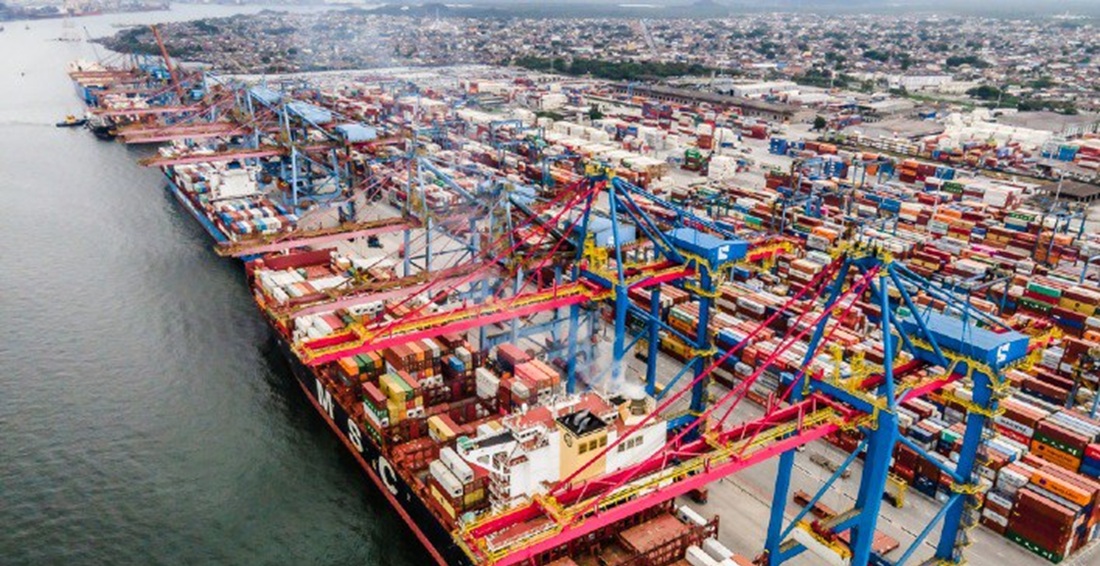
Cargo throughput at ports in Brazil’s Southeast region reached 575.5 million tonnes between January and October 2025, according to data from the National Waterway Transport Agency (Antaq). The volume represents growth of 4.97% compared with the same period in 2024, keeping the Southeast as Brazil’s main logistics hub and the region handling the largest cargo volumes in the national port system.
Regional performance was mainly supported by dry bulk cargoes, which totalled 299.7 million tonnes, up 4.20% year on year. Liquid bulk reached 187.3 million tonnes, posting growth of 7.74%, largely driven by the movement of crude oil and derivatives. Containerized cargo accounted for 60 million tonnes, an increase of 2.17%, while general cargo reached 28.6 million tonnes, up 1.60% compared with 2024.
According to the Minister of Ports and Airports, Silvio Costa Filho, the figures confirm the region’s strategic role in Brazilian logistics. “The Southeast remains the country’s main logistics corridor, supported by cargo diversity, integration between public ports and private terminals, and a continuous agenda of infrastructure investments,” he said.
Busiest ports
As the country’s largest port, the Port of Santos (SP) led throughput in the Southeast, handling 119.4 million tonnes, a 1.05% increase compared with 2024, and accounting for 20.8% of all cargo moved in the region through October. It was followed by the Tubarão Terminal (ES), with 70.4 million tonnes (up 9.12%), and the Angra dos Reis Waterway Terminal (RJ), which handled 57.9 million tonnes, up 8.26% over the period.
Below is a historical overview of container exports and imports via the Port of Santos since January 2022. The chart was prepared using DataLiner data:
Container exports and imports via the Port of Santos | Jan 2022 to Oct 2025 | TEU
Source: DataLiner (Click here to request a demo)
Through the Port of Itaguaí (RJ), 51.7 million tonnes were handled, maintaining its strategic role in iron ore shipments, while the TPE/TOIL Oil Terminal (SP) recorded 49.6 million tonnes, with a 15.43% increase, reinforcing the Southeast’s relevance in Brazil’s energy logistics.
According to Costa Filho, the concentration of these large terminals is a competitive advantage for the region. “We are talking about ports that operate at high scale, with clearly defined specializations, which ensures efficiency, predictability and competitiveness for Brazilian foreign trade,” he noted.
Main commodities
Antaq data show that iron ore remained the main commodity handled in the region (33.7% of the total), with 194.2 million tonnes, up 7.46%, consolidating the Southeast as the backbone of the country’s mineral exports.
Next came crude oil and derivatives, which reached 152.2 million tonnes, up 10.35%, reflecting the strength of the energy sector. Containerized cargo totalled 60 million tonnes (+2.17%), while soybeans handled 37.3 million tonnes, posting a strong increase of 16.47%, driven by agribusiness. Petroleum products (excluding crude oil) totalled 27.2 million tonnes, maintaining a significant share of the regional cargo mix.
Types of navigation
Of the total volume handled at Southeast ports, 435.6 million tonnes were transported via long-haul shipping operations between Brazil and other countries. This segment grew 5.23% compared with 2024, demonstrating stronger integration of the region with international markets.
Coastal shipping (cabotage), which involves transport between Brazilian ports, totalled 114.1 million tonnes over the period, up 5.25% year on year. This mode is essential to national logistics, as it allows large volumes of cargo to be moved along the coast, reducing costs and complementing road transport.
Analyzing cargo entering and leaving the country through Southeast ports, Antaq data indicate that exports rose 6.63%, while imports recorded a slight decline of 2.41%, a movement that points to localized adjustments in trade volumes.
Source: Ministry of Ports and Airports
Related Post
-
Grains
Jun, 02, 2023
0
Brazil’s soy meal exports soar to top spot among agricultural products
-
Shipping
May, 19, 2021
0
ITF forecasts worldwide transport activity to more than double by 2050
-
Grains
May, 14, 2020
0
Competition for soy supplies expected between exporters and processors in second half
-
Ports and Terminals
Oct, 19, 2022
0
Portonave acquires land near Port of Navegantes; understand