


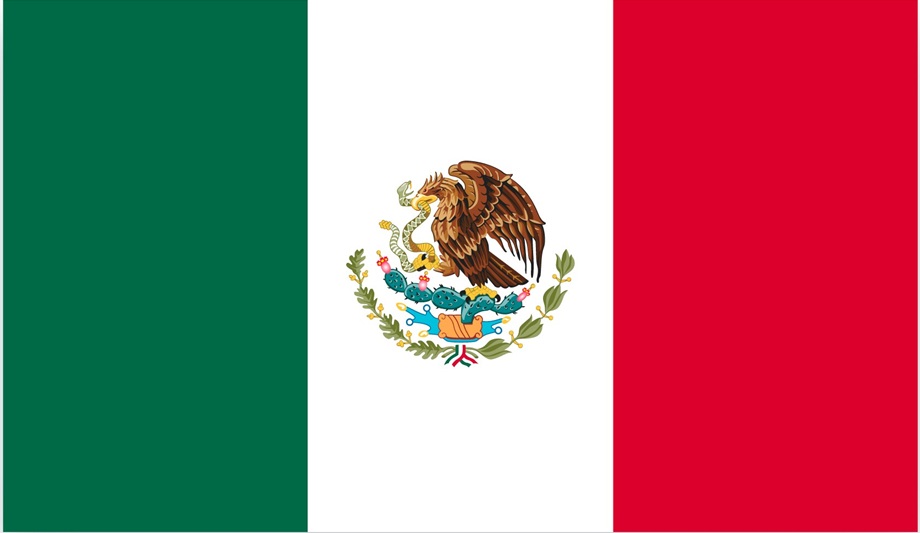
New Mexican tariffs deepen fears of global trade war
Jan, 05, 2026 Posted by Sylvia SchandertWeek 202602
After partial exemptions from the sweeping U.S. tariff hikes, Brazil begins 2026 facing new tariff increases on its exports. This time, the higher duties come from Mexico — introduced on an accelerated timetable. Proposed by the Mexican government in September 2025 and approved by Congress in early December, the measure took effect on Thursday, Jan. 1, 2026, imposing tariffs of up to 35% on imports from several countries with which Mexico has no free-trade agreements, including Brazil.
The tariff increase, which according to preliminary estimates by the National Confederation of Industry (CNI) could affect $1.7 billion in Brazilian exports, is widely seen as a ripple effect of the tariff shock imposed on Brazil during 2025 by President Donald Trump of the United States. Mexico was the seventh-largest destination for Brazilian shipments in 2024 and, through November 2025, was the sixth, totaling $7.1 billion in exports. But more than disrupting trade with a market that matters to Brazil, Mexico’s tariffs could set a precedent for similar measures, fueling a tariff war with global consequences—not only for trade flows and costs, but for foreign relations more broadly.
The Mexican government said the tariffs are intended to strengthen domestic production and protect roughly 350,000 jobs in sensitive industries such as footwear, textiles, apparel, steel, and automotive manufacturing.
Below is a historical overview of Brazilian containerized exports to Mexico starting in January 2022. The chart was prepared using DataLiner data:
Brazilian Containerized Exports to Mexico | Jan 2022 – Nov 2025 | TEU
Source: DataLiner (click here to request a demo)
A CNI study found that China is likely to be the most affected by the measures, followed by other Asian nations such as South Korea, India, and Thailand. Brazil is expected to be the fifth most affected. The report said the Mexican tariffs could affect 232 Brazilian products, totaling $1.7 billion, representing 14.7% of Brazilian shipments to Mexico in 2024.
Asked for comment, Brazil’s Ministry of Development, Industry, Trade and Services (MDIC) reiterated a statement issued on Dec. 12 after the Mexican Congress approved the tariffs, saying it “has remained in contact with Mexican authorities to address the possible effects of the tariff changes.”
The problem, experts warn, is that Mexico’s move may be only the beginning of a wave of new tariff measures, almost always justified as a way to protect domestic industry.
“Mexico’s decision to impose tariffs against Brazil is, unfortunately, the first step toward consolidating in the international market a practice of unilateral tariff actions,” said José Augusto de Castro, president of the Brazilian Foreign Trade Association (AEB). “In this scenario, any other country can adopt tariffs freely, without knowing what the consequences will be, much less whether imposing higher tariffs will or will not generate reciprocity from other countries.”
Welber Barral, a partner at BMJ and a former foreign trade secretary, noted that global protectionism has been on the rise worldwide, building on measures initiated by Trump. “We have just seen the announcement of a safeguard tariff on beef by China. The whole world has been increasing its protective measures.”
Barral also pointed to India’s decision to impose a three-year tariff of 11%-12% on certain steel products. The Indian government announced the measure on Dec. 30 as part of an effort to counter shipments from China. “That will have a major effect on the international market,” he said. “Unfortunately, it reflects the spread of protectionist measures around the world—and Mexico is following that path now.”
“The pattern of trade wars is not bilateral,” said Livio Ribeiro, an economist and partner at the consultancy BRCG. “They end up becoming trade wars that gradually spread, pushing us toward a more autarkic world, with higher tariffs and trade flows restricted at some level. The world we are heading toward is a new equilibrium with less cooperation, higher costs, and the seductive appeal of protecting domestic industry—something that has never worked and won’t work now.”
For Castro, of the AEB, Mexico’s tariff increase is a “dangerous precedent.” He said it could lead countries to impose higher tariffs to offset what others have already adopted. “At first, basically, Trump imposed tariffs. We are already facing Mexico’s tariffs, and another country could suddenly emerge. That can lead to a global tariff imbalance, which is bad for world trade.”
“Mexico was under pressure from the United States to adopt these measures,” said Barral, of BMJ. He noted that it is still necessary to assess the impact on sectors covered by special agreements between Brazil and Mexico, such as the automotive and specific chemical products sectors. “Brazil will have to accelerate free-trade agreements through Mercosur.”
Brazil currently lacks a broad free-trade agreement with Mexico. However, it does have so-called ACE agreements (Acordos de Complementação Econômica, or Economic Complementation Agreements), such as the one covering the automotive sector.
The main target of Mexico’s new tariffs is Asia—especially China—Ribeiro said. “The measure is aimed much more at Asia, under the argument of protecting domestic industry and aligning Mexico’s tariff policy with the United States. There is domestic opposition in Mexico, with concerns about rising costs and an impact on inflation. Clearly, this is not going to lead to Mexican reindustrialization.”
Ribeiro said the danger of a trade war comes when a chain reaction begins, in which everyone starts taxing everyone else under the argument of protection and tariff equalization. “Unfortunately, that is exactly what we are seeing in the Mexican case. It’s a bad move, but it won’t be an isolated one. In that sense, we should expect similar policies from other countries. That’s the key issue we need to watch going forward. With trade wars, you always know how they start—you never know how they end,” said Ribeiro, who is also an associate researcher at FGV Ibre.
Source: Valor International
-
Economy
Mar, 12, 2025
0
New DataLiner Data Show Brazilian Container Throughput Hits Record High in January
-
Economy
Sep, 01, 2022
0
Brazil announces trade surplus of $4.165 billion in August, above expected
-
Grains
Nov, 21, 2022
0
Argentina mulls reinstating ‘soy dollar,’ says agency
-
Grains
Nov, 01, 2022
0
More grain ships leave Ukraine ports despite Russian suspension