


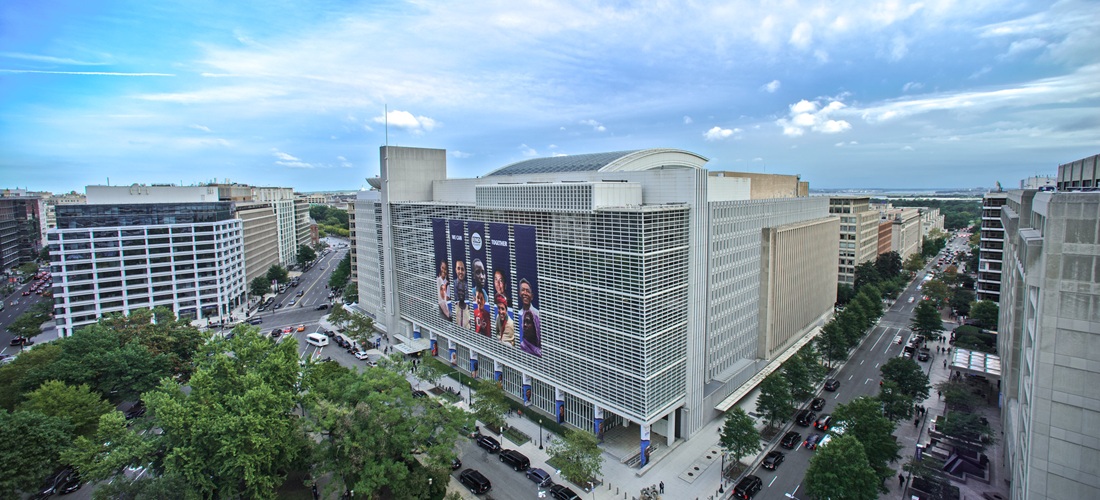
World Bank cuts Brazil GDP forecast for 2026 to 2%
Jan, 14, 2026 Posted by Gabriel MalheirosWeek 202603
The World Bank has lowered its forecast for Brazil’s economic growth in 2026, revising the estimate from 2.2% to 2%, according to the latest Global Economic Prospects report released on Tuesday (13). For 2027, the bank expects a slightly stronger expansion of 2.3%.
The downgrade in Brazil’s 2026 GDP forecast reflects the impact of high real interest rates (adjusted for inflation), headwinds in global trade, and increased international uncertainty, the institution said.
Brazil’s Finance Ministry remains slightly more optimistic, projecting 2.4% growth in 2026, according to its November Macrofiscal Bulletin.
Across Latin America and the Caribbean, the World Bank expects the regional economy to grow 2.3% in 2026 and 2.6% in 2027, supported by a recovery in trade flows and stronger domestic demand.
See how Brazilian container exports flowed between 2022 and November 2025, according to data from Datamar.
Brazilian Container Exports | Jan to Nov | 2022 to 2025 | TEU
Source: DataLiner (click here to request a demo)
Global growth is forecast to remain stable over the next two years, ranging between 2.6% and 2.7%, despite “persistent trade tensions.” The World Bank estimates global GDP rose 2.7% in 2025, and projects 2.6% growth for 2026, followed by 2.7% in 2027.
The bank said global expansion in the coming years will be driven in large part by the strength of the U.S. economy. However, even if the forecasts materialize, the 2020s are likely to mark the weakest decade for global growth since the 1960s.
“With each passing year, the global economy is proving less capable of generating growth, and seemingly more resilient to policy uncertainty,” said Indermit Gill, chief economist and senior vice president of the World Bank.
Among developing economies, growth is expected to slow to 4% in 2026 from 4.2% in 2025, before edging up to 4.1% in 2027. This category includes low- and middle-income countries. The World Bank noted that low-income countries, in particular, are expected to see higher average annual growth of 5.6% in both 2026 and 2027.
“With public debt in emerging and developing economies at its highest level in more than half a century, restoring fiscal credibility is an urgent priority,” said M. Ayhan Kose, deputy chief economist and director at the World Bank.
“Well-designed fiscal rules can help governments stabilize debt, rebuild policy space, and respond more effectively to shocks. But rules alone are not enough. Credibility, enforcement, and political commitment are ultimately what determine whether fiscal rules lead to stability and growth,” he said.
By Mariana Andrade for Valor Econômico
-
Jan, 16, 2024
0
San Antonio Terminal Sets Record With 1,136 Cherry-Loaded Containers
-
Oil and Gas
Mar, 22, 2022
0
Oil exports from Brazil increase until the 3rd week of March; sugar drops
-
Ports and Terminals
Feb, 14, 2024
0
São Francisco Port ranks 7th among Brazil’s public ports
-
Meat
Oct, 07, 2024
0
Kosher slaughter stands in the way of Brazilian poultry exports to Israel