


Santos port expansion faces fresh legal fight over planned logistics park
Jan, 22, 2026 Posted by Gabriel MalheirosWeek 202604
Plans to expand the Port of Santos, Latin America’s largest, have become embroiled in a new multibillion-real competition dispute, adding to ongoing tensions surrounding the auction of the STS-10 container terminal scheduled for later this year.
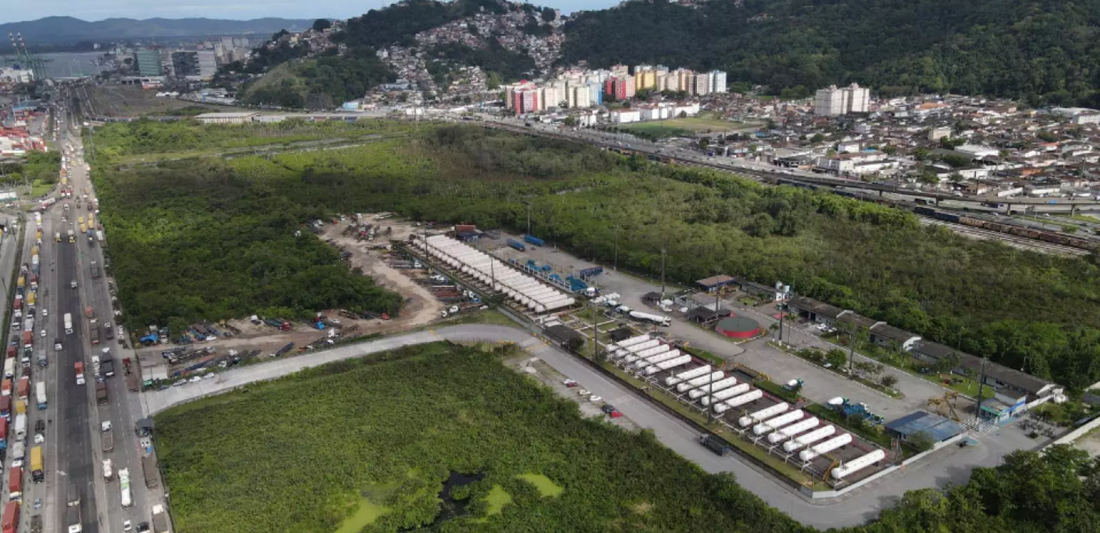
The latest controversy centers on a tender launched in late October by the federal port authority APS (Santos Port Authority) for the development of a logistics park within the port area. The project involves the construction of warehouses and support facilities to handle cargo flows linked to port operations.
The proposed model for transferring the land to private operators triggered an immediate backlash from business associations active in Santos, pushing the dispute into the courts.
APS plans to tender a 242,000-square-meter site on the right bank of the port. The concession, expected to generate more than 1.06 billion reais in revenue, would run for 20 years, with the possibility of an extension.
Private-sector groups argue that the problem lies in the competitive format chosen by APS. The state-owned authority, which reports to the Ministry of Ports and Airports, opted for a paid right-of-use concession, a simpler model with fewer regulatory requirements than a traditional port lease auction. The short timeline was another point of criticism, as bidders were given just 22 days between the publication of the tender notice and the submission deadline.
APS justified the model by classifying the site as an area “not related to port operations,” meaning it would not be directly linked to core port activities. That interpretation, however, was challenged by industry groups.
Six national associations representing port and logistics interests—Abratec, ABTL, ABTP, ABTRA, ATP and Fenop—sent a joint letter to the ministry and to waterway regulator Antaq, calling for the immediate cancellation of the tender.
According to the associations, the land is included in the Port of Santos Development and Zoning Plan (PDZ), approved in 2020, as a designated area for short-, medium- and long-term projects. Labeling it as non-operational, they argued, amounts to a “legal fiction” designed to bypass port legislation.
The groups also criticized the lack of technical studies, such as technical, economic and environmental feasibility assessments, as well as the absence of traffic and neighborhood impact analyses.
They said the project would generate heavy truck traffic in an area already strained by road bottlenecks, without explaining how existing access infrastructure would absorb the additional flow.
In the first week of January, the ministry’s technical staff reviewed the complaints and, after examining maps and guidelines from the 2020 PDZ, sided with the companies.
“The area designated for the [Right Bank Logistics Park] CL-MD Santos qualifies as an area related to port operations in the short-, medium- and long-term planning horizons, in accordance with the current PDZ of the Port of Santos,” the ministry concluded.
As a result of the dispute, the tender process was suspended by a court injunction issued by the 1st Federal Court of Santos.
Asked to comment, APS stood by its position and said the ministry’s and companies’ assessment was incorrect.
“The premise that the PDZ classifies the area as operational is mistaken,” APS said, adding that the site, historically known as the Terreno da Rede (formerly part of the RFFSA railway), is classified as an area “not related to port operations.”
According to APS, an area is only considered operational if it “directly carries out cargo handling or storage linked to waterborne transport.”
“The project is unequivocally land-based logistics support infrastructure, not a port terminal,” the authority said. “The planned activities take place exclusively in the pre-gate phase, before entry into the port terminal.”
APS said the logistics park will not have berths, will not handle cargo directly from vessels, will not operate goods linked to waterborne transport and will not be integrated into the operational systems of container terminals.
Classifying the project as a port lease, the authority added, would be legally incorrect and technically inconsistent with sector regulations.
Responding to criticism over the short deadline, APS said the 15-business-day period complies with Brazil’s state-owned companies law and that the tender does not require complex engineering projects at the proposal stage.
Despite the opposition, APS said it intends to press ahead with its chosen model.
“The APS supports maintaining the current rules, including competitive safeguards designed to prevent the formation of vertical monopolies and ensure that essential port access infrastructure is not captured by a single economic group, to the detriment of other users.”
By André Borges, Folha de S.Paulo
-
Trade Regulations
Dec, 28, 2023
0
Brazil welcomes renewal of Mexico anti-inflation package as local exporters benefit
-
Aug, 11, 2023
0
Japan resumes poultry imports from Brazil’s Espirito Santo
-
Meat
May, 19, 2025
0
Brazil May Resume Chicken Meat Exports in 28 Days, Says Fávaro
-
Grains
Jan, 07, 2025
0
Wheat Imports Expected to Remain Strong in 2025