


Tecon Santos on radar of newly created United Ports LLC
Feb, 11, 2026 Posted by Gabriel MalheirosWeek 202607
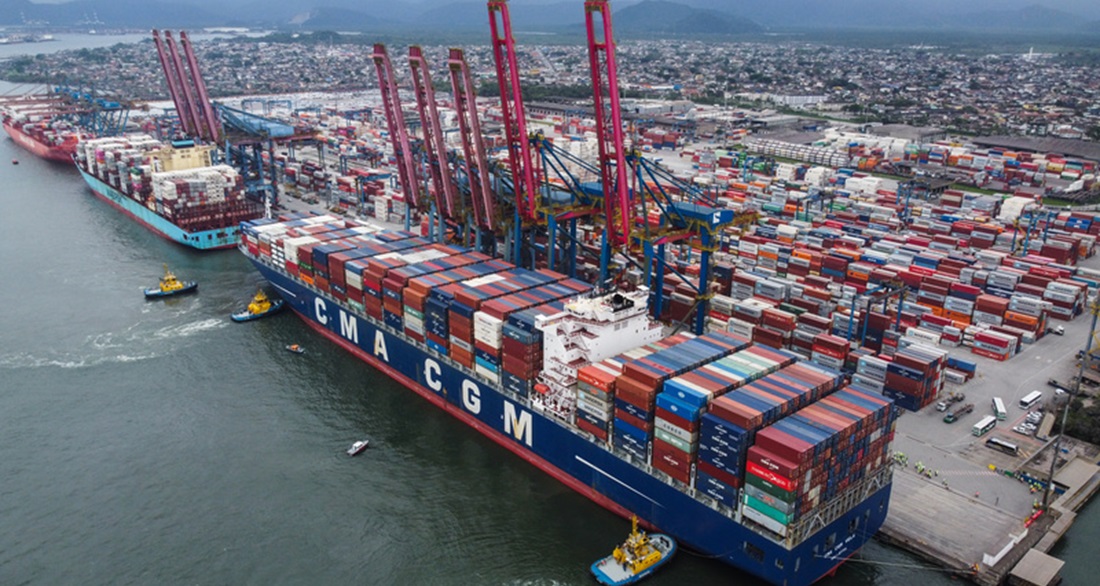
Tecon Santos, the largest container terminal in Latin America and operated by Santos Brasil at the Port of Santos, is among the assets that could benefit from the newly formed joint venture United Ports LLC. The company stems from a partnership between shipping line CMA CGM — which controls Santos Brasil — and global infrastructure fund Stonepeak. The transaction was disclosed to the market last week.
Stonepeak will invest roughly R$12 billion to acquire a 25% minority stake in the joint venture, which brings together ten terminals operated by CMA CGM across six countries: Brazil, the United States, Spain, India, Taiwan and Vietnam.
CMA CGM Group CEO Rodolphe Saadé said the partnership with a specialist infrastructure investor enhances the group’s capacity to invest in port terminals. Stonepeak CEO James Wyper noted that container terminals are strategic, hard-to-replicate assets and that the joint venture offers a differentiated opportunity to invest in a high-quality portfolio.
In a statement, Santos Brasil said it is not a direct party to the transaction, that there is no change in its shareholding control, and that there is no immediate impact on operations, governance or contracts. Any future developments will depend on regulatory approvals, and the company said it will keep the market informed.
Port consultant Ivam Jardim said the move could strengthen Tecon Santos’ investment capacity. According to him, Stonepeak’s entry provides long-term capital to CMA CGM, which has made significant acquisitions in recent years. This could accelerate planned investments and enable new expansion projects, enhancing the terminal’s competitiveness.
Consultant Luis Claudio Montenegro said the joint venture reflects a broader structural shift in the global port sector, with shipping lines expanding vertical integration and combining terminal operations with long-term financial capital. In Brazil, he said, the impact is particularly relevant given the involvement of the Port of Santos. Under the right conditions, the arrangement could boost investments in capacity, technology and productivity.
Montenegro added that the main risk lies not in vertical integration itself, but in potential regulatory barriers that could stall investments and reduce competition at a time when Brazil needs to expand scale and efficiency in foreign trade.
Source: A Tribuna
-
Ports and Terminals
Jan, 10, 2024
0
APM Terminals completes land purchase for Suape terminal
-
Ports and Terminals
Feb, 23, 2026
0
Indigenous protesters occupy Cargill’s Santarem port terminal in Brazil
-
Ports and Terminals
Sep, 05, 2019
0
TCP sets two new records in August
-
Other Cargo
Jul, 30, 2025
0
Brazil cotton exports hit all-time high in 2024/25 season