


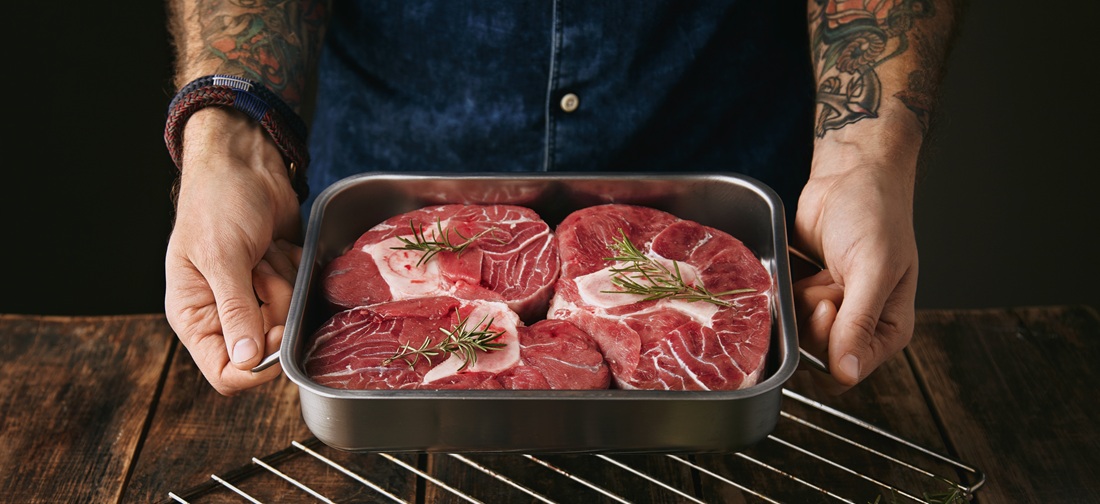
Trump expands Argentine beef imports by 80,000 tonnes to try to curb U.S. prices
Feb, 11, 2026 Posted by Sylvia SchandertWeek 202607
U.S. President Donald Trump signed a decree on the 6th temporarily increasing imports of Argentine beef at reduced tariffs.
The order establishes an additional 80,000 metric tonnes in the import quota for the product in 2026. The measure applies only to lean beef trimmings specifically from the South American country. Lean trimmings are smaller cuts of beef with low fat content, typically leftover from the deboning and cutting of larger portions of cattle.
The decision, aimed at lowering food prices, comes amid criticism of the Trump administration over the rising cost of living — an issue that helped boost Democratic candidates’ electoral victories in 2025.
Beef prices in the U.S. reached record levels last year, driven by strong demand and a decline in cattle supply. The scenario benefited ranchers — who largely supported Trump — but increased pressure on consumers.
“As President of the United States, I have a responsibility to ensure that American workers can feed themselves and their families,” Trump said in the decree.
According to the Republican president, the measure was taken after discussions with the U.S. Secretary of Agriculture and is intended to increase the supply of ground beef for American consumers.
Economists interviewed by Reuters, however, said the increase in Argentine beef imports is unlikely to significantly reduce costs for Americans. Food companies are more likely to benefit.
Meanwhile, representatives of the cattle sector — who had already opposed similar decisions — criticized the move.
“Instead of imports that harm American ranchers, we should focus on solutions that reduce bureaucracy, lower production costs, and support the expansion of our herd,” said Republican Senator Deb Fischer of Nebraska, a major cattle-producing state.
In total, the U.S. imported around 33,000 metric tonnes of Argentine beef in 2024, accounting for 2% of total imports, according to government data.
Recently released data from Datamar shows that Argentina exported 3,545 TEUs of beef to the U.S. in 2025, representing a 38% increase. The following is a compilation of historical data for Argentine containerized beef exports to the U.S. between 2022 and 2025:
Argentine Beef | Jan 2022 – Dec 2025 | TEUs
Source: DataLiner (click here to request a demo)
Trade agreement and critical minerals exploration
On the 5th, the U.S. and Argentina signed a trade agreement providing for tariff reductions and a reciprocal investment plan.
The understanding also covers critical materials, in line with Trump’s strategy to reduce dependence on China, which currently dominates the production and refining of these essential inputs for technology, energy, and defense.
According to the text, there will be U.S. cooperation and investment across the entire sector chain in Argentina — from exploration to refining, processing, and export.
U.S. Ambassador and trade negotiator Jamieson Greer announced the agreement after meeting with Argentina’s Minister of Foreign Affairs, International Trade, and Worship, Pablo Quirno.
“The deepening partnership between President Trump and President Milei serves as a model for how countries of the Americas, from Alaska to Tierra del Fuego, can advance our shared ambitions and protect our economic and national security,” Greer said.
According to the U.S. trade representative, the agreement “reduces long-standing trade barriers and provides meaningful market access for U.S. exporters.” The expectation, he added, is to expand business ranging from motor vehicles to agricultural products.
The document released by the U.S. government indicates that the agreement does not enter into force upon signature. It will take effect 60 days after the exchange of written notifications confirming completion of internal legal procedures — or on another date agreed upon by the countries.
Once in force, Argentina will eliminate tariffs or reduce them to around 2% on thousands of U.S. products, and will also open duty-free quotas for strategic items such as 80,000 tonnes of beef and 10,000 vehicles.
In return, the U.S. will eliminate tariffs on selected Argentine agricultural products and cap potential surcharges on other goods at 10%.
The trade opening also предусматриes the elimination of Argentina’s statistical tax — a fee charged on imports to fund customs services — within three years. Tariff reductions will be gradual, applied annually on January 1.
In an official statement, President Javier Milei’s government celebrated the agreement, saying it consolidates a “strategic relationship” between the countries, based on economic openness, clear rules for international trade, and “a modern vision of trade complementarity.”
“The signing of this agreement, achieved thanks to President Javier G. Milei’s vision of openness and regional integration, and his excellent relationship with U.S. President Donald J. Trump, is another pillar that allows Argentina to once again be part of the Western world,” the statement said.
Other investments
Beyond critical minerals, the Agreement between the United States and the Republic of Argentina on Reciprocal Trade and Investment (ARTI) expands access for U.S. investments in other strategic sectors of Argentina’s economy, including:
* Energy: facilitating investments across the entire chain, from exploration and production to refining, transport, and power generation, focusing on energy security and industrialization.
* Infrastructure: investments in telecommunications, transport, and logistics, including shipbuilding and navigation.
* Technology and communications: opening for investments in information and communications infrastructure, such as 5G and 6G networks, satellites, and submarine cables.
* Capital goods: facilitating the entry of machinery and equipment, including used and remanufactured items, for construction, agriculture, mining, and healthcare.
* Defense: simplifying and expanding trade and industrial cooperation in the sector.
* Financing: potential support from U.S. agencies such as EXIM Bank and DFC, in partnership with the private sector.
Talks with Brazil
Reuters reported that Brazil attended a meeting in the U.S. on Wednesday (4), where U.S. Vice President J.D. Vance presented plans to bring allies together in a critical minerals trade bloc. The Brazilian government is still assessing whether to join the group.
Brazil’s Foreign Ministry confirmed to Reuters that the country was present at the meeting through its Embassy in Washington, but did not indicate whether Brazil might join the initiative or how potential participation would work.
A Brazilian government source told Reuters that the country is open to partnerships, provided they generate added value. According to the source, given the scale of the issue, it needs to be handled bilaterally, and a decision will not be made quickly.
Source: G1
-
Meat
Oct, 29, 2019
0
BRF signs memorandum to invest US$120m in factory in Saudi Arabia
-
Blog Statistics (ENG)
Jun, 12, 2026
0
East Coast South America Top Trading Countries | Jan-Apr 2026 vs. Jan-Apr 2025 | DataLiner
-
Ports and Terminals
May, 27, 2020
0
Zoning and Development Plan for Itaqui port approved
-
Ports and Terminals
May, 27, 2025
0
Operational drill tests emergency vessels at the Port of Rio Grande