


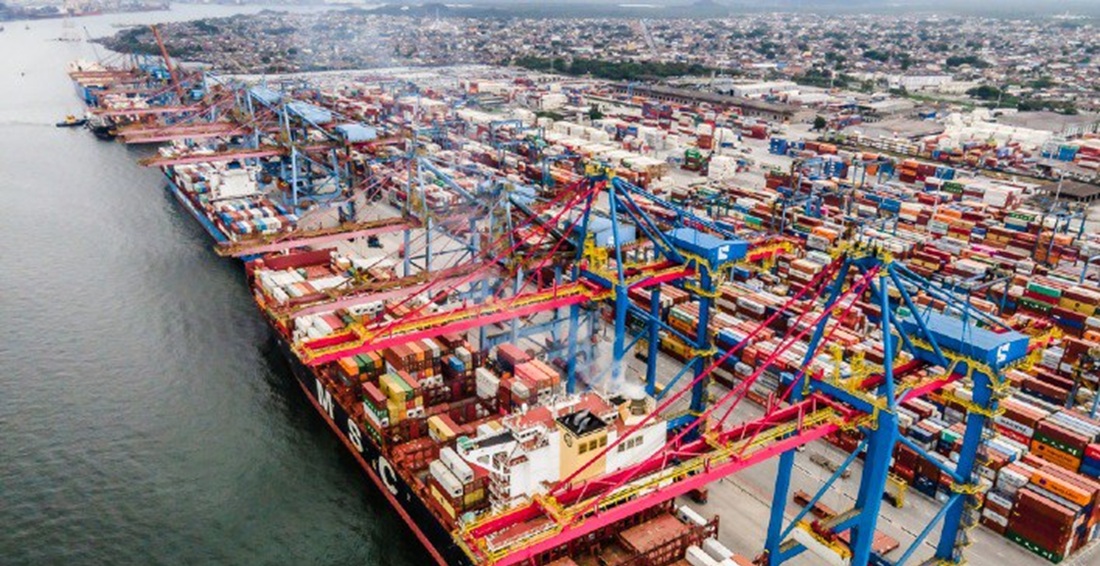
Port of Santos posts cargo growth, exposing structural limits in the Anchieta–Imigrantes system
Feb, 18, 2026 Posted by Sylvia SchandertWeek 202607
The handling of 635.3 million tonnes of cargo between January and November of last year confirms the leading role of ports in Brazil’s Southeast Region within the country’s logistics infrastructure. This represents growth of 6.01% compared with the same period in 2024, a performance that contributed decisively to the positive results of Brazil’s trade balance, which reached a record US$ 348 billion in exports between 2023 and 2025. Within this context, the Port of Santos closed 2025 with its best result in history, handling 186.4 million tonnes, a 3.6% increase over the previous record set in 2024.
The performance has been closely monitored by the Federation of Cargo Transport Companies of the State of São Paulo (FETCESP), underscoring the significance of these results for São Paulo’s logistics infrastructure, especially in the Santos region, home to the largest port in Latin America. According to the federation, the growth further consolidated the Baixada Santista’s strategic position in Brazil’s foreign trade.
“These are significant, robust figures that bring pride to all of us here in the Baixada Santista. The Port of Santos once again demonstrates its strength and operational capacity. But those who deal with day-to-day operations know that every tonne handled requires an enormous logistical effort,” says Roseneide Fassina, regional vice president of FETCESP and president of SINDISAN, the Commercial Cargo Transport Companies Union of the São Paulo Coast.
Below is a historical overview of container exports and imports through the Port of Santos starting in January 2022. The chart was prepared using DataLiner data.
Port of Santos | Exports & Imports | Jan 2022 – Dec 2025 | TEUs
Source: DataLiner (Click here to request a demo)
According to Fassina, the growth in volumes also highlights structural weaknesses that have yet to be fully resolved. Logistics bottlenecks and access limitations to the Port of Santos remain critical issues, with the main constraint lying in the Anchieta–Imigrantes System (SAI), which controls vehicle flows between the plateau and the Baixada Santista.
“We experience traffic peaks that directly affect mobility in the region. At certain times of the day, more than 600 trucks per hour pass through the system. This does not mean that all of them are heading to the port, but the pressure on infrastructure is real and constant,” Fassina explains. “Trucks that arrive ahead of their scheduled time end up waiting, which creates queues, increases costs, and impacts the entire supply chain.”
In practice, road cargo transport is the main mode responsible for moving goods to and from the Port of Santos, especially in foreign trade, where exports are decisive for the port complex’s performance. Any disruption or slowdown in traffic flows directly affects shipping schedules, terminal productivity, and operating costs.
The federation also notes that the challenge goes beyond road access. Yard capacity, scheduling systems, and supporting infrastructure must keep pace with growing volumes. Without structural expansion, higher throughput is likely to intensify pressure on the system.
In this context, intermodality is seen as a strategic path forward. According to the regional president of the federation: “If we had greater rail integration with road cargo transport, we would reduce part of the pressure on access routes and increase the efficiency of the system as a whole. Multimodal integration brings both economic and environmental benefits.”
Beyond modal integration, technological modernization and the sustainability agenda are also part of the discussion. Against this backdrop, one of the federation’s key demands is the expansion of the Port of Santos area. “Today, the port complex covers 7.8 million square meters, but with the inclusion of peripheral areas within the port’s boundaries, this could reach 20.4 million square meters. This expansion is essential to ensure future capacity and prevent growth from turning into a bottleneck,” Fassina concludes.
Source: FETCESP
-
Shipping
Apr, 22, 2026
0
Despite the war, 12 ships have already sailed from Brazil to the Gulf
-
Economy
Jul, 11, 2022
0
Red flag: Brazil export basket to China not nearly diverse enough
-
Jun, 25, 2025
0
Middle East Tensions Disrupt Urea Supply, Push Up Fertilizer Costs in Brazil
-
Ores
Sep, 18, 2023
0
New terminal in Itaguai Port will open doors for mining companies