


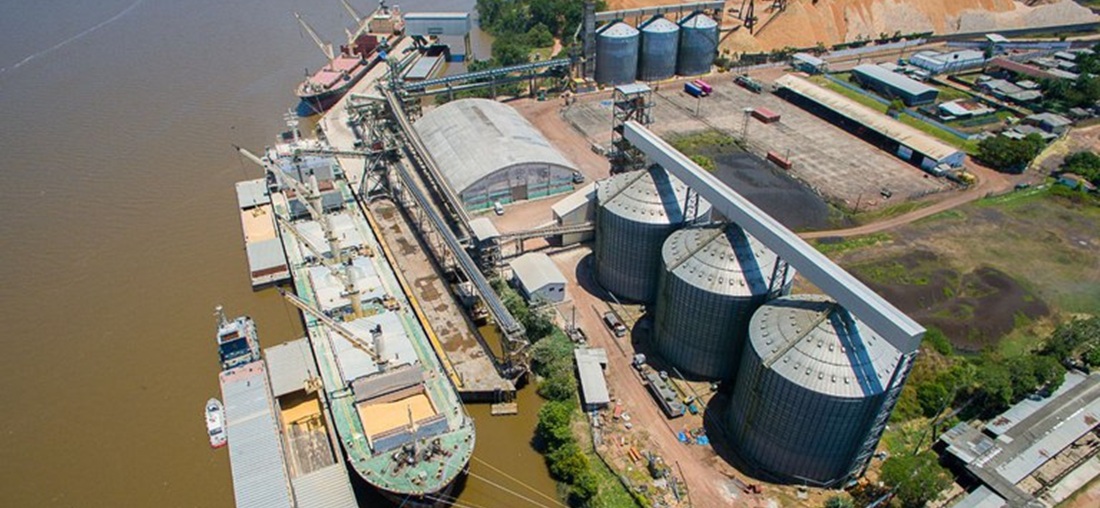
Port of Santana strengthens the Northern Corridor and expands inland grain transport in 2025
Mar, 16, 2026 Posted by Sylvia SchandertWeek 202612
The Companhia Docas de Santana (CDSA) reached a significant milestone in Brazil’s inland navigation sector in 2025. The Port of Santana handled 1,182,994 tonnes of cargo via inland waterways (grain barges), a 35.5% increase from 2024. The highlight was the sharp rise in grain unloading volumes: soybean shipments grew by 63.2%, and corn increased by 42%.
The following breakdown tracks the historical progression of outbound volumes recorded at the Port of Santana since January 2023, according to Datamar market intelligence:
Cargo Exports | Port of Santana | Jan 2023 – Jan 2026 | WTMT
Source: DataLiner (click here to request a demo)
The performance reinforces the consolidation of the so-called Northern Corridor as an efficient and competitive alternative for shipping crops from Brazil’s Midwest, particularly Mato Grosso, the country’s largest grain-producing state.
The competitive advantage begins at the origin. When grains depart from Sorriso (MT) bound for traditional ports in Brazil’s South and Southeast, logistics costs are typically higher. By shifting part of the route to waterways through the Northern Corridor, long road stretches are replaced by river transport, reducing costs, optimizing transit times, and improving logistical predictability.
Estimates indicate that freight costs for crops shipped from the Midwest through Brazil’s northern ports can be reduced by up to 34%. In addition, exporting via the North provides easier access to the Panama Canal, cutting approximately four days from the round-trip travel time between Brazil and China — a strategic advantage in global trade.
The scale of river operations is also noteworthy. A convoy with 20 grain barges can transport 56,000 tonnes of cargo, with each barge capable of carrying 2,800 tonnes. In comparative terms, a single convoy is equivalent to 1,120 road trains, assuming each truck carries around 50 tonnes. This directly reduces highway traffic, lowers infrastructure wear, and helps mitigate emissions.
Another key factor driving growth at the Port of Santana is the search for alternatives to bottlenecks and congestion at ports such as Santos and those in Paraná, where queues and long waiting times increase costs and disrupt logistics schedules.
In this context, the Port of Santana is consolidating its role as a strategic solution, offering lower operational saturation and smoother cargo handling for oceangoing vessels.
The 35.5% increase in 2025 reaffirms CDSA’s role as a driver of regional and national logistics development. Expanding the use of inland waterways strengthens the competitiveness of Brazilian agribusiness, promotes multimodal efficiency, and positions Brazil’s North as a key logistics corridor for foreign trade.
With strong results and continued growth prospects, inland navigation through Santana is no longer merely an alternative but is becoming a central pillar in Brazil’s strategy for exporting agricultural production.
Source: Portal Portuario
Related Post
-
Ports and Terminals
Mar, 17, 2021
0
Imbituba completes inaugural shipment of calcined petroleum coke
-
Ports and Terminals
Mar, 09, 2023
0
Brazil’s Log-In sets annual record with over BRL 2 bln in revenue
-
Ports and Terminals
Dec, 19, 2025
0
Fertilizer Imports Reach the Best Performance in the History of the Port of Itaqui
-
Shipping
Dec, 12, 2019
0
Agency holds ANTAQ Award ceremony