


Why anxieties are rising over the Malacca Strait, Asia’s key shipping route
Apr, 29, 2026 Posted by Gabriel MalheirosWeek 202618
Disruptions to shipping in the Strait of Hormuz have raised concerns about vulnerabilities in another critical maritime corridor half a world away.
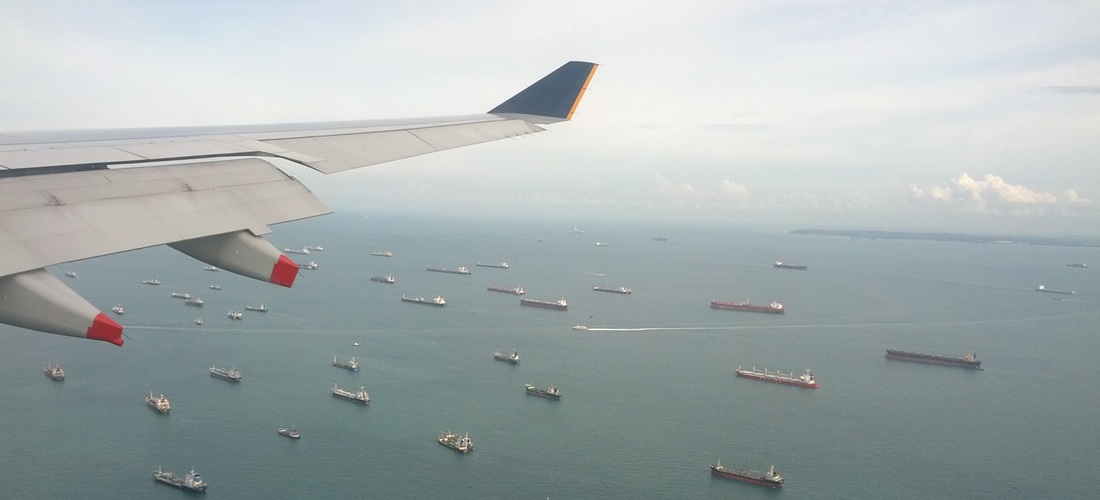
The Strait of Malacca – a narrow stretch of water between Indonesia and Malaysia that funnels trade past Singapore – carries more than a fifth of global maritime trade and is the world’s busiest chokepoint.
Long seen as a strategic vulnerability – particularly by China, which relies heavily on the route for energy imports – the strait has come into sharper focus following the effective shutdown of the Hormuz strait by Iran in response to US and Israeli military attacks.
While the Malacca Strait is governed by international rules guaranteeing free passage, concern spread after a top Indonesian official briefly floated the idea of transit tolls.
Officials in the region have since reaffirmed that the strait will remain open and toll-free. Even so, the episode highlights how sensitive global trade remains to disruption along one of its most heavily used corridors.
Significance of Strait of Malacca
It is one of the world’s most important shipping lanes, linking the Indian Ocean with the South China Sea and the wider Pacific.
Stretching about 805km between the Indonesian island of Sumatra and the Malay Peninsula, with Thailand to the north and Singapore at its southern entrance, it provides the shortest sea route between the Middle East and East Asia.
That efficiency has made it indispensable.
More than 102,500 ships transited the strait in 2025, up from about 94,300 the previous year, according to Malaysia’s Marine Department.
A wide mix of cargo passes through, including crude oil, liquefied natural gas, coal, palm oil and iron ore, as well as manufactured goods.
In the first half of 2025, about 23.2 million barrels of oil a day were shipped through the strait, according to the US Energy Information Administration, supplying major economies including China, Japan and South Korea.
That exceeds the roughly 20.9 million barrels that passed through the Strait of Hormuz over the same period.
What makes Strait of Malacca a chokepoint?
At its narrowest, the strait is just 2.7km wide, underscoring its vulnerability given the sheer volume of traffic it carries.
That increases the risk of collisions and groundings, particularly in its busiest stretches. Even localised disruptions can slow traffic and push up shipping costs.
Piracy and armed robbery are also of concern – there has been an uptick in attacks bringing the total to 108 in the Malacca and Singapore straits in 2025.
While alternative routes through Indonesia’s archipelago exist, they are not as convenient or easy to navigate.
The Sunda Strait is shallow in parts and lies near an active volcano.
The route via the Lombok and Makassar straits adds significant time and expense.
A voyage from the port city of Ras Tanura in Saudi Arabia to Japan is more than twice the distance of a transit via the Malacca Strait.
Who controls Strait of Malacca?
Indonesia, Malaysia and Singapore border the strait and exercise sovereignty over their territorial waters, which can extend up to 12 nautical miles from their coastlines under the United Nations Convention on the Law of the Sea.
The three littoral states established a tripartite framework in 1971 to coordinate management of the strait.
At the same time, the strait is classified as an international strait, meaning ships and aircraft have the right of transit passage – allowing them to move continuously and without obstruction.
Coastal states cannot suspend transit or charge ships simply for passage under international law, though fees for specific services are permitted.
The three countries, along with Thailand, coordinate closely on security and safety, including anti-piracy efforts and joint patrols.
While no single nation controls the strait outright, their geographic positions give them significant influence over one of the world’s most important trade routes.
Why is there increased anxiety over Malacca Strait?
Threats to shipping in the Strait of Hormuz have underscored how quickly chokepoints can become geopolitical flashpoints and drags on the global economy.
Indonesian Finance Minister Purbaya Yudhi Sadewa floated – and quickly walked back – the possibility of charging ships to transit the strait after Iran moved to do so in the Hormuz strait.
The Indonesian Defence Ministry is also weighing a US proposal for military aircraft overflight access through Indonesian airspace, something that drew significant pushback within its own military establishment, including over sovereignty concerns.
Singapore responded quickly, stressing that the strait must remain open and free for international navigation.
Malaysia has also emphasised the importance of maintaining unimpeded passage, reflecting a shared interest among littoral states in keeping traffic flowing.
The Hormuz-strait crisis has also spurred Thailand, just to the north-east of the Malacca Strait, to draw attention back to its longstanding goal of creating a land bridge of highways and railways across its southern peninsula.
That would bypass the strait and cut transit times, but it is seen as a very challenging endeavour both logistically and financially.
Why is Malacca Strait so important to China?
China is among the countries most exposed to risks in the Strait of Malacca. It is the world’s largest oil importer, with most of its supplies transported by sea and passing through the waterway.
That vulnerability has driven efforts to diversify supply routes, including pipelines from Central Asia and Russia and investments in alternative corridors under the Belt and Road Initiative, including across Myanmar.
Even so, maritime routes remain central to China’s economy, leaving it highly sensitive to instability along the Malacca corridor.
China’s leaders have long viewed the strait as a strategic vulnerability in a conflict scenario – a concern often referred to as the “Malacca Dilemma”, a term popularised during the presidency of Hu Jintao in the early 2000s.
The picture is further complicated by competing territorial claims in the nearby South China Sea and Beijing’s strategic rivalry with the US for maritime influence in the region.
South-east Asia’s waterways have been used for ship-to-ship transfers involving Iran’s “dark fleet”, which moves oil through covert methods to evade sanctions, with much of it ultimately reaching Asian markets, including China.
Chairman of the Joint Chiefs of Staff Dan Caine said in April that American forces would “actively pursue” vessels attempting to provide material support to Iran, including those carrying Iranian oil.
Source: Strait Times
-
Other Cargo
Mar, 18, 2022
0
JBS invests BRL 134 million to produce fertilizers
-
Economy
Mar, 10, 2025
0
Commodity Price Drop and Oil Platform Imports Push Brazil’s Trade Balance into Deficit
-
Ports and Terminals
Apr, 11, 2025
0
Port of Santos, SP, Joins Sustainability Pact from the Ministry of Ports and Airports — Here’s What It Means
-
Meat
Jan, 09, 2024
0
Brazil dodges bird flu threat to post record chicken exports – industry lobby