


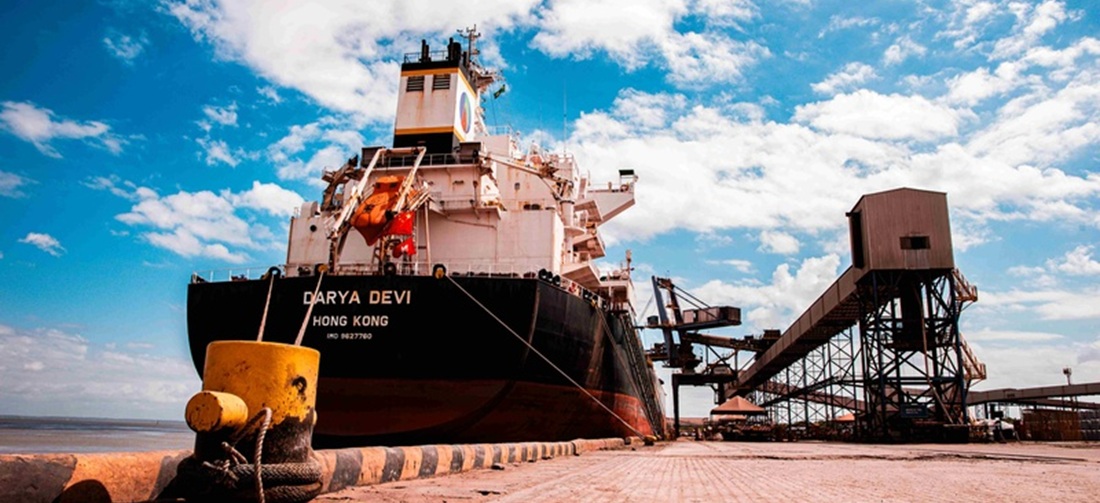
Port of Itaqui strengthens Northern Arc’s role in Brazil’s export logistics
Jun, 15, 2026 Posted by Gabriel MalheirosWeek 202626
The Port of Itaqui, in São Luís, Maranhão, has become one of Brazil’s main gateways for fertilizer imports used in agricultural production and a key export outlet for soybeans and corn grown in the Center-North region. A major logistics hub for Brazilian agribusiness, Itaqui is the country’s fourth-largest public port and the main asset in the Northern Arc, a strategic corridor that handles about 38% of Brazil’s crop exports.
Its location gives Brazil facilitated access to major markets such as Europe, North America and Asia, helping reduce shipping distances, logistics costs and transit times.
Ports and Airports Minister Tomé Franca said the route is critical to Brazil’s economic sovereignty.
“The Northern Arc is no longer a promise. It has become essential to Brazil’s competitiveness. Itaqui offers efficiency and agility, easing pressure on ports in the South and Southeast and creating a much smarter export route,” he said.
The geography of growth
The Northern Arc covers the states of Maranhão, Pará, Amazonas, Amapá and Rondônia. Together, they form a logistics frontier that connects agricultural production from Brazil’s Center-West and MATOPIBA region — Maranhão, Tocantins, Piauí and Bahia — to global markets.
Within that network, Itaqui stands out for its natural conditions. Port President Orquelina Costa said the port’s draft is a key advantage.
“We have berths ranging from 12 to 26 meters in depth, which allows us to receive the world’s largest vessels. This natural infrastructure, combined with continued investment in technology and sustainability, places us at the forefront of foreign trade,” she said.
Multimodal links and major investments
Itaqui’s efficiency goes beyond its maritime access. The port is connected to a broad transport network that gives more predictability and agility to grain, ore and pulp logistics, while also supporting fertilizer and fuel imports.
Local road and airport infrastructure connects directly to three major railways: the 4,238-kilometer Transnordestina railway, operated by FTL, which crosses seven northeastern states; the 892-kilometer Carajás Railway, which carries ores and pulp produced in the Imperatriz region of Maranhão; and the North-South Railway, a key link between the port complex and major production regions in the Southeast and Center-West.
To support continued expansion, the Ministry of Ports and Airports and the Maranhão state government brought forward the renewal of port management by Empresa Maranhense de Administração Portuária (Emap) through 2051. The renewal secures a R$1.3 billion investment plan. Additional private investment, including R$221.5 million to modernize the copper terminal operated by Vale by 2030, is also expected to expand the port’s operating capacity.
Regional economic impact
Beyond its role in Brazil’s trade balance, Itaqui supports a broad regional business network. The port’s activity involves importers, transport companies, input suppliers and major fuel distributors, including Petrobras, Granel Química, Terminal Marítimo do Maranhão, Petróleo Sabbá and Ipiranga.
This ecosystem generates thousands of direct and indirect jobs, supporting dockworkers and driving the local economy under the joint oversight of agencies such as Antaq, the Federal Revenue Service, the Federal Police, Anvisa and Vigiagro.
Source: Ministry of Ports and Airports
-
Ports and Terminals
Aug, 10, 2023
0
Brazil gov’t to auction off five port areas on Friday, August 11
-
Ports and Terminals
Jul, 27, 2022
0
New crop boosts activities at the Port of Paranaguá
-
Ports and Terminals
May, 19, 2026
0
Wilson Sons plans Tecon Rio Grande expansion to handle larger vessels and Southern Cone market
-
Ports and Terminals
Aug, 16, 2022
0
Port of Maceió throughput grows by more than 43% in 2Q22