


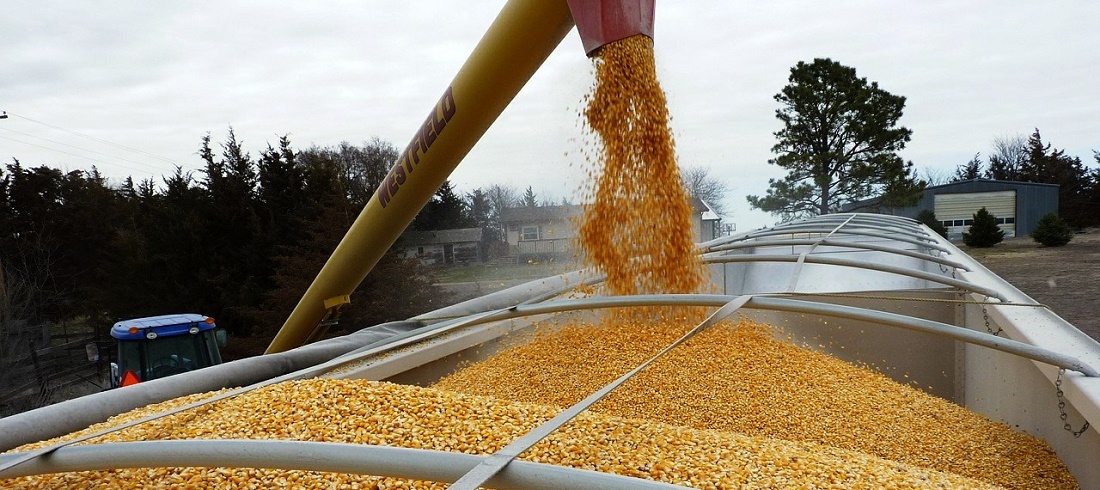
Argentina’s corn exports head for record 45 million tonnes, US$9 billion in revenue
Jun, 18, 2026 Posted by Gabriel MalheirosWeek 202625
Argentina’s corn exports are on track to set a new volume record and generate one of the highest foreign-exchange inflows ever recorded for the crop, according to private-sector sources.
In the 2024/25 marketing season, Argentina exported 29.1 million tonnes of corn, generating US$6.1 billion. For the 2025/26 season, shipments are expected to reach 45 million tonnes and bring in US$9 billion. That would represent a 54.6% increase in volume and a 47.5% rise in value.
In container terms, Argentina exported 2,543 TEUs in the first four months of 2026. The chart below provides a month-by-month breakdown of Argentina’s corn export volumes, based on data obtained and processed by Datamar.
Argentina Corn Exports | Jan 2023 – Apr 2026 | TEUs
Source: DataLiner (click here to request a demo)
The projected jump is tied to crop size. Argentina has produced large corn volumes in recent years, and the current harvest is expected to reach a record level. The Rosario Board of Trade estimates production at 68 million tonnes, up from more than 50 million tonnes in the previous cycle, while the government projects 70 million tonnes. The Buenos Aires Grain Exchange, which forecasts a 64-million-tonne crop, said the harvest has reached 43.6% of the suitable area. Farmers are now close to finishing the soybean harvest and are expected to continue with corn afterward.
Official data for the first two months of the 2025/26 marketing season, March and April, already show a strong start.
“According to INDEC data, 9.9 million tonnes of corn were exported in the first two months of the 2025/26 marketing season, a volume that exceeds both the same point in the previous cycle and the five-year average by 3.2 million tonnes,” said Mateo Schildknecht, grain analyst at consultancy AZ-Group.
Vietnam was the top destination for Argentine corn, buying 1.8 million tonnes. At the same point in the previous marketing season, corn exports to Vietnam were 700,000 tonnes lower, Schildknecht said. Over the full 2024/25 cycle, Argentina shipped 5.3 million tonnes of corn to that market.
Egypt ranked second, with 1.6 million tonnes, followed by Peru, with 870,000 tonnes. Over the past five years, those three markets have accounted on average for 16%, 6.5% and 9.6% of Argentine corn exports, respectively, Schildknecht said.
In value terms, exports in the early part of the current marketing season reached US$2.072 billion, up from US$1.493 billion at the same point in the previous cycle, according to the analyst.
Exporters have already registered sworn export sales declarations, known as DJVE, for 19 million tonnes.
“If the current shipment pace is maintained, exports could reach around 45 million tonnes over the full campaign, setting a new historic record. That volume would exceed the five-year average by 11.8 million tonnes and surpass the previous record of 40.9 million tonnes, set in the 2020/21 campaign,” Schildknecht said.
Although the volume would be a record, revenue is not currently expected to set a new high. Schildknecht projected export earnings of US$9 billion, based on an FOB price of US$200 per tonne. In 2020/21, stronger prices lifted corn export revenue to about US$9.4 billion.
For Schildknecht, the main factor behind the expected export boom is the record harvest, with estimates ranging from 64 million to 70 million tonnes depending on the source.
Eugenio Irazuegui, of Zeni, analyzed the data for the calendar year rather than the marketing season. He said corn exports from January through May totaled 14.98 million tonnes, above the 14.41 million tonnes shipped in the same period of 2025.
He said the increase was concentrated in March, April and May, as the new crop entered the market.
Argentine corn is also competitively priced against supplies from other major exporters, including Brazil and the United States.
“Export FOB prices are between US$5 and US$10 per tonne lower, with most overseas sales going to buyers in Asia,” Irazuegui said. “Brazil is expected to become more competitive for July-August shipments once the safrinha harvest is more widely available.”
Adapted from La Nación
-
Fruits
Apr, 07, 2025
0
U.S. Tariff Hike Could Cost Brazilian Orange Juice Exporters Over $200 Million Annually – CitrusBR
-
Economy
May, 22, 2024
0
Brazil and US to draft thorough study on bilateral trade over 200 years of diplomatic relations
-
Other Logistics
Jul, 06, 2020
0
Argentine railway cargo volume up 27% in first semester of 2020
-
Meat
Apr, 25, 2025
0
Brazilian Pork Exports Post Double-Digit Growth in Q1 2025