


Brazil signals plan to sell yuan-denominated bonds in outreach to China and BRICS partners
Jun, 25, 2026 Posted by Gabriel MalheirosWeek 202626
Brazil formally signaled on Thursday (25) in Beijing that it intends to issue sovereign debt in China’s local currency market, a move the government sees as part of a broader strategy to diversify its external financing.
The announcement came through a letter of intent delivered by Finance Minister Dario Durigan to Pan Gongsheng, governor of the People’s Bank of China, the country’s central bank.
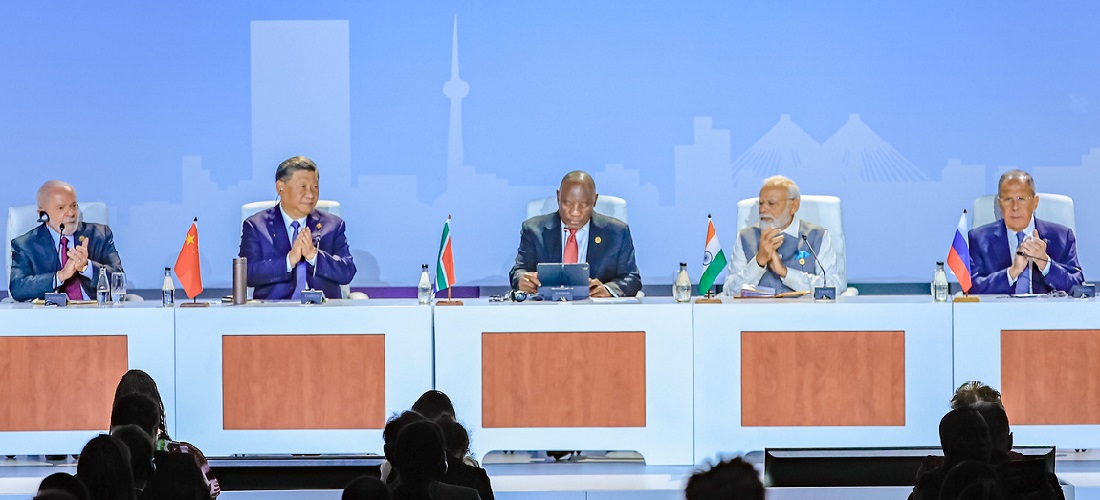
The proposed issuance comes as Brazil and China deepen economic ties and as BRICS countries continue to discuss greater use of local currencies in trade and finance, part of a wider push to reduce dependence on the U.S. dollar.
Yuan-denominated bonds issued by foreign entities in China are known as “panda bonds,” a reference to one of the country’s national symbols. They allow foreign governments or companies to raise funds directly from Chinese investors, who buy the securities and receive interest payments in local currency.
The size of Brazil’s planned issuance has not yet been defined. Durigan told Reuters that the first sale in China could mirror Brazil’s April return to the euro market, when the country issued bonds in Europe for the first time in more than a decade.
“We raised 5 billion euros in Europe. We have not yet defined the amount here in China for the first issuance, but it will be up to 5 billion yuan,” he said.
Durigan recalled that the European transaction was Brazil’s largest-ever single round of sovereign bond issuance, raising 5 billion euros, or about R$30 billion. Strong investor talks and favorable market conditions helped the Lula administration move ahead with the sale.
At the ceremony marking the delivery of the letter of intent, Durigan said Brazil’s move was a vote of confidence in China.
“It is a sign that we should work together if we want to improve the lives of our people,” he said after a bilateral meeting at China’s central bank.
The transaction also carries diplomatic weight, signaling emerging markets’ interest in alternatives to a global financial system still dominated by the dollar.
“We need to test and begin the path of Brazil’s sovereign debt in China,” Durigan said.
By submitting the document, Brazil is telling China that it has met all the requirements for the bond sale. The operation now depends on final approval from authorities in Beijing. The Brazilian government has not said how much it intends to raise.
“We will wait for the best market window to carry out the issuance in the coming months,” Durigan said. Speaking to Reuters, he estimated the timeline at two to three months.
Slovenia had the largest debut in the panda bond market earlier this year, raising 4 billion yuan through a three-year bond.
Durigan said Brazilian companies had asked the government to begin issuing yuan-denominated debt to help them raise funds through private panda bond deals and reduce exposure to exchange-rate volatility in Brazil. He said he had discussed the plan with mining company Vale and electrical equipment maker WEG.
“The profitability of projects in Brazil is very good, but volatility in real exchange rates can affect the final result. That is why we are offering a currency hedge tool for these investments,” Durigan said.
Brazilian delegation in China
Durigan has been in China since Wednesday (24). During the trip, he also visited Wind Information, one of the country’s main financial data providers, to discuss the publication of information on Brazil’s market, especially the bonds once they become available, directly to local investors.
According to the Brazilian government, selling bonds in China’s currency is a way to reduce dependence on the dollar. Bruno de Conti, a professor of international economics at the University of Campinas, said the move also has a political dimension.
De Conti said Brazil wants to show Beijing that the two countries are aligned in the effort to move toward de-dollarization, while also signaling confidence in China’s central bank and positioning itself more broadly as a country seeking to diversify the currencies used in transactions.
“It was a geopolitical move to signal this bilateral partnership with China, but also within BRICS, to show a willingness to move forward and support a de-dollarization effort,” he said.
The founding BRICS countries — Brazil, Russia, India and China — have discussed reducing reliance on the dollar for years. At the bloc’s first summit in Russia in 2009, members discussed the possibility of using local currencies in trade among themselves. At the time, Lula said the use of local currencies between countries would take years.
The goal was to reduce dependence on the U.S. currency and make countries less vulnerable to crises, such as the one seen in 2008. The debate remained mostly in the background but gained momentum in recent years because of geopolitical conflicts and U.S. sanctions. Sanctions imposed on Russia after its invasion of Ukraine, for example, strengthened the argument for alternatives to the dollar.
Brazil and China completed their first transaction financed and settled in Chinese yuan and converted directly into reais in 2023, involving a pulp export by Eldorado Brasil, which has a subsidiary in Shanghai. Other companies, including Suzano and Vale, later carried out similar transactions, although most of their trade still remains dollar-denominated.
The BRICS push for de-dollarization, now involving not only the bloc’s founding members but also newer entrants such as the United Arab Emirates, has drawn criticism from U.S. President Donald Trump.
In July 2025, Trump said he would impose additional import tariffs on BRICS countries, saying they were trying to “destroy the dollar.”
Source: Folha de São Paulo
-
Trade Regulations
Jan, 07, 2021
0
Portuguese EU presidency wants to sign trade agreement with Mercosur
-
Ports and Terminals
Jan, 04, 2022
0
Port of Itaguaí is granted environmental license
-
Economy
Jan, 09, 2026
0
After tariff hikes, U.S. records lowest trade deficit since 2009
-
Sugar and Ethanol
Jul, 13, 2026
0
Tereos ships record 75,000 tonnes of VHP sugar to China in partnership with VLI