


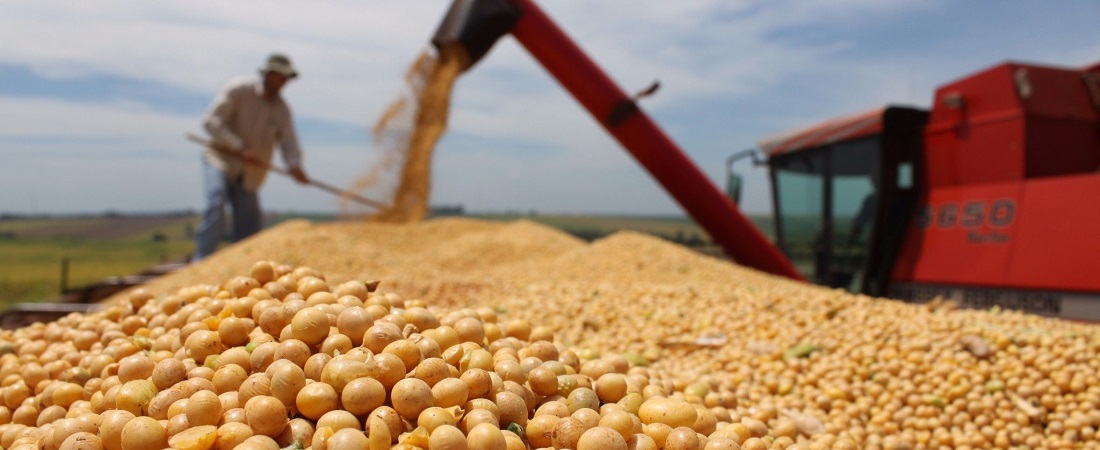
China accepts Brazil’s environmental law for soybean imports
Jul, 06, 2026 Posted by Sylvia SchandertWeek 202628
China will require Brazilian soybean suppliers to comply with Brazil’s environmental legislation before fullfiling its soybean imports, but no more than that. Chinese buyers had initially planned to adopt stricter standards modeled on Brazil’s Soy Moratorium, but abandoned the proposal after lobbying by the Mato Grosso Soybean and Corn Producers Association (Aprosoja MT).
Two years ago, Chinese buyers began developing sustainability rules for soybean imports from Brazil. The initial draft included much stricter requirements, such as zero deforestation and sustainability criteria aligned with those established under the Soy Moratorium.
Since then, organizations including Aprosoja MT have worked to make the proposed rules more flexible. The protocol, originally scheduled for release during COP30 in Belém last November, was postponed because of disagreements over environmental assessment criteria and restrictions.
At the time, the Chinese industry planned to adopt controls on soybeans linked to illegal deforestation that were criticized by Aprosoja MT, including blocking farmers’ taxpayer identification numbers (CPF) in cases involving precautionary administrative measures, as well as other requirements not provided for under Brazil’s Forest Code.
Brazilian soybean exports to China fell 7% in the first five months of the year compared with the same period a year earlier. The chart below compares the volumes recorded in recent years:
Soybean Exports | Jan-May | 2022 – 2026 | WTMT
Source: DataLiner (click here to request a demo)
On Wednesday (July 1), the China Chamber of Commerce of Import and Export of Foodstuffs, Native Produce and Animal By-Products (CFNA), which represents China’s food industry, unveiled the new protocol during the 17th China International Cereals and Oils Conference (CCOC17) in Shanghai.
The release of the Brazil-China Sustainable Soybean Supply Chain Guide, developed jointly with the World Resources Institute (WRI), was welcomed by representatives of Brazilian producers.
“We spent two years working with the CFNA. The outcome is a major achievement for Aprosoja MT,” said Luiz Pedro Bier, vice president of Aprosoja MT, who attended the guide’s launch. According to him, the original document contained guidelines that went beyond the requirements of Brazilian law.
The guide released by China explicitly recognizes Brazilian legislation as the primary benchmark for assessing the legality and sustainability of production. It specifically cites legal instruments such as the Rural Environmental Registry (CAR) and official deforestation permits.
The final text no longer cites the Soy Moratorium as a reference. Under that agreement, grain traders committed not to purchase soybeans produced in the Amazon biome on land cleared after the second half of 2008, even when the clearing was permitted under Brazilian law. Pressure from producer groups in recent years has also weakened the Soy Moratorium itself.
Instead, the Chinese guide cites the Legal Soy Program, developed by Aprosoja MT, as a case study of best practices in promoting the environmental and social compliance of Brazil’s soybean production.
“The sustainability of Brazilian production must be assessed based on our own legislation. Technical dialogue has shown that it is possible to establish international benchmarks that respect Brazilian law and recognize producers’ commitment to responsible production. This is an important step toward strengthening trust between Brazil and China,” Bier said.
Aprosoja MT now expects to sign a memorandum of understanding in Beijing on July 6 to implement a soybean traceability program.
Source: Valor International
-
Shipping
Feb, 01, 2023
0
Antaq balance sheet brings growth to cargo handling in waterways
-
Automotive
Jan, 11, 2022
0
Road equipment industry grows in 2021 and returns to normal standing
-
Grains
Apr, 23, 2024
0
Grain freight costs from Brazil to Asia plunge
-
Ports and Terminals
Jun, 06, 2022
0
Month-old cyclone still causes millionaire damages to Santa Catarina ports