


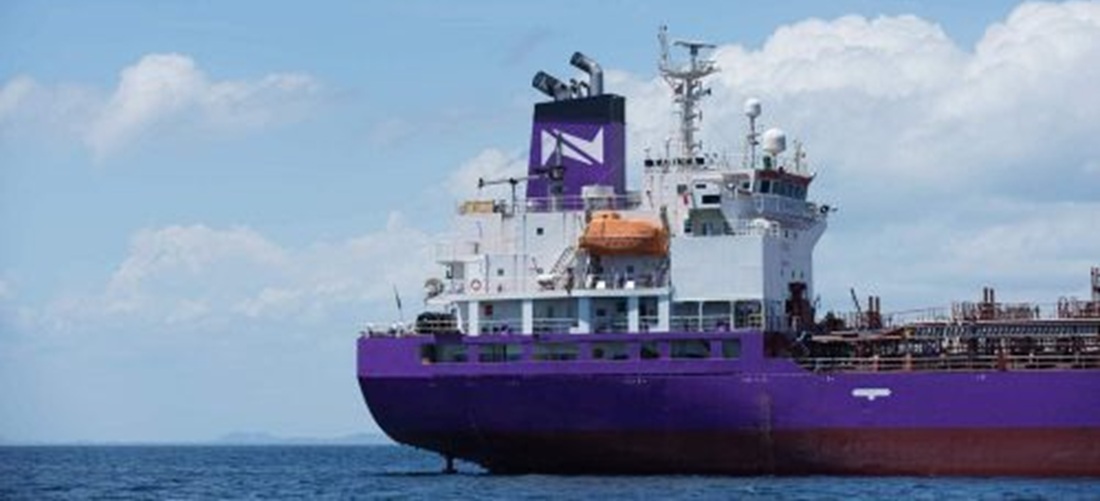
Norcoast adds Rio de Janeiro call to cabotage route serving Manaus Free Trade Zone
Jul, 21, 2026 Posted by Gabriel MalheirosWeek
Brazilian coastal shipping company Norcoast is expanding its domestic network by adding Rio Brasil Terminal (RBT), at the Port of Rio de Janeiro, to its regular service.
The first call was scheduled for Tuesday, July 21, when the NC Breda was due to berth at the terminal. The new service creates a direct coastal shipping link between Rio de Janeiro and the Manaus Free Trade Zone, one of Brazil’s largest industrial hubs.
The call forms part of Norcoast’s strategy to expand its coverage in southeastern Brazil and extend the reach of cabotage—the transportation of cargo between ports within the same country.
The company aims to provide an alternative for both domestic cargo and feeder services, which connect Brazilian ports with international shipping routes.
Norcoast said the service will give shippers greater schedule reliability and flexibility, while integrating maritime transportation with road and rail networks.
Adding Rio de Janeiro to the route creates a direct link between the Manaus industrial hub and southeastern Brazil. The service will also be able to handle cargo originating in Rio de Janeiro state, Espírito Santo, Minas Gerais and inland São Paulo through connections with the regional rail network.
Norcoast expects consumer goods, steel and beverages to be among the main industries served. The route could also attract higher-value cargo, for which security, reliability and service frequency are increasingly important considerations when choosing a transportation mode.
“We want to extend the reach of cabotage by expanding our portfolio and service network in a consistent and sustainable way,” Norcoast Commercial Director Marcio Salmi said in a statement.
“We are closely monitoring demand from these industries and believe we can create value by increasing service availability, encouraging greater use of coastal shipping and supporting regional development.”
With the Rio de Janeiro call, Norcoast’s network now connects the ports of Manaus, Pecém, Suape, Salvador, Santos, Paranaguá, Itajaí and Rio de Janeiro.
The company operates four vessels, each with capacity of approximately 3,500 TEUs, and follows a door-to-door logistics model that combines coastal shipping with inland transportation.
Coastal shipping still faces integration challenges
Norcoast’s expansion into Rio de Janeiro comes as Brazil seeks to increase the role of coastal shipping in its domestic freight network.
Data from the Brazilian Association of Coastal Shipping Companies (ABAC) show that the sector returned to growth in the second quarter of 2026, supported by a recovery in domestic and feeder operations.
Growth over the full first half, however, was limited to 0.9%, highlighting the challenge of increasing coastal shipping’s share of Brazil’s freight transportation market.
Despite having more than 8,000 kilometers of coastline, Brazil still moves only a relatively small share of its cargo by sea.
Paulo Resende, head of the Infrastructure and Logistics Center at Fundação Dom Cabral, said the main obstacle is not maritime transportation itself, but the weak integration between different modes of transport.
“A port cannot be viewed as the cargo’s final destination, but as part of a logistics corridor,” Resende said in a recent interview with Transporte Moderno. “Without efficient connections to railways, highways and distribution centers, cabotage loses competitiveness.”
Investments in door-to-door services, multimodal connections and broader service networks—such as Norcoast’s new Rio de Janeiro operation—are intended to address one of the industry’s main constraints: the difficulty of offering shippers a fully integrated logistics chain.
Beyond operational gains, companies are also increasingly using coastal shipping to reduce carbon emissions.
A Norcoast study found that maritime transportation can emit up to 89% less carbon dioxide than road freight on certain logistics corridors. It can also significantly reduce cargo theft risks, factors that have increased interest among industrial and consumer-goods shippers.
Source: Transporte Moderno
-
Ports and Terminals
Jun, 26, 2024
0
Wheeled cargo operations reach peak at Rio Grande Port
-
Shipping
Aug, 01, 2022
0
Sea freight Santos-Shanghai rises 400% in two years
-
Economy
Oct, 04, 2023
0
IMF warns fragmented commodities markets imperils food security, green transition
-
Ports and Terminals
Oct, 30, 2025
0
Port of Itajaí Grows 127% in Eight Months Compared to All of Last Year as Ministry Outlines Definitive Lease Timeline