


U.S. tariffs push Espírito Santo ports to seek new cargo markets
Sep, 28, 2026 Posted by Sylvia SchandertWeek 202640
U.S. tariffs on Brazilian products are already affecting, albeit to a limited extent, exports of ornamental stone, such as granite, shipped through the port complex operated by Vports in Espírito Santo state.
In an interview with Valor, Vports Managing Director Pedro Henrique Garcia Benevides said the sector is responding to the tariffs by prioritizing higher-value products and seeking new markets, particularly in the Middle East.
“Although the volume of cargo shipped has declined, the impact on revenue has been smaller because [the sector] is focusing on more expensive, higher-value-added products,” he said in his first interview since taking office in July.
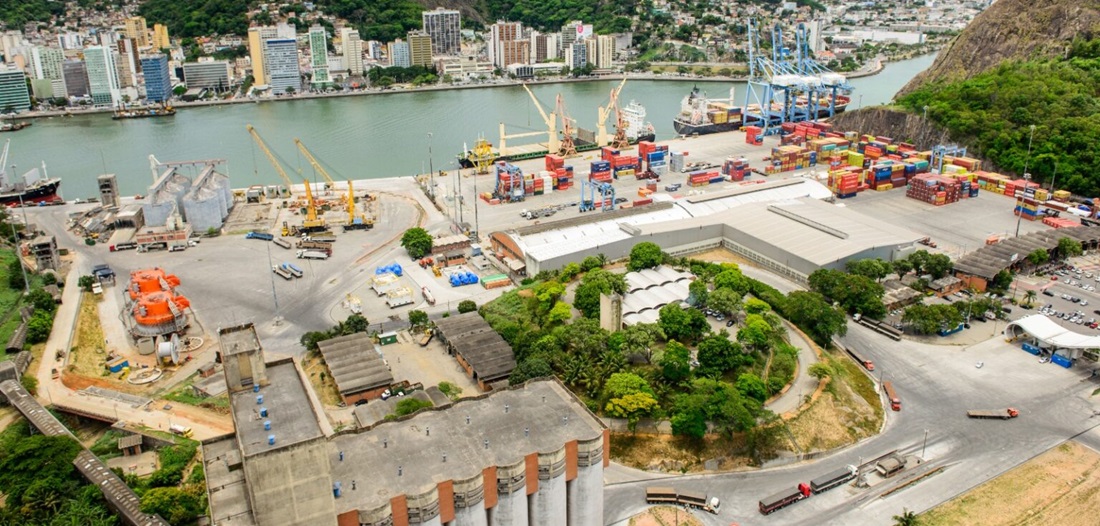
Brazil’s first and only privatized port operator following the privatization process completed in September 2022, Vports manages the ports of Vitória, Vila Velha, and Barra do Riacho in Espírito Santo.
For the port operator, the shift could lead to the creation of new logistics corridors, attract more shipping routes, and increase cargo flows through the complex. Benevides said diversifying export destinations could also have positive effects on Espírito Santo’s economy, boosting the state’s trade balance and creating jobs across the logistics chain.
Granite, pig iron and coffee are among the main products exported through Vports’ terminals to the U.S. For ornamental stone, considering all destinations, shipments of granite and marble totaled 809,000 tonnes from January through August, up 9% from the same period in 2025. The segment accounted for 13% of all cargo handled by the complex during the period, representing $818 million in trade this year.
According to Benevides, the segment is likely to feel the impact of the tariffs more acutely because the duties put Brazilian products in tougher competition with suppliers from other countries, such as India, which offers similar products to the U.S. market and may have more competitive freight, logistics, and production costs. The U.S. tariff is 37.5%, except for quartzite, which is subject to a 12.5% tariff.
Despite the impact on the sector, Benevides said the multipurpose nature of the ports operated by Vports—meaning their ability to handle different types of cargo within the same complex—helps cushion the effects of international crises and geopolitical disruptions. The ports handle cars, machinery, and various types of bulk cargo, including fertilizers, coal, and lithium.
Benevides expects the complex to end the year with record cargo volumes of close to 9 million tonnes. He said the complex handled an average of 7 million tonnes a year when private management took over. Vports’s more conservative forecast is for the complex to handle 10 million tonnes by 2029.
On the rail side, the company put a new pig iron handling facility into operation this year at the Port of Capuaba in Vila Velha. The operation makes use of the existing rail link between Espírito Santo and Minas Gerais, and is part of Vports’s strategy to expand the use of rail in the complex.
Benevides said there is room for another phase of rail expansion. The company has identified four projects along a section of track near the port that could increase access capacity and would require about R$150 million in investment.
On the road side, Benevides said the company is discussing the creation of a truck staging yard near the port to organize truck traffic and prevent growth in operations from creating bottlenecks at access points and disrupting the relationship between the port and the surrounding city. Another project considered necessary to significantly expand the complex’s capacity is widening the navigation channel.
How to finance these additional projects is still under discussion. According to Benevides, one possibility would be for the Espírito Santo state government to participate if it considers the projects strategic to regional development.
The option being discussed most actively within Vports, however, is converting concession payments into investments in federal assets. In practice, part of the funds earmarked for concession payments would instead be invested directly in infrastructure projects. The proposal still needs to be presented to and negotiated with government authorities.
“It is an instrument that is possible under our contract and within the federal government framework as well,” he said. Fixed and variable concession payments total about R$50 million a year.
The assessment is that the investments would increase the capacity and competitiveness of assets that will be returned to the federal government at the end of the concession. The company also sees them as the main drivers of a more significant increase in capacity over the long term. Benevides estimates that if these projects move forward, the complex could eventually handle as much as 20 million tonnes of cargo.
Source: Valor International
-
Grains
Jan, 01, 2021
0
Argentina suspends corn exports until March to focus on domestic supply
-
Ports and Terminals
Nov, 03, 2025
0
Rising footwear imports create tougher environment for Brazil’s Vulcabras, says CEO
-
Meat
Dec, 03, 2025
0
ABPA forecasts higher poultry and pork exports in 2025–26
-
Trade Regulations
Nov, 06, 2025
0
Greater challenge ahead for Brazilian agribusiness in Asia