


Port of Paranaguá Completes First Moegão Connection to Private Terminal
Oct, 13, 2026 Posted by Gabriel MalheirosWeek 202642
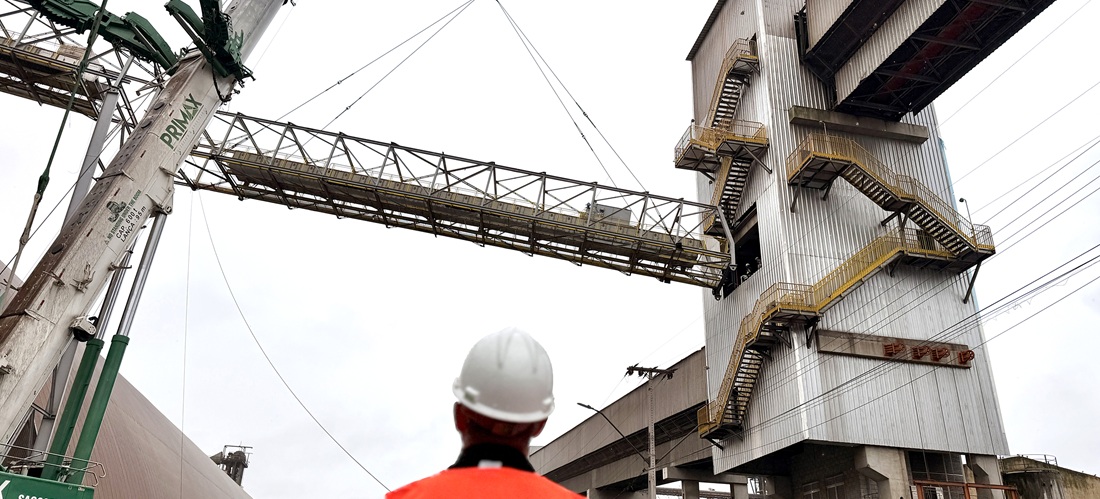
The ALTP terminal, operated by a consortium formed by Louis Dreyfus Company and Amaggi and responsible for PAR 25, has become the first private terminal to connect to the Moegão complex at the Port of Paranaguá. The operation took place on Sunday morning, Oct. 11, requiring the closure of Avenida Portuária and the involvement of dozens of professionals.
The Moegão is the largest public port-sector project currently under construction in Brazil and the largest in Paraná, with investment of around R$700 million. The project incorporates unprecedented features in railway and port engineering by centralizing, at a single location, the receipt of agricultural bulk cargo transported by rail for subsequent loading onto ships.
“We are revolutionizing the way we receive cargo that will be exported around the world. The Moegão, together with the new T-shaped pier and the increase in operating draft, which will allow even larger vessels to call, will considerably increase the competitiveness of our port,” said Luiz Fernando Garcia, CEO of Portos do Paraná.
Installing the 55-meter-long steel structure, which weighs around 35 tonnes, required a heavy-duty crane capable of lifting up to 600 tonnes to a maximum height of 48 meters. Dozens of professionals took part in the operation, which lasted around two hours. Securing the structure took another four hours.
The structure is now connected to the Moegão’s central gallery, which extends for 1.7 kilometers and houses more than 4,000 meters of conveyor belts. The conveyors will transport products unloaded from railcars to the terminals.
By October 2027, all 11 terminals in the Port of Paranaguá’s East Export Corridor are expected to have their facilities connected to the system.
Moegão at the Port of Paranaguá to Expand Rail Capacity
Once operational, the Moegão at the Port of Paranaguá will significantly increase the port’s capacity to receive grain and meal by rail, allowing it to handle up to 24 million tonnes per year. Current rail receiving capacity stands at just over 5 million tonnes. The expected gain in operational efficiency is 63%.
The project was designed to support the expansion of Ferroeste, which will include a branch originating in Mato Grosso do Sul, as well as the restructuring of the Southern Rail Network.
The complex has three independent rail lines and will be able to receive up to 180 railcars at once, with three cars unloaded simultaneously on each line. Capacity will reach 900 railcars unloaded every 24 hours, compared with around 550 per day currently.
At present, the receipt of grain and meal by rail is not centralized. Railcars are directed to individual terminals, requiring trains to be maneuvered and split. These operations can sometimes interrupt traffic on streets in the port area for more than 40 minutes.
By centralizing operations and eliminating the need to split train formations, the number of level crossings — points where railway tracks intersect streets — will be reduced from 16 to five. As a result, traffic interruptions will be limited to the time required for trains to pass, estimated at an average of 10 to 15 minutes.
Source: Portos do Paraná
-
Ports and Terminals
Jun, 23, 2023
0
Açu Port targets sugarcane biomass for green methanol production
-
Other Cargo
Jul, 08, 2022
0
Brazil’s footwear industry export revenue grows 67.5% in 2022
-
Other Logistics
Dec, 07, 2023
0
Public, private sectors drive infrastructure investment by 20%
-
Port Rankings
Mar, 01, 2023
0
Ports Ranking | DataLiner | Jan-Dez 2022 vs. Jan-Dez 2021 | Brazil and Plate