


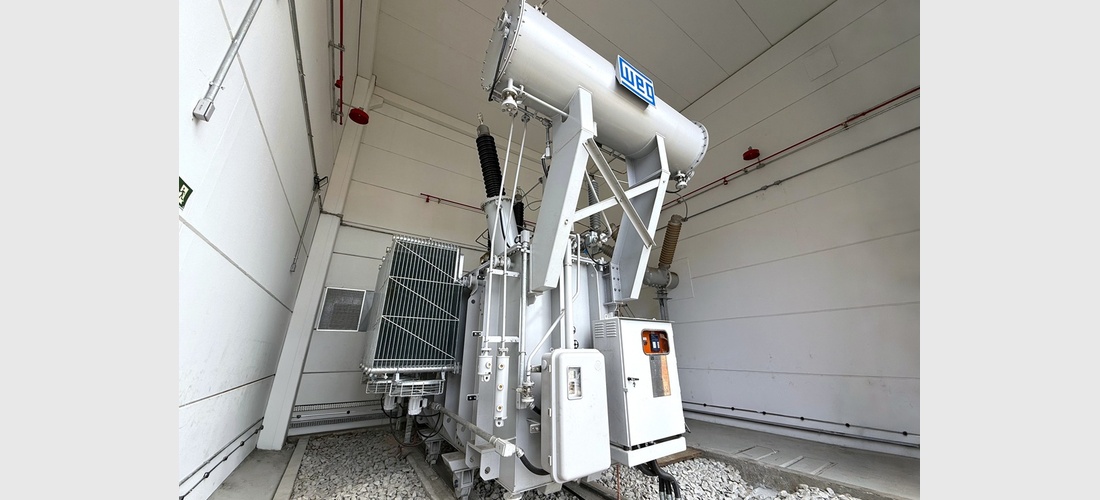
Second transformer doubles capacity at Paranaguá Container Terminal substation
Nov, 23, 2026 Posted by Sylvia SchandertWeek 202648
TCP, which operates the Paranaguá Container Terminal, completed the installation and commissioning of a second transformer at its electrical substation on Sunday, November 22. The work was part of a R$7 million investment to double the substation’s transformer capacity from 25 to 50 megavolt-amperes (MVA). The expansion is part of the terminal’s strategy to expand operations and reduce carbon emissions.
The substation, which opened in 2023, was designed to accommodate two 25 MVA transformers. With the second unit in place, the substation can support a planned increase in the number of power outlets for refrigerated containers, known as reefers, from 5,280 today to 5,500 by the end of 2026 and 6,000 by 2028.
“As cargo volumes grow and we adopt new technologies, demand for electricity is likely to rise. Installing the second transformer immediately improves power quality and efficiency and prepares the terminal to expand its operations,” said Kayo Zaiats, TCP’s safety superintendent.
In addition to supporting expansion of the reefer area, the added capacity will be essential to modernizing the terminal’s equipment. It will support two new ship-to-shore (STS) cranes expected to arrive by 2028 and allow the terminal to continue replacing diesel-powered equipment with electric models.
One of TCP’s main projects is the electrification of its fleet of 39 rubber-tired gantry (RTG) cranes, which handle containers in the yard. TCP has already converted three cranes that operate in the terminal’s rail area. Compared with diesel models, the converted cranes have cut greenhouse gas emissions by 97%, increased productivity by 21% and reduced maintenance costs by up to 80%, according to TCP. The substation expansion will allow the company to proceed with plans to electrify the remaining 36 cranes.
“The results from the first RTGs reinforce the importance of extending electrification to other parts of the terminal. In addition to reducing our environmental impact, the technology improves productivity and reduces maintenance needs, showing that investments in sustainability can deliver significant gains in operating efficiency,” Zaiats said.
The strategy also covers other equipment. TCP has purchased two electric buses, replaced forklifts at its import warehouse with electric models and is considering buying electric terminal tractors (TTs) and heavy-duty forklifts.
TCP has sourced its electricity from renewable sources since 2021, earning the terminal an international renewable energy certificate (I-REC) for the fifth consecutive year in 2026. According to TCP, it was also the first Brazilian port terminal to earn ISO 50001 certification for energy management.
Keeping the terminal operating during installation required planning
The substation remained in service during installation and commissioning of the second transformer. Engineering teams had to coordinate their work to carry it out safely. Some cargo operations continued during the work, allowing the terminal to avoid a complete shutdown.
With testing complete and the transformer’s safety and performance verified, the substation is now operating at its full planned capacity of 50 MVA.
Source — TCP
-
Ports and Terminals
Oct, 10, 2025
0
Brazil’s Antaq Upholds Suspension of APS Deals Amid Santos Terminal Tender Concerns
-
Ports and Terminals
Jun, 05, 2024
0
Porto de Santos extends Ecoporto lease contract for 180 days
-
Economy
Jul, 02, 2026
0
Brazilian container trade grows through May, but second half brings new challenges
-
Dec, 20, 2024
0
Ministry of Ports Joins Special Committee on Future Fuel Regulation