


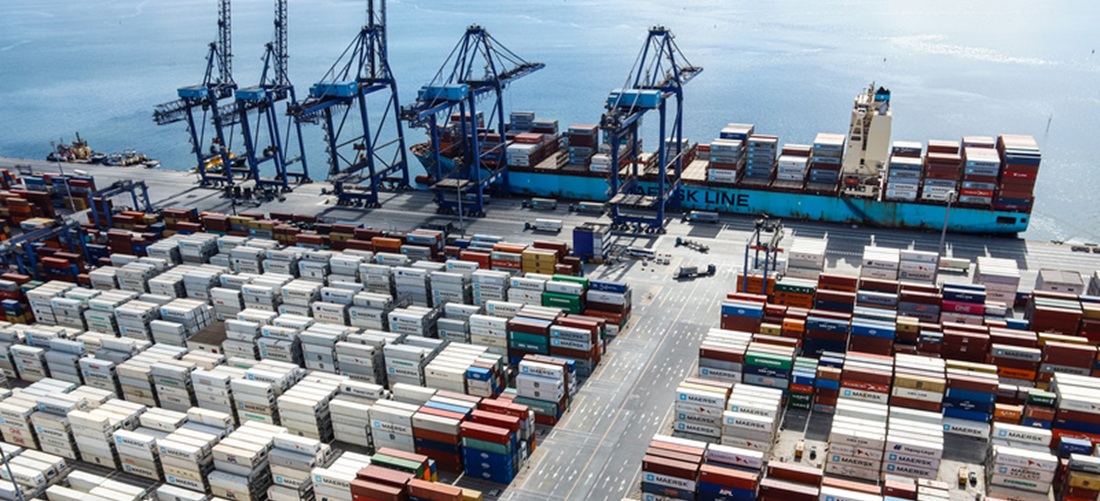
Advanced monitoring tech rolled out across major Brazilian ports
Nov, 17, 2025 Posted by Lucas LorimerWeek 202547
The Brazilian Port System, coordinated by the Ministry of Ports and Airports (MPor), will allocate R$380 million to equip strategic ports with technology that allows monitoring of all vessels in the port area and provides real-time navigability conditions. The Vessel Traffic Management and Information System (VTMIS) is being implemented in Santos (SP), Paranaguá (PR), Rio de Janeiro (RJ), Rio Grande (RS), Itaguaí (RJ), Itaqui (MA), and Vila do Conde (PA), which together account for 56% of the cargo handled by Brazilian public ports.
“We are bringing to the country the most advanced port technology available, a system used in the world’s main terminals that increases our logistics efficiency,” says the Minister of Ports and Airports, Sílvio Costa Filho. “Our ports are breaking cargo-handling records and we constantly need to modernize them and increase their efficiency,” he said.
At the Port of Santos, the largest in Latin America, the VTMIS implementation project has already been tendered, and the result is expected to be announced in early December. “Investments are prioritized based on criteria such as maritime traffic intensity, navigation risks, and public security aspects,” explains the National Secretary of Ports, Alex Ávila.
In Paranaguá, the Port Authority is expected to launch the tender later this year and will be responsible for monitoring and costs for five years. Operation and maintenance of the VTMIS will then be transferred to the concessionaire that won the auction for the port’s access channel, held in October. The project will cover the entire Paranaguá and Antonina port area.
At the Port of Rio Grande, a similar system — VTS — is being implemented. In addition to tracking vessel movements in the port area, including with heat and infrared sensors for night vision, the equipment can provide ships with wind, tide, ocean current, and even water salinity conditions — something essential for the Port of Rio Grande, located in the Lagoa dos Patos. The more saline the water, the greater the vessel’s cargo capacity for the same draft.
In Rio de Janeiro, the Port Authority has been implementing the VTMIS to modernize and integrate waterway traffic monitoring. So far, the VTMIS project has advanced significantly in Phase 1, with the inauguration of the new Operations Control Center (CCO) and the installation of essential sensors. Phase 2 (VTS) includes the acquisition of equipment, activation of remote stations, and data integration. Finally, Phase 3 will consist of the full implementation of the VTMIS, in accordance with the established schedule.
The Ports of Belém, Santarém, and Vila do Conde in Pará; Salvador and Aratu in Bahia; São Francisco do Sul, Imbituba, and Itajaí in Santa Catarina; Fortaleza in Ceará; and Manaus in Amazonas are currently in study phases to define technical needs and investments.
Security
Because it provides comprehensive information on movements in the port area, including with night vision, the system is also a crucial tool for the prevention of illicit activities such as drug trafficking and smuggling. The VTMIS enables data integration with other agencies, sharing information from radars, cameras, and sensors capable of identifying suspicious activities.
Currently, the VTMIS is part of the Port Logistics Intelligence initiatives developed by the Federal Government, alongside other systems such as VTS (Vessel Traffic Services) and LPS (Local Port Service). These resources position Brazil in line with the world’s leading ports, increasing navigation safety, environmental protection, and logistics efficiency.
-
Economy
Apr, 12, 2022
0
The Brazilian trade balance shows a surplus of US$ 3.55 billion in the first two weeks of April
-
Dec, 01, 2021
0
November: Soy shipments grow 196% compared to the same month in 2020
-
Shipping
Jul, 15, 2025
0
Kellanova Launches Coastal Shipping in Brazil to Cut Emissions, Shift from Road Freight
-
Trade Regulations
Jun, 09, 2026
0
Brazil delays enforcement of approved antidumping duties on imported milk powder