

Asian carriers order billions in new ships as Gulf volatility sends freight indices in opposite directions
Mar, 17, 2026 Posted by Sylvia SchandertWeek 202612
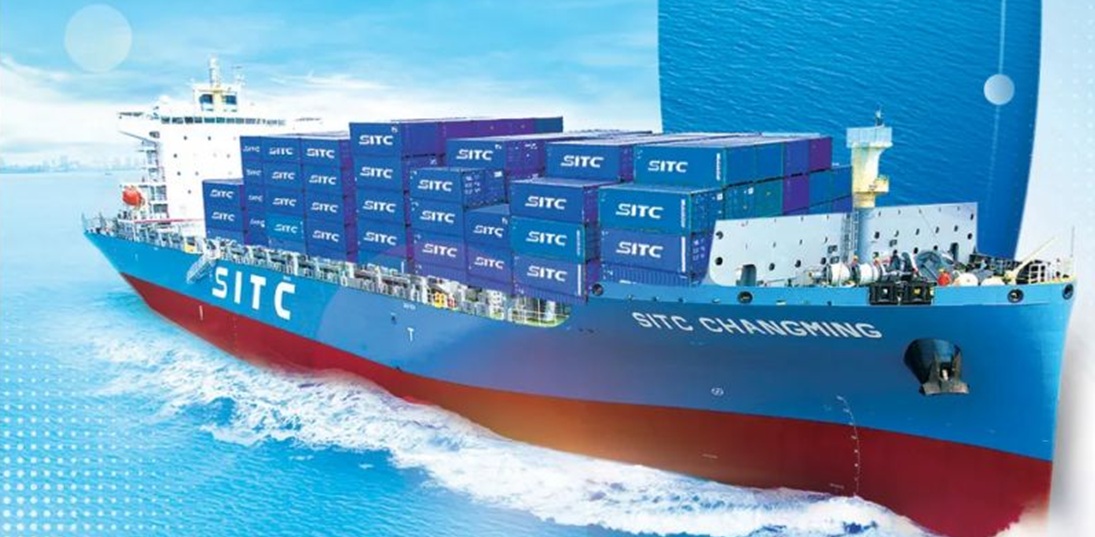
SITC International and Wan Hai Lines have both committed to major fleet expansions this month, signalling that mid-tier Asian carriers are ordering through a market downturn rather than retreating from it — even as the industry’s own pricing instruments give contradictory readings of what the downturn looks like. SITC reported a 19% increase in full-year profit to US$1.23 billion for 2025, on revenue of US$3.41 billion, according to the carrier’s HKEX filing on 10 March (Stock Code: 1308). Container volumes rose 7.8% to 3.85 million teu and average freight rates climbed 4.5% to US$753 per teu.
The Hong Kong-listed intra-Asia specialist operated 119 vessels with 184,961 teu of capacity at year-end, and its balance sheet shows advance payments for vessel acquisitions rising to US$52.5 million from US$30.9 million a year earlier — a proxy for accelerating orderbook commitments that the company confirmed in its results statement, noting plans to continue purchasing vessels and investing in logistics. Wan Hai is expanding from a weaker footing. The Taiwanese carrier announced orders for six new vessels alongside its 2025 financial results this week: four 6,000 teu LNG dual-fuel ships at CSSC Huangpu Wenchong Shipbuilding and two 9,200 teu methanol-ready vessels at Shanghai Waigaoqiao Shipbuilding, with a combined contract value of US$547 million and delivery expected in 2029–2030, according to the carrier’s exchange disclosure.
Wan Hai’s audited FY2025 results are scheduled for release on 17 March; nine-month 2025 profit stood at NT$21.45 billion (US$660 million), down from a full-year 2024 net profit of NT$47.42 billion, indicating a sharp earnings decline that the carrier is choosing to invest through rather than retrench from. The ordering comes against a backdrop of unusual divergence in spot rate indices. The World Top Container Ports (WTCP) freight rate tracker — CM’s aggregation platform drawing on multiple published indices — shows all major benchmarks rising in the week to 13 March under persistent Persian Gulf disruption, but by vastly different magnitudes.
The Freightos Baltic Index (FBX) composite rose 7.5% to US$1,759 per 40ft container, with China/East Asia–North Europe up 10.3% to US$2,883. Drewry’s World Container Index (WCI) composite gained 8.0% to US$2,123. But the Shanghai Containerized Freight Index (SCFI) composite surged 14.8% to 1,710 points, while the China Containerized Freight Index (CCFI) moved just 1.7% to 1,072 points.
These are not rounding differences — they reflect structurally different data pools. The SCFI captures carrier-quoted spot rates collected weekly from 15-plus shipping lines by the Shanghai Shipping Exchange, expressed in index points with a 2009 base; it reprices fastest because it measures what carriers intend to charge at origin. The FBX aggregates live transactional data — spot FAK tariffs and surcharges — from the Freightos/WebCargo booking platform, reported per 40ft container; its marketplace basis smooths individual carrier repricing.
The WCI composite, tracked by WTCP, gained 8.0% to US$2,123; the index is Drewry’s weekly spot rate assessment across eight East-West routes, reported per 40ft container. The CCFI, by contrast, blends both spot and contractual rates as reported by a panel of 23 carriers across Chinese ports; its contract-rate weighting dampens weekly swings, which is why it registered barely any movement in a week when spot-focused indices surged. For shippers benchmarking against any single index, the practical difference this week was roughly US$500–700 per box on Asia–Europe depending on which measure they used.
SITC’s rising profits and Wan Hai’s declining earnings tell different stories, but both carriers are making the same bet: that the vessels they order today will arrive into a market that needs them in 2029–2030. BIMCO’s data suggests that bet is against the odds. The global container orderbook reached a record 11.8 million teu across more than 1,350 ships at the end of February 2026, up 28% year-on-year, according to BIMCO chief shipping analyst Niels Rasmussen.
Even assuming all vessels currently 22 years or older are scrapped before 2030, fleet capacity would still grow an average 6.1% annually through the rest of the decade — roughly double the rate at which global container demand is expanding.
Source: Container Mag
-
Meat
Sep, 22, 2022
0
BRF cuts 18 thousand tonnes of CO2 emmissions from its logistics operations
-
Grains
Feb, 16, 2023
0
Corn exports at Brazil’s Paranagua up 300% in January
-
Datamar EN
Jul, 01, 2019
0
Datamar launches DataLiner Chile
-
Grains
Aug, 15, 2025
0
Brazil’s wheat imports up 20% in 12 months as prices continue to fall