



Avian Influenza: China and European Union Suspend Poultry Imports from All of Brazil
May, 16, 2025 Posted by Denise VileraWeek 202520
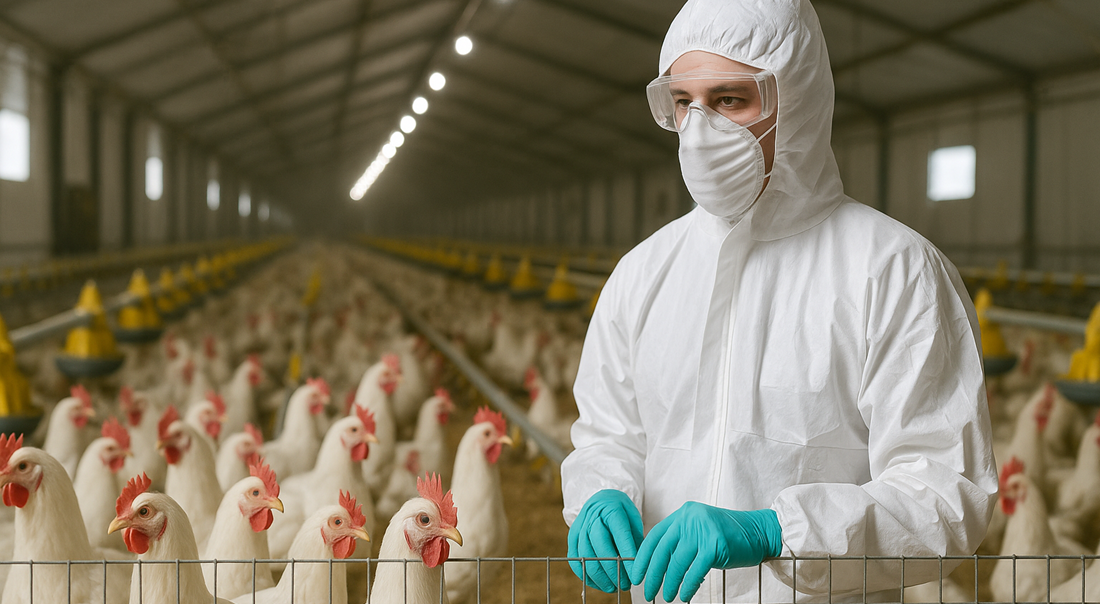
China and the European Union confirmed on Friday (May 16) the suspension of poultry imports from across Brazil, due to sanitary protocols. The decision follows the confirmation of an avian influenza case at a commercial farm in Montenegro, Rio Grande do Sul. The Brazilian government and poultry industry representatives had anticipated the move.
Brazil’s Minister of Agriculture, Carlos Fávaro, acknowledged that the arrival of avian influenza at a commercial farm in the country was only a matter of time, and that the government had already been preparing for such a scenario. Following confirmation of the case, the federal government declared a 60-day animal health emergency across the country. Some countries, including Argentina, the United Arab Emirates, and the United Kingdom, opted to restrict imports only from the state of Rio Grande do Sul.
Below is a historical chart of Brazilian chicken meat exports to China, based on DataLiner data:
Brazilian Chicken Meat Exports to China | Jan 2022 – Mar 2025 | TEUs
Source: DataLiner (click here to request a demo)
In response to the news, Ricardo Santin, president of the Brazilian Animal Protein Association (ABPA), stated, “In all cases, we will request the same treatment as with Newcastle disease.” Last year, when a Newcastle disease outbreak was identified in Rio Grande do Sul, the Brazilian government and poultry industry worked with international buyers to ensure restrictions were limited to the affected region.
Speaking to Globonews, Minister Fávaro said the affected farm has been isolated and that full sanitization measures are underway. He also noted that egg tracing has already been conducted, and that all eggs supplied by the farm are being destroyed.
The minister emphasized that, among major global poultry players, Brazil managed to contain the virus longer than any other country, which he sees as a testament to the efficiency of Brazil’s sanitary system. “We were confident that the virus would eventually reach commercial farms. But no country managed to contain it as long as we did. This led us to review various sanitary protocols,” he told Globonews.
This is Brazil’s 167th confirmed case of avian influenza, detected two years after the first outbreak in wild birds along the Espírito Santo coast. Fávaro added that the World Organisation for Animal Health (WOAH) has been notified, and Brazilian sanitary authorities have established a containment zone around the outbreak.
“As soon as we are certain that we can declare the outbreak eliminated, trade will resume immediately,” Fávaro stated.
The minister added that, depending on how quickly sanitary measures progress and how transparently Brazil communicates them, trade restrictions could be lifted before the end of the 60-day emergency period.
“The health emergency is expected to last 60 days. The outbreak itself can be resolved in at most 28 days. If, during that time, we successfully contain the region and fully disclose that the outbreak has been eliminated and normalcy restored, it’s possible to resume trade before the 60 days are up,” he explained.
Fávaro reiterated that there is no risk of avian flu transmission through chicken meat or egg consumption, as the virus is destroyed during cooking. The main danger lies in handling or transporting the carcasses of infected animals.
When asked why importing countries suspended purchases despite the lack of consumer risk, the minister explained that their primary concern is preventing potential infection of local flocks by importing contaminated products.
“Nothing prevents us from continuing negotiations with these countries transparently, so that restrictions can be limited to Rio Grande do Sul while the rest of Brazil resumes trade,” he told Globonews.
No New Outbreaks Reported
Also on Friday (May 16), in an interview with CNN Brasil, Fávaro said the entire region remains on high alert and no new cases have been detected where the outbreak was confirmed. While he couldn’t specify how many poultry production units operate in the area, he assured that there have been no additional suspected cases.
“The 10-kilometer radius is under full surveillance. Teams from the Agricultural Defense Secretariat are visiting all facilities. Any sign of sick animals prompts immediate isolation of nearby farms. We are monitoring all of them and tracking this farm’s production, including where its eggs were sent and ensuring their destruction,” he said.
Regarding poultry products currently at ports or already shipped for export, Fávaro said there is no risk. “The system is highly efficient, with a high level of traceability. We can demonstrate to all countries the origin of shipments currently in transit or waiting at ports. Trade restrictions apply only from the moment the case was verified. There’s no retroactive commercial loss for what was produced and exported before yesterday.”
The minister confirmed that suspected cases among wild birds at the Sapucaia do Sul Zoo (RS) are also under investigation. However, he emphasized that the primary concern lies with commercial farming. “What affects trade relations are cases in commercial farms. Investigations at the zoo involve wild birds, which don’t restrict trade but lead to increased inspections in the region to prevent the virus from spreading to commercial operations,” he noted.
Source: Globo Rural
-
Other Logistics
Oct, 25, 2023
0
New infrastructure assets to boost cargo flow to Paranagua Port
-
Ports and Terminals
Feb, 04, 2021
0
CADE blocks two port operators at Itajaí from levying terminal handling charge
-
Ports and Terminals
May, 18, 2023
0
Pecém port complex welcomes two new board members
-
Grains
Apr, 30, 2019
0
Recife Port receives corn shipments from Argentina