


Brazil agriculture ministry flags suspected fraud in soybean cargo bound for export at Paranaguá port
Mar, 10, 2026 Posted by Gabriel MalheirosWeek 202611
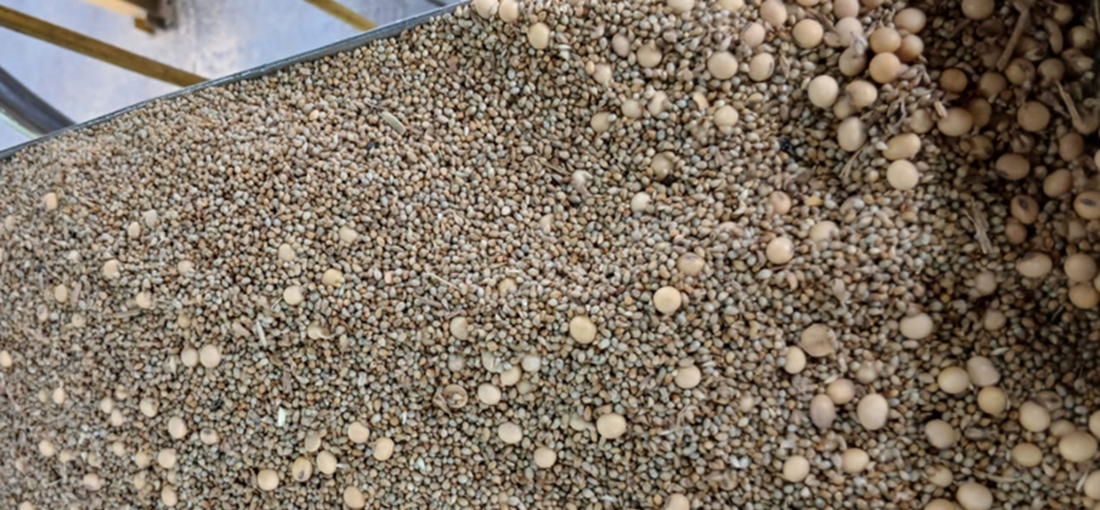
Brazil’s Ministry of Agriculture and Livestock (Mapa) has identified signs of fraud in a soybean shipment destined for export at the port city of Paranaguá, in the southern state of Paraná, the ministry said.
The case was detected by the Plant Products Inspection Service in Paraná (Sipov/PR) after the port authority for Paranaguá and Antonina alerted officials on Feb. 24.
Inspectors carried out checks at the port’s truck screening yard to verify whether the cargo met official identity and quality standards required for plant products intended for human consumption and international trade.
During the inspection, authorities found inconsistencies between the cargo and the information listed in the fiscal documentation, indicating a possible irregularity in the export process. The shipment, estimated at about 42 tonnes, showed signs of adulteration upon arrival, with differences between the product transported and the soybean originally declared in the documents. A classification audit further reinforced suspicions by identifying a composition different from that reported.
Fernando Augusto Mendes, head of Sipov/PR, said strict oversight of exports is strategic for Brazil.
He noted that Brazil’s position as the world’s largest soybean producer and exporter requires continuous strengthening of official inspection mechanisms to safeguard the reputation of Brazilian products in international markets.
Mapa is responsible for supervising the quality, classification and compliance of plant products intended for domestic trade and export under Brazil’s Plant Product Classification System, established by Law 9,972/2000 and regulated by Decree 12,709/2024. Complementary rules define technical standards and operational requirements for each product.
Three-stage inspection system
In Paraná, federal inspection of plant products follows three stages.
The first takes place at the origin, in 64 registered facilities in the state authorized to store and export soybeans to China. At this stage, inspectors verify classification, identity and quality criteria.
The second stage occurs when cargo arrives at the Port of Paranaguá, where inspections are carried out at the screening yard and port terminals in coordination with the port authority and state agencies. In 2025, more than 507,000 vehicles were inspected under this process.
The final stage occurs during vessel loading for export, conducted jointly with the International Agricultural Surveillance service (Vigiagro), when inspectors perform a final cargo verification and issue the phytosanitary certificate.
Almir Gnoatto, the federal agriculture superintendent in Paraná, said the inspection system is crucial to maintaining the integrity of the sector.
“The ministry’s work is essential to ensure that plant products traded and exported meet official standards of quality and identity,” he said. “This protects producers, the market and the reputation of Brazilian agribusiness while ensuring transparency and reliability in commercial operations.”
The case remains under investigation. Mapa is examining possible administrative and operational violations, while any potential criminal aspects are being investigated by Brazil’s Federal Police.
The seized cargo is expected to be destroyed under ministry supervision, with final disposal likely to occur in a sanitary landfill once formal procedures are completed.
-
Grains
Aug, 05, 2021
0
Conab warns again of a new risk of frost damage from RS to the south of SP
-
Ports and Terminals
Jun, 25, 2024
0
Santos Port Authority one step closer to closing orbital road contract in Guarujá
-
Commodities
Jul, 08, 2020
0
Commodity ranking for Brazil`s container shipping exports & imports in first five months of 2020
-
Shipping
Dec, 13, 2020
0
Removal of ONE’s damaged ship containers begins