


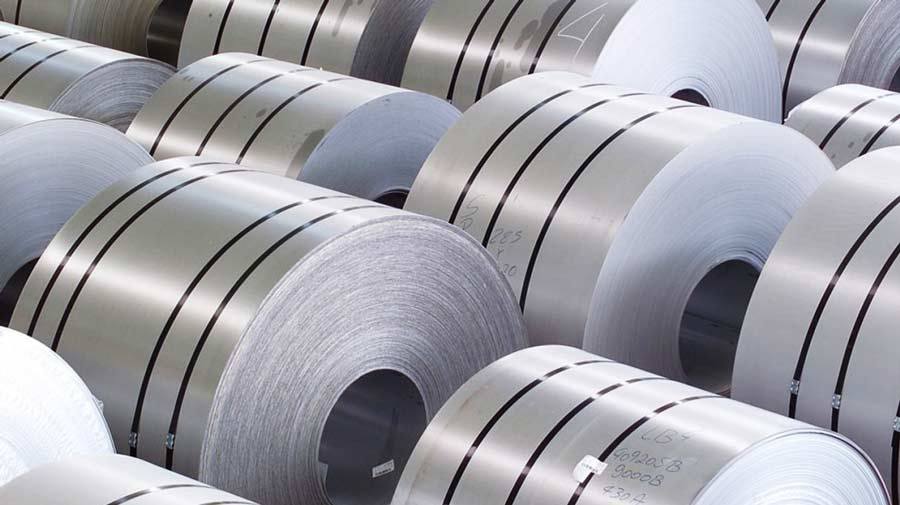
Brazil, Mexico and Canada step up measures to counter surge of cheap Chinese steel
Sep, 26, 2025 Posted by Lucas LorimerWeek 202540
While U.S. President Donald Trump’s trade policies deal a blow to steel producers worldwide, countries like Brazil, Mexico, and Canada are striking back. And the United States is not their only target.
Although the three nations are seeking to negotiate with Trump’s government for relief from tariffs of up to 50% imposed in June on steel imported into the U.S., they are also focusing on boosting domestic demand to offset the drop in exports.
That means blocking the growing flood of cheap Chinese steel that threatens to drive local producers out of their home markets.
Mexico announced a plan this month to raise tariffs on Chinese products, including steel, by up to 50%.
Canada has also implemented protectionist measures.
And in Brazil, steelmakers are urging the government to impose more trade barriers against foreign supply.
Together, the three countries accounted for 38% of U.S. steel imports in July and about half of them last year.
“We need speed and effectiveness in applying trade defense measures,” said Marco Polo de Mello Lopes, president of Instituto Aço Brasil.
Chinese steel now represents about 65% of Brazil’s steel imports. “Our mission is to win back that one-third of the market we lost to predatory imports.”
Moves to halt Chinese steel imports may also strengthen the negotiating position of the three countries with the U.S.
Trump’s tariffs on America’s neighbors come as his administration wages a broader trade war against the world’s second-largest economy, aiming in part to stem the flow of cheap Chinese products to countries worldwide.
Chinese steel accounted for more than half the global market last year, according to the World Steel Association.
A spokesperson for the U.S. Trade Representative’s office did not respond to requests for comment.
Steel volumes to the U.S. tumble
Since Trump announced the tariffs, shipments from Canada and Brazil to the U.S. have plunged. U.S. imports from these countries fell by 45% and 27%, respectively, in July compared to the same period a year earlier, according to Census Bureau data.
Mexico has not yet felt the full impact of the duties due to stockpiles, with its steel exports to the U.S. increasing by 50% in July.
Still, damage to industries in Mexico, Canada, and Brazil has already spread.
In Brazil, Gerdau canceled plans to invest about $600 million in a new steel mill in Mexico. Algoma Steel Group, which operates a major plant in Ontario, Canada, is halting steel shipments to the U.S., its CEO told Bloomberg News.
Although the reference tariff on steel is 50%, the countries are facing a lower effective rate in practice.
In July, the duty on iron and steel averaged below 30% for Canada, Mexico, and Brazil, according to Bloomberg data that includes negotiated exemptions.
Mexico and Canada are relatively shielded thanks to an exception for metal “melted and poured” in the U.S., as well as waivers on non-metal content in these products, Bloomberg Economics notes.
The U.S. continues to import steel and will need to keep buying abroad unless its domestic industry expands on a large scale. The ultimate fate of Trump’s tariffs remains uncertain after the Supreme Court agreed to hear arguments on their legality.
In the short term, however, protectionist moves targeting China are proliferating, as steelmakers across the Americas reel from Trump’s tariffs.
Beyond raising tariffs on Chinese steel, Mexico is investigating “ghost” steel mills — operations that exist only on paper in Asia and serve as fronts for imports, allowing owners to circumvent tariffs or sanctions.
Canada imposed 25% tariffs on Chinese steel and, in July, reinforced its tariff-rate quotas — imposing higher duties on volumes above certain levels — to further limit imports from countries outside the U.S. The government also added a 25% surtax on steel products from any country, except the U.S., that contain metal melted and poured in China.
Brazil, meanwhile, is investigating whether anti-dumping duties are needed on imports of 25 types of Chinese steel products. The government has implemented a system of tariff quotas to cap imports of certain items and support local mills — a measure the industry considers ineffective.
In a late-July speech, Zhao Minge, CEO of the China Iron and Steel Association, warned of potential protectionist moves from countries flooded with Chinese steel. Large-scale exports of “low value-added primary steel products” are not aligned with China’s export policies, he said.
Brazil is under significant pressure as U.S. tariffs push China to redirect supply. Luxembourg-based steel giant ArcelorMittal may delay plans for a new plant in Brazil, its country head Jorge Oliveira said. “It’s a project at risk of postponement if import levels keep rising,” he said in an interview late last month.
The global trade reshuffle also forced ArcelorMittal to halt exports of 400,000 tons of Brazilian-made steel slabs to Canada, which can no longer re-export them to the U.S., Oliveira added.
Gerdau
In August, at a conference in São Paulo, Gerdau’s chairman, André Gerdau Johannpeter, warned that Brazil’s steel sector is nearing a breaking point, with any further dip in capacity utilization below the current 66% likely to threaten jobs. “The big debate is where the jobs will end up — in China or in Brazil?” he said.
A political clash between Brazil and Trump over the treatment of his ally Jair Bolsonaro has dealt a blow to Brazil’s efforts to reach a bilateral steel tariff deal. Since Trump slapped 50% tariffs on Brazilian products, diplomatic channels between the two countries have gone silent — and talks will only resume once tensions ease, said Lopes of Instituto Aço Brasil.
Last month, Barry Zekelman, CEO of Zekelman Industries, said Canadian steelmakers will not survive unless U.S. trade policies change. His Chicago-based steel pipe manufacturer owns a tube mill in Ontario. “Canadian mills can’t survive with the taxes they’re paying,” he said. “They’ll go bankrupt if this continues.”
Source: InvestNews
-
Grains
Sep, 05, 2025
0
Brazil’s soybean exports rise in September while corn loses ground, says Anec
-
Meat
Feb, 09, 2023
0
Revenue from pork exports rise to us$ 212.4 million in january
-
Automotive
Aug, 27, 2025
0
Stellantis Begins Jeep Commander Exports to the Middle East as Global Expansion Accelerates
-
Automotive
Apr, 09, 2026
0
Stellantis calls for measures to offset Chinese competition in Brazil