


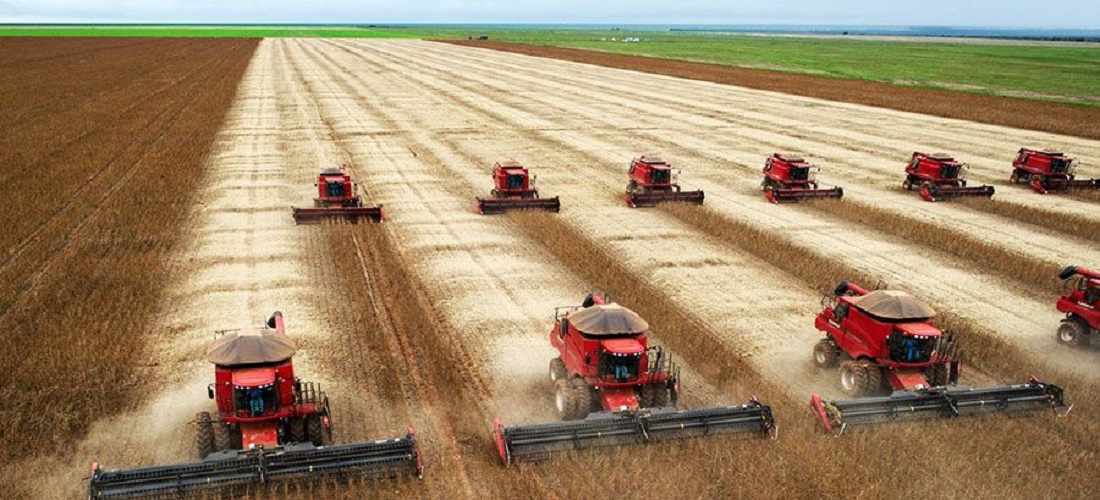
Brazil set to maintain strong soybean exports to China amid U.S. trade tensions
Jul, 25, 2025 Posted by Lucas LorimerWeek 202531
As China and the U.S. remain at an impasse over a new trade agreement, Brazil is expected to continue exporting large volumes of soybeans to the Asian country in the second half of the year—precisely when, in past cycles, U.S. shipments would typically take the lead.
In June, China imported a record volume of soybeans for the month, reaching 12.26 million tonnes, according to data from the General Administration of Customs. Of that total, 10.62 million tonnes came from Brazil, which has benefited from Donald Trump’s trade war to ramp up sales to Chinese buyers.
“Since the [2024 U.S. presidential] election, China has been preparing to buy more soy from Brazil, and recent investments to expand shipping capacity at some terminals in the Port of Santos are proof of that. China’s strategy is to rebuild large inventories to shield itself from price swings caused by the trade war,” said Vlamir Brandalizze of Brandalizze Consulting.
Recently, market rumors suggested that China may resume soybean purchases from the U.S. as part of an effort to broker a new trade deal. But according to Brandalizze, Brazil is still likely to dominate the Chinese soybean trade through September, when the 2025/26 U.S. harvest begins.
“Focus on U.S. exports should pick up in October—assuming China and the U.S. can reach a trade agreement by August,” he noted. In June, China imported 1.58 million tonnes of soybeans from the U.S., a year-on-year increase of 20.6%.
Enílson Nogueira, an analyst at Céleres Consultoria, agrees that China will likely continue sourcing more soybeans from South America for the remainder of the year.
“In the short term, I don’t see China turning to U.S. soybeans. With abundant crops in Brazil and Argentina, it is logical that purchases would flow to these countries. And with Brazil producing about 172 million tonnes this year, it’s leading the shipment queue,” Nogueira explained.
Higher Brazilian soybean volumes to China are expected to keep export premiums at Brazilian ports in positive territory through the second half of the year, as was the case earlier in 2025.
“Historically, premiums are higher in the second half. Even if China and the U.S. reach a deal, premiums will remain firm—around $0.80 over for August contracts,” said Nogueira.
Brandalizze added that premiums could decline slightly if a U.S.–China deal is reached, but levels remain strong for now. “Premiums are up 160 points for September contracts and 145 for October, a sign that demand for Brazilian soy remains high.”
According to Ismael Menezes, a partner at MD Commodities, although the pace of soybean shipments to China has slowed over the past two months, Brazil is expected to maintain its dominant position as a supplier.
Weak demand for U.S. soybeans and the approaching U.S. harvest are expected to put further pressure on prices in the Chicago market. Over the past 12 months, soybean futures have fallen nearly 10%.
“Premiums will stay firm while Chicago prices fall due to the pressure of the U.S. harvest. If we’re seeing short-term contracts holding at $10 per bushel, $9.50 likely becomes the ceiling in the second half of the year,” Menezes projected.
Source: Globo Rural
-
Dec, 15, 2022
0
Gov’t commission wants to get rid of abandoned ships in Guanabara Bay
-
Shipping
Aug, 08, 2023
0
Mercosur Line expands capacity of BRACO service
-
Sugar and Ethanol
Dec, 15, 2021
0
WTO says India must comply with global sugar trade rules
-
Ports and Terminals
Oct, 04, 2022
0
ATP, Antaq sign agreement to promote technical cooperation in private terminals