

Brazil sorghum output surges as China exports and ethanol demand grow
Sep, 22, 2026 Posted by Gabriel MalheirosWeek 202639
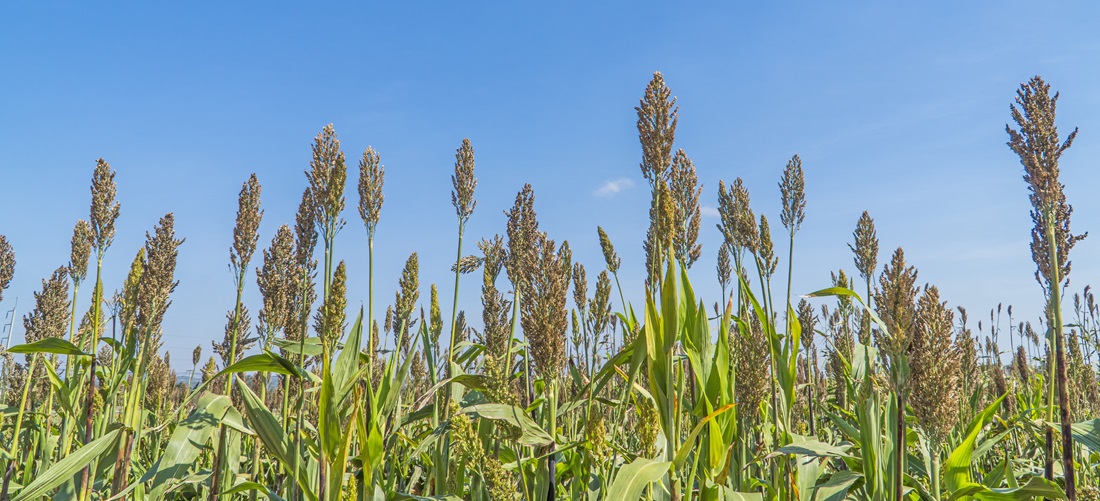
Sorghum is moving beyond its traditionally smaller role in Brazilian agriculture as rising production, access to the Chinese market, growing use in ethanol production and greater tolerance to water stress create new opportunities for the crop.
Brazil produced around 6 million metric tons of sorghum last year and is expected to reach about 7.5 million tons this year, according to Daniel Rosa, a director at the Brazilian Association of Corn and Sorghum Producers, known as Abramilho.
Goiás leads production with approximately 2 million tons, followed by Minas Gerais with around 1.4 million tons, according to Abramilho data.
Growth is also spreading beyond the crop’s traditional producing regions. Matopiba is emerging as a new frontier for sorghum, with production in Maranhão up 110%, according to Rosa.
“It is a crop that we have seen growing very strongly here in Brazil,” he said.
China changes the export outlook
One of the biggest recent shifts has come from demand.
Historically used mainly for animal feed, sorghum is beginning to reach new markets. Brazil exported around 180,000 metric tons in 2024, a record at the time, with South Africa among the main destinations.
Access to China could now take Brazilian sorghum exports to a different level.
Abramilho took part last year in a mission involving Chinese technical officials who visited farms and processing facilities in Minas Gerais and Goiás. The protocol to open the Chinese market subsequently moved forward.
“China is the world’s largest sorghum importer. They produce it domestically, but they still depend on international sorghum,” Rosa said.
Brazilian exports had already exceeded 250,000 tons this year through the previous month, surpassing the total shipped in 2024.
Expectations for September are considerably higher. Rosa cited projections from Brazil’s grain exporters association Anec indicating shipments could reach 1 million tons during the month.
The additional demand has already had an impact on Brazil’s domestic market, according to Rosa. In some cases this season, producers were able to sell sorghum at prices above corn, something he said is unusual.
“This year, we had the opening of the Chinese market and ethanol plants also began operating with sorghum. Demand increased quickly and even somewhat unexpectedly,” he said.
Ethanol creates another source of demand
Alongside exports, the biofuels industry is emerging as one of the main drivers of domestic sorghum demand.
According to Rosa, four plants have already been identified as processing both corn and sorghum. They are located in Balsas, Maranhão; Luís Eduardo Magalhães, Bahia; Ulianópolis, Pará; and Sidrolândia, Mato Grosso do Sul.
One industrial advantage, he said, is that corn ethanol plants can be adapted to process sorghum with relatively minor changes.
“Every corn ethanol plant is potentially a sorghum ethanol plant. The adjustments you need to make to the industrial facility to operate with sorghum are small,” Rosa said.
Processing also produces DDG, a coproduct used in animal feed.
Rosa said corn and sorghum behave differently in the industrial process: sorghum produces more DDG, while corn yields more oil and a larger volume of ethanol.
Drought tolerance expands second-crop potential
In the field, one of sorghum’s main advantages is its greater tolerance to water stress.
That allows the crop to be planted in areas and during periods when second-crop corn becomes riskier.
“It handles drought, a period without rainfall, better than corn. And it fits very well with our model of soybeans as the first crop. In the second crop, where corn no longer fits, sorghum can come in,” Rosa said.
That does not necessarily mean replacing corn. One possible strategy is to stagger the crops according to the planting window.
If the soybean harvest is delayed or weather conditions shorten the ideal window for corn, growers can plant corn first and use sorghum on areas planted later.
According to Rosa, that flexibility becomes increasingly important as weather conditions grow more unstable.
Sorghum can remain viable in some regions even in March, when climate risks for second-crop corn are already higher. Matopiba and parts of Mato Grosso do Sul are among the areas considered to have expansion potential.
Lower input needs come with lower yields
Choosing between corn and sorghum still requires both economic and agronomic analysis.
Rosa said sorghum can require less fertilizer than corn and is not affected by the corn leafhopper, eliminating the specific pest-control costs associated with the insect.
In some corn fields, he said, producers make six or seven insecticide applications to manage the pest.
On the other hand, sorghum yields are lower than corn yields and the crop has historically also received lower prices.
Production costs, expected yields, prices and climate risk therefore all need to be considered before choosing between the two crops.
Rosa also pointed to what he described as a persistent management misconception: that sorghum requires almost no fertilizer because it is a hardy crop.
Insufficient fertilization, he said, can reduce yields and cause sorghum to draw on nutrients already available in the soil, potentially affecting the crop planted afterward.
Animal feed remains a major market
Animal feed remains sorghum’s main domestic market.
The grain is used in poultry, hog and cattle diets and can partially replace corn, although Rosa cautioned that the substitution cannot be made automatically.
“Corn will have soybeans as a protein source and corn as an energy source, while sorghum sits somewhere in between. It has a little more protein but is less energy-dense. So livestock producers have to take that into account when formulating feed,” he said.
Growth in ethanol production could strengthen the link between agriculture, energy and livestock further, as sorghum processing generates DDG for use in animal diets.
Brazil could reach 15 million tons
Brazil still has substantial room to expand production.
Rosa cited an Embrapa projection indicating that the country could produce 15 million tons of sorghum between 2030 and 2035, nearly double the current level of 7.5 million tons.
Growth could come both from higher yields and from bringing into production areas that currently grow soybeans during the summer but remain fallow during the second-crop season.
“We have room to expand planted area, we have room to increase productivity and, most importantly, we have growing demand from exports to China and from ethanol,” Rosa said.
For the Abramilho director, sorghum should therefore no longer be viewed simply as a substitute for corn or its “poor cousin.” The crop is beginning to develop its own market and gain liquidity.
“I would not call it a complement. I would call it another option,” Rosa said.
Export growth could reshape logistics
The shift could also have implications for Brazil’s logistics infrastructure.
According to Rosa, much of the country’s sorghum exports currently moves through the Port of Santos. However, the need to keep sorghum segregated from other grains is encouraging the search for alternative routes, including the Port of Tubarão in Espírito Santo.
The main challenge will be turning the recent surge in demand into a lasting market. China’s purchasing behavior will be important to that trajectory, Rosa said.
“If China continues demanding large volumes of sorghum from Brazil, we could also see very significant growth here,” he said.
At the same time, ethanol is expanding the domestic market and giving farmers another option for the second crop.
For Rosa, those factors could establish sorghum as a third major alternative alongside the two crops that currently dominate Brazilian grain production.
“It adds another important production chain for growers who once produced only soybeans, then moved to soybeans and corn, and can now produce soybeans, corn and sorghum.”
Source: Canal Rural
-
Sugar and Ethanol
Jul, 23, 2019
0
BP and Bunge create bioenergy joint venture
-
Ports and Terminals
Apr, 06, 2026
0
Port of São Francisco do Sul expands capacity and advances the release of new warehouses
-
Trade Regulations
Jan, 23, 2020
0
ANTAQ and German agency collaborate to help protect ports from climate change effects
-
Ports and Terminals
Nov, 27, 2023
0
Pecém Port Initiates Game-Changing Wind Turbine Cabotage Transport