


Brazil to strengthen role in global agricultural trade over next decade
Jun, 30, 2026 Posted by Gabriel MalheirosWeek 202627
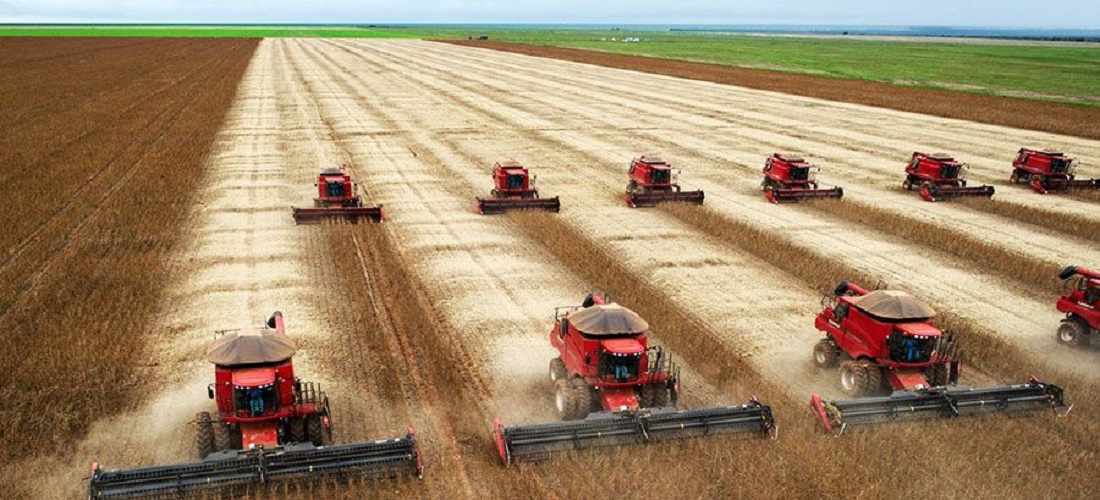
Latin America is expected to remain the world’s largest agricultural exporting region through 2035, led mainly by Brazil, Argentina and Paraguay, according to the OECD-FAO Agricultural Outlook 2026-2035.
The report projects that Latin America’s agricultural trade surplus could reach about US$150 billion by 2035, three times the level forecast for North America. At the same time, regions such as South and Southeast Asia, the Middle East and Sub-Saharan Africa are expected to increase food imports as populations and incomes grow.
Global agricultural production is projected to rise 13.3% by 2035, reaching US$4 trillion. Middle-income countries are expected to lead the expansion, especially in Asia-Pacific, Sub-Saharan Africa and Latin America, which together will account for more than 80% of the increase in global output.
Meat
Brazil, the United States and the European Union are expected to continue accounting for more than half of global meat exports in 2035.
China’s demand for beef should remain strong, although its share of global meat imports is expected to decline as domestic pork production expands. Beef prices are projected to remain high in the short term because of limited supply.
Corn
Global corn production is expected to keep growing, with Brazil, China and the United States among the main drivers.
Brazil is projected to increase its share of global exports, supported by the expansion of its second corn crop and the integration of corn production with soybean farming.
By 2035, global corn export shares are expected to stand at:
- United States: 29%
- Brazil: 26%
- Argentina: 16%
- Ukraine: 15%
Recent port throughput data obtained by Datamar shows a rerouting of cargo flows toward new shipping hubs. Among Brazil’s leading corn export ports, the Port of Rio Grande stood out, with volumes rising 91.7% in the January-April 2026 period from a year earlier, while the Port of Santarém posted growth of 271% over the same comparison. Traditional ports such as Santos and Paranaguá, meanwhile, saw declines of 16% and 41%, respectively.
See below the market share of Brazil’s main corn export ports:
Top Corn Export Ports | Jan-Apr 2026 | WTMT
Source: DataLiner (click here to request a demo)
Soybeans
Brazil is expected to remain the world’s largest soybean producer and exporter.
Brazilian output is projected to grow by an average of 0.7% per year through 2035, driven by the country’s double-cropping system for soybeans and corn.
By the end of the period, Brazil is expected to account for 61% of global soybean exports.
Sugar
Brazil is also expected to maintain its leadership in the global sugar market.
National production is projected to reach 50.2 million tonnes in 2035, representing about 34% of global output.
On the export side, Brazil is expected to account for 72% of global raw sugar trade and 28% of white sugar trade, consolidating its leadership alongside Thailand.
Cotton
Productivity gains are expected to keep Brazil in first place among global cotton exporters through 2035.
Projected shares of global cotton exports are:
- Brazil: 39%
- United States: 27%
- Sub-Saharan Africa: 11%
- Australia: 9%
Biofuels
Global biofuel consumption is expected to grow 1.4% per year over the next decade.
Brazil, Indonesia and India are projected to lead the increase in production, supported by fuel demand, energy security targets and emissions-reduction commitments. Brazil is also expected to expand its corn ethanol output.
Source: Valor Econômico
-
Trade Regulations
Aug, 31, 2022
0
Brazil and US reaffirm commitment to reduce non-tariff barriers
-
Ports and Terminals
Dec, 03, 2024
0
Porto Central Construction Begins in Brazil’s Espírito Santo: BRL 16 Billion Investment
-
Ports and Terminals
Sep, 25, 2019
0
Infrastructure signs ordinance for investments of R$750m in the port sector
-
Meat
Sep, 22, 2022
0
BRF cuts 18 thousand tonnes of CO2 emmissions from its logistics operations