


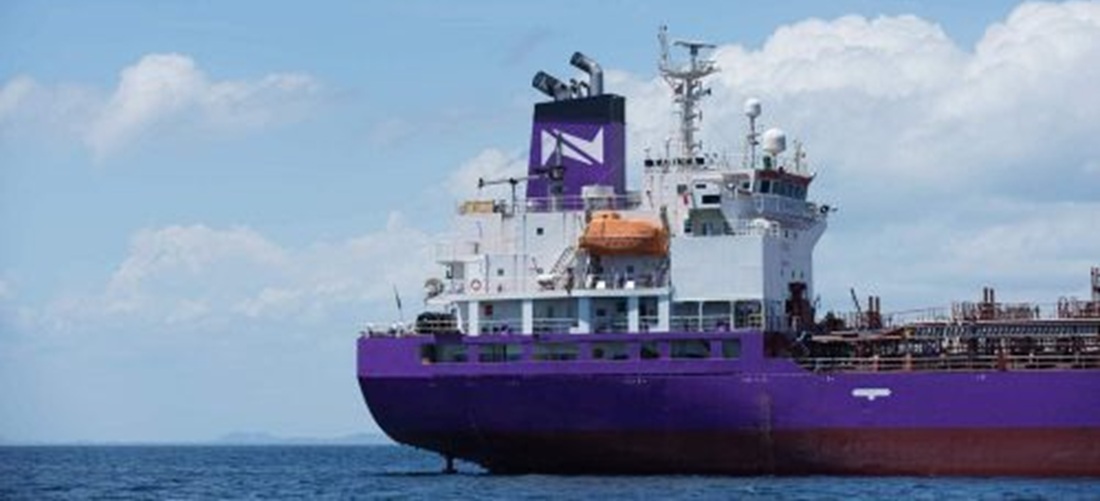
Brazil’s coastal shipping sector could gain ground as companies seek to cut logistics emissions
Jul, 14, 2026 Posted by Gabriel MalheirosWeek 202629
The way goods move across Brazil is becoming increasingly important to corporate decarbonization strategies. In a country where 63.4% of freight is transported by road, the choice of transportation mode now affects not only costs and delivery times but also climate targets and corporate carbon inventories.
A study by Brazilian coastal shipping company Norcoast estimates that its operations prevented 317,800 metric tons of carbon dioxide equivalent (CO₂e) emissions in 2025 compared with a scenario in which the same cargo was transported entirely by road. The analysis covered 49,611 shipments totaling approximately 957,000 metric tons of cargo.
According to the study, the company’s intermodal operations, combining coastal shipping with road transportation for pickup and final delivery, generated 123,200 metric tons of CO₂e. Emissions would have reached 441,000 metric tons under an all-road scenario, representing a difference of 72.1%.
Norcoast’s operations produced 128.7 kilograms of CO₂e per metric ton transported, compared with 460.7 kilograms for road freight.
“Coastal shipping does not eliminate road transportation, which remains essential at both ends of the journey, but it reduces reliance on long-distance trucking and significantly improves the carbon intensity of the logistics chain,” Norcoast CEO Fabiano Lorenzi said.
Data from Brazil’s Institute of Logistics and Supply Chain, known by its Portuguese acronym ILOS, show that trucks carry 63.4% of the country’s freight. Railways account for 18%, waterborne transportation for 14.6%, pipelines for 4.1% and air freight for 0.1%.
Brazil’s dependence on highways is also reflected in its emissions profile. According to the CNT 2025 Inventory, the country’s transportation sector emitted 190 million metric tons of CO₂e in 2023, with road transportation accounting for 92.9% of the total. Trucks alone were responsible for approximately 34% of transportation emissions.
“Companies increasingly need to understand the carbon footprint of their supply chains,” Lorenzi said. “When we can show that impact for each shipment, route and operation, transportation decisions are no longer based solely on cost and delivery time. They also become part of the company’s sustainability strategy.”
Brazil has several characteristics that could support the expansion of coastal shipping, locally known as cabotage, including its extensive coastline, the concentration of population and economic activity near the coast, and logistics corridors connecting major producing regions with large consumer markets.
Created by Brazilian shipping company Norsul and German container carrier Hapag-Lloyd, Norcoast began operating in February 2024. The company focuses on transporting containers along the Brazilian coast and shifting cargo away from long-distance road journeys.
According to the Brazilian Association of Coastal Shipping Companies, known as ABAC, the segment handled 1.9 million twenty-foot equivalent units, or TEUs, in 2025, up 24% from the previous year.
Domestic cargo accounted for 876,000 TEUs, or 45% of the total. Coastal shipping of domestic goods grew 15% last year after increasing 10% in 2024.
With four vessels and approximately 600 customers, Norcoast sees room to expand in a market estimated to include around 4,000 potential shippers. Its strategy combines maritime and road transportation while promoting the lower emissions intensity of coastal shipping to companies seeking to reduce the carbon footprint of their logistics chains.
Bruno Alonso, Norcoast’s emissions specialist and the executive responsible for the study, said the difference in carbon footprints is primarily related to transportation capacity.
One of the company’s vessels can carry up to 3,500 TEUs, spreading its emissions across cargo belonging to numerous shippers. A standard truck generally carries one TEU.
In addition to scale, the company attributes part of its efficiency to vessel speed management, engine optimization and the use of low-sulfur fuel oil, or LSFO. Norcoast is also monitoring alternatives such as biofuels and green hydrogen, although both still require investment and technical adjustments before they can be adopted at scale.
Logistics moves up the climate agenda
Transportation choices are becoming increasingly important as companies face growing pressure to account for indirect emissions throughout their production and supply chains. Under the GHG Protocol, these emissions are classified as Scope 3.
Pressure on the maritime transportation sector is also increasing. The International Maritime Organization has set targets to reduce greenhouse gas emissions by at least 20% by 2030 and 70% by 2040 compared with 2008 levels, with the goal of reaching net-zero emissions by or around 2050.
The strategy also calls for zero- or near-zero-emission fuels and energy sources to account for at least 5% of the sector’s energy use by 2030. The Carbon Intensity Indicator, or CII, which assigns vessels an annual carbon-efficiency rating, has been in force since 2023.
Norcoast said its methodology follows GHG Protocol guidelines and includes emissions generated by its vessels as well as the road segments used for cargo pickup and delivery.
The company compared those figures with a simulated scenario in which the same cargo volumes were transported between the same origins and destinations entirely by truck.
Despite its potential, coastal shipping accounts for approximately 11% of freight transportation in Brazil. Containerized coastal shipping represents about 1% of the country’s overall freight market.
Lorenzi said expanding maritime transportation does not mean replacing trucks, which remain essential for cargo collection and distribution. Instead, the challenge is to improve integration between transportation modes, reduce long-distance road journeys and make Brazilian logistics more efficient and less carbon-intensive.
Source: Valor Econômico
-
Meat
Mar, 20, 2025
0
Brazil’s Meat Exports to Malaysia Poised to Rise After Sanitary Agreement with Sarawak
-
Ports and Terminals
May, 31, 2023
0
Brazil feds dismantle fraud scheme in tax inspections at Port of Suape
-
Grains
Jul, 06, 2022
0
EU soybean imports fall 6% in 2021/22, Brazil’s share grow to 60%
-
Meat
Sep, 05, 2025
0
EU recognizes Brazil as free of avian flu, says agriculture minister