


Brazil’s Fish Production Set to Decline Amid New Trump Tariffs, Researcher Says
Jul, 22, 2025 Posted by Lucas LorimerWeek 202531
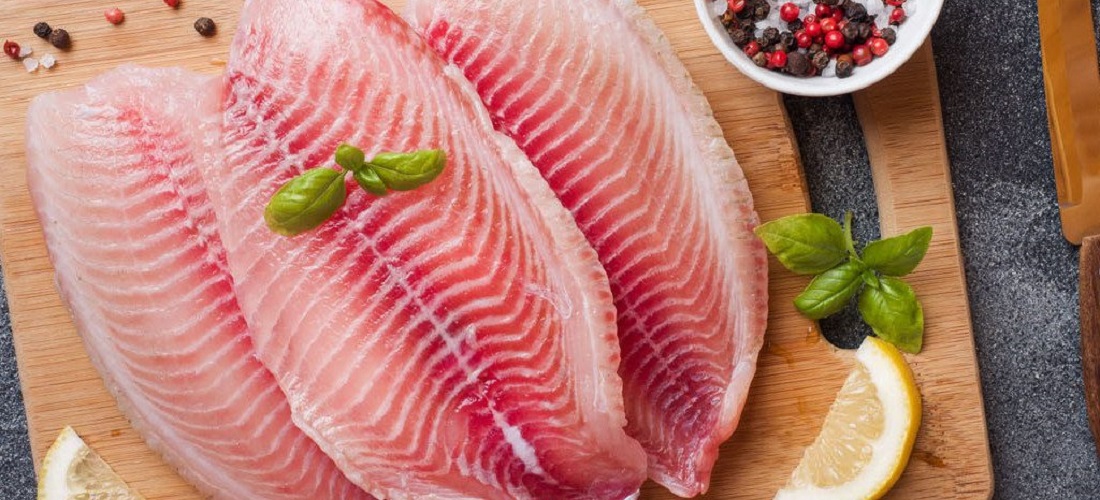
The announcement of a 50% tariff on Brazilian products exported to the United States, starting August 1, has come as a significant blow to the seafood sector, particularly for tilapia producers, whose output increased 14.3% in 2024 compared to 2023.
This is the assessment of Ronaldo Cavalli, a professor at the Oceanography Institute of the Federal University of Rio Grande (FURG) and a member of the National Institute for Ocean Research (INPO) network. He argues that strengthening the domestic market could serve as an alternative.
“But that’s just an alternative. The real solution is to avoid the tariff—to negotiate,” he told Valor Econômico.
According to Cavalli, shifting supply to the domestic market could be a strategy for tilapia producers. In 2024, Brazil produced 662,230 tons of tilapia. Of that total, around 14,000 tons were exported, according to the FURG professor.
“It’s a relatively small export share, and redirecting that portion to the domestic market wouldn’t be difficult,” he said.
The professor draws attention to Brazil’s experience with shrimp, which was primarily exported until the early 2000s but is now consumed mainly in the domestic market. That shift followed the introduction of anti-dumping tariffs by the United States in 2005, after American shrimpers accused producers from six countries—including Brazil—of selling below domestic cost abroad.
He notes, however, that tilapia exports have been growing in recent years, and the tariffs announced by Trump could represent a step backward for Brazilian production.
Cavalli adds that the sector is shaken not only by the American president’s sweeping tariff increase, but also by Brazil’s recent move to open its market to Vietnamese tilapia imports following a bilateral agreement.
“We’ll need to wait and see how the market reacts. The tendency is to negotiate. If no agreement is reached, Brazil will have to open new markets or sell domestically at lower prices,” he observes.
The researcher notes that the primary concern is not the temporary loss of exports, but rather the reversal of a long-term growth trend.
“It’s not just hitting the brakes—it’s throwing the whole thing into reverse. Tilapia is currently the crown jewel of Brazilian aquaculture, and the big risk is losing this expanding export market, which is much more attractive because it pays better,” he said.
The U.S. market accounts for 80% of Brazil’s fish exports, generating US$244 million in revenue, according to the Brazilian Association of Fish Industries (Abipesca). For lobster, snapper, and tuna, nearly 100% of production is exported, with the United States as the leading destination.
“In the case of lobster and snapper—both produced specifically for export—strengthening the domestic market isn’t a viable option. These are distinct products for very different market niches,” the professor noted.
In this context, the signing of a trade agreement between Mercosur and the European Union could open up “a range” of new opportunities, according to Cavalli. Brazil’s fish exports to the EU and the United Kingdom have been suspended since 2018 due to alleged deficiencies in the country’s sanitary controls.
Source: Globo Rural
-
Ports and Terminals
Mar, 22, 2023
0
Dozens injured after ship topples over in Scotland
-
Ports and Terminals
Jul, 13, 2023
0
Brazil Ministry of Ports announces new reduction in port tariffs
-
Other Logistics
Jan, 17, 2022
0
Hapag-Lloyd pays US$55 million for boxship acquisition from Eastern Pacific
-
Economy
Nov, 21, 2023
0
Brazil tops USD 300 bn in exports for 2nd consecutive year