


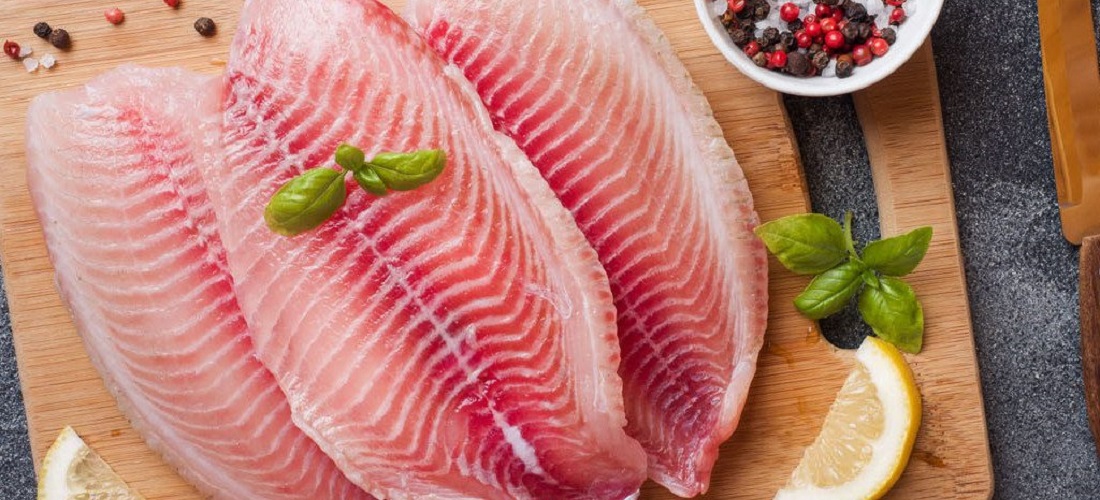
C.Vale says it is “paying to export” tilapia to the U.S. amid tariff hike
Oct, 13, 2025 Posted by Lucas LorimerWeek 202543
Amid the effects of Donald Trump’s tariff hike, C.Vale, based in Paraná, “is paying to export tilapia” to the United States, says the cooperative’s poultry and fish commercial manager, Fernando Aguiar.
In September, C.Vale shipped 378 tonnes, a 44% reduction from 670.4 tonnes in the same month of 2024. Revenue fell 49%: from US$3.31 million to US$1.69 million.
“The cooperative decided to maintain its partnership with the American importer, believing in a negotiated solution for the tariffs,” says Aguiar.
Since January, C.Vale has exported 4,355 tonnes to the Americans, between frozen and fresh fillets. In 2024, shipments totaled 6.9 thousand tonnes, up from 4 thousand the previous year.
Despite the tariff hike, production of 230 thousand fillets per day at the two processing plants in Palotina and Nova Prata do Sul has not been reduced. The volume not absorbed by the foreign market stayed in the domestic market. In addition to Paraná, the cooperative’s tilapia is sold in 17 states.
Last year, C.Vale became the first cooperative in Brazil to obtain ASC (Aquaculture Stewardship Council) certification for tilapia production in excavated ponds, thereby enhancing its export credentials. The cooperative now targets markets in Canada, Colombia, and the United Arab Emirates.
Reduction
Overall, tilapia processors report a drop of 20% to 80% in fish exports to the United States in September, the second month of the tariff’s enforcement.
Even with the 50% tax, the United States remains the main, and almost the only, destination for Brazilian tilapia exports, accounting for more than 90%. September data from Agrostat, of the Ministry of Agriculture, Livestock and Food Supply (Mapa), confirm that the fall was severe.
There was a 56.87% reduction in volume compared to the same month in 2024. A total of 538.5 tonnes were shipped to the premium American market compared to 1,248.6 tonnes in September 2024. In revenue, the decrease was slightly smaller, 46.6%, closing at US$3.075 million.
In the July to September quarter, volume fell 29.17% and revenue fell 27.66%. On the other hand, considering the total shipments for the year, there was an increase of 23.64%, totaling 8,845.9 tonnes.
This is because exports to the U.S. of the main item in Brazil’s fish farming industry grew in the first half of the year and, amid the tariff threat, shipments accelerated in June and July. In 2024, Brazil exported 10.8 thousand tonnes, compared with 5.06 thousand tonnes in the previous year.
In recent years, companies have increased shipments of fresh fillets to the U.S. by air and have also begun exporting frozen fillets by sea, driven by the higher quality of Brazilian product compared to other countries.
Industries
Juliano Kubitza, director of Fider, one of the largest exporters of tilapia fillets to the U.S., said that after the tariff hike, the company’s shipments fell 80%. There has been a small growth in exports to other countries, but on average, the company, which has a farm and processing plant in Rifaina, in São Paulo’s interior, is exporting half the previous volume.
Last year, it exported about 50% of its 9,600 tonnes of production. Now, the surplus has been redirected to the domestic market.
“Brazil used to export only 4% of its production. It’s an important tonnage, but not impossible to absorb in local markets with greater consumption stimulus. The sad part is being left out of a market as large and important as the American one.”
According to Kubitza, some of Fider’s U.S. clients have started buying tilapia from Colombia, paying more than they did for Brazilian fish before the tariff hike. “It’s very sad to see a market that we built with so much effort handed to the Colombians. And they don’t even have enough fish to meet demand, which has caused higher prices.”
Ramon Amaral, CEO of Brazilian Fish, from Santa Fé do Sul (SP), said the company continues to export tilapia to the United States, but the volume has already fallen by 20%. The company used to export an average of 70 tonnes of fresh tilapia fillets per month by air to Miami and occasionally shipped containers of frozen fillets.
“We’ve zeroed our margin and even worked on some shipments with a negative margin to keep the window open, the client active. Since we’re Brazilian, we never give up, but we’re praying for this tariff to end soon. Meanwhile, we’re exploring markets in China, Canada, and South America, trying to find a way out.”
When the tariff was announced, Brazilian Fish had just invested R$100 million to increase the capacity of its two plants in Santa Fé from 60 tonnes per day to 100 tonnes, aiming to increase fillet exports to the U.S., which accounted for 18% to 20% of revenue.
To mitigate losses, Ramon reduced production and took advantage of the increased storage capacity for finished products, intending to keep frozen fillets for one or two years while the situation with the U.S. remains unresolved or until new markets are opened.
Fider, in turn, already had government authorization to invest in a new farm in the Pedregulho reservoir to double tilapia production, focusing on exports, which accounted for 50% of revenue. The plan has been suspended for now. In addition to fresh fillets for the U.S. by air, the company ships fish meal, skin, and scales to Asian countries.
Alternatives
The president of the Brazilian Fish Farming Association (Peixe BR), Francisco Medeiros, says that Brazilian tilapia exporters continue to seek alternatives to maintain contracts with American clients, even taking losses, as reported by Brazilian Fish and C.Vale.
According to him, Brazil has few opportunities in the global tilapia fillet market, which is dominated by China and Vietnam, countries that adopt industrial procedures banned in Brazil and thus can offer more competitive prices.
“What remains for us is the premium market of the United States and Canada, where consumers are willing to pay more for a quality product.”
Medeiros adds that Brazilian companies continue to work with partners in the United States to find ways to overcome the effects of the tariff hike.
“The sector’s position from the beginning was for the Brazilian government to go to the United States to negotiate, which did not happen, but we believe that this negotiation between the American government and Brazil should, at some point, evolve toward reducing this tax and making our operation competitive again.”
Source: Globo Rural
-
Blog News (ENG)
Aug, 30, 2023
0
Pecém negotiates new shipping lines to meet Brazil’s northeast cargo demands
-
Economy
Jun, 08, 2022
0
Paraguay ships 21% more items produced in ‘maquiladoras,’ beef follows suit
-
Blog Statistics (ENG)
Feb, 19, 2025
0
East Coast South America Top Trading Countries | Jan-Dec 2024 vs. Jan-Dec 2023 | DataLiner
-
Grains
Jul, 27, 2020
0
China imports records volume of Brazilian soy in June